

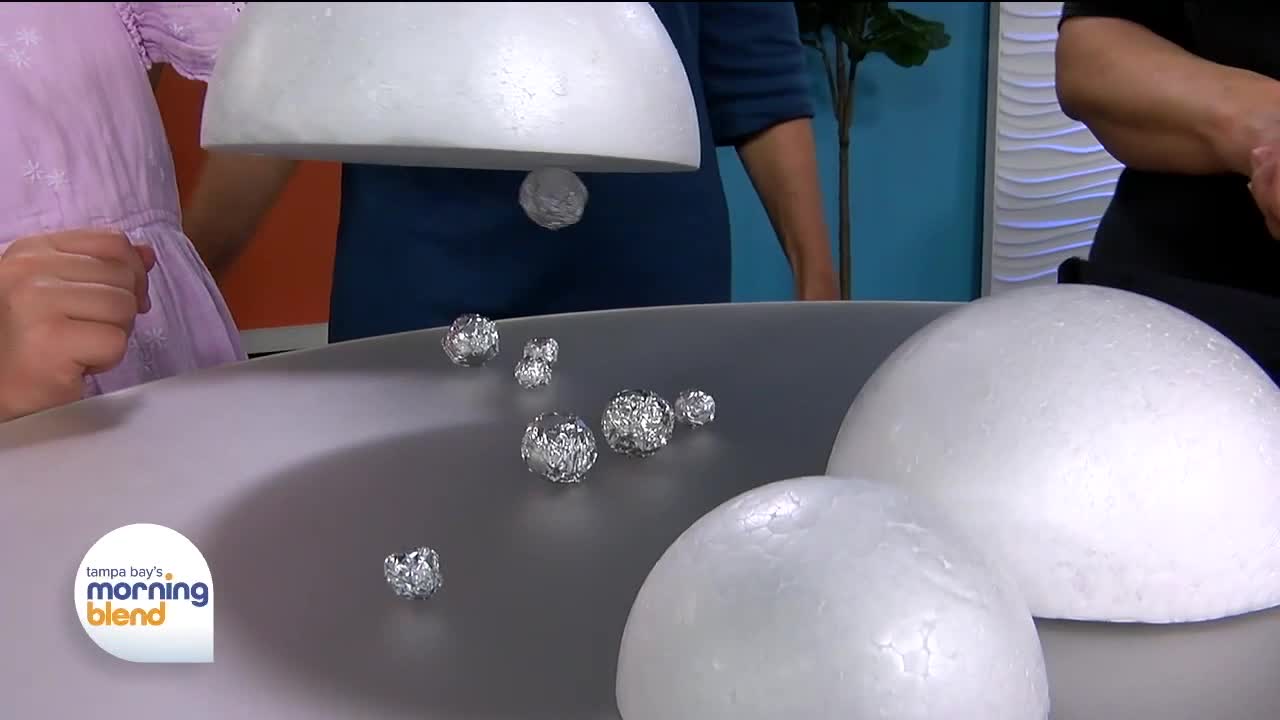

Jumping Ball Boogie! Can you move objects without touching them? By creating static electricity on a styrofoam dome, we can make lightweight balls jump, bounce, and stick using invisible forces. 1. Static electricity creates a charge. When we rub the styrofoam dome with hair, wool, or fabric, it picks up extra electrons and becomes negatively charged. This is the same kind of static electricity that can make your hair stand up or give you a small shock.
Opposite charges attract. The aluminum-covered balls are made from a material that lets charges move easily. When the charged dome gets close, the charges in the aluminum shift around, causing the balls to be pulled toward the dome and stick to it.
Different materials act differently. Aluminum lets charges move freely, but styrofoam does not. That's why the aluminum balls jump up and stick, while the plain styrofoam balls are more likely to bounce around or move away. Takeaway: Even though static electricity is invisible, it can create forces strong enough to move objects. Different materials react to those forces in different ways.
For more information on MOSI and all their programs, visit mosi.org
