



TAMPA, Fla. — When you're in a life-threatening situation, every minute counts.
Tampa Bay 28 anchor Lauren St. Germain covers medical news and is committed to informing viewers about new technology that could help people in the community. She learned how Hillsborough County Fire Rescue (HCFR) will start using drones to get whole blood to some emergency scenes.
Watch report from Lauren St Germain
The future of emergency medicine is here in Hillsborough County, and it's something HCFR Division Chief Todd Carnell has been working on for years.
"The problem that I saw – you know we have a 900-square-mile county and how can we get blood to the most amount of people — blood is a precious commodity; we don’t want to waste it," Carnell said.
So, his answer was drones. HCFR teamed up with Archer First Response Systems, Tampa General Hospital and OneBlood for this first-of-its-kind program in the nation. Archer First Response Systems is operating the drones out of its flight operations center in Sarasota.
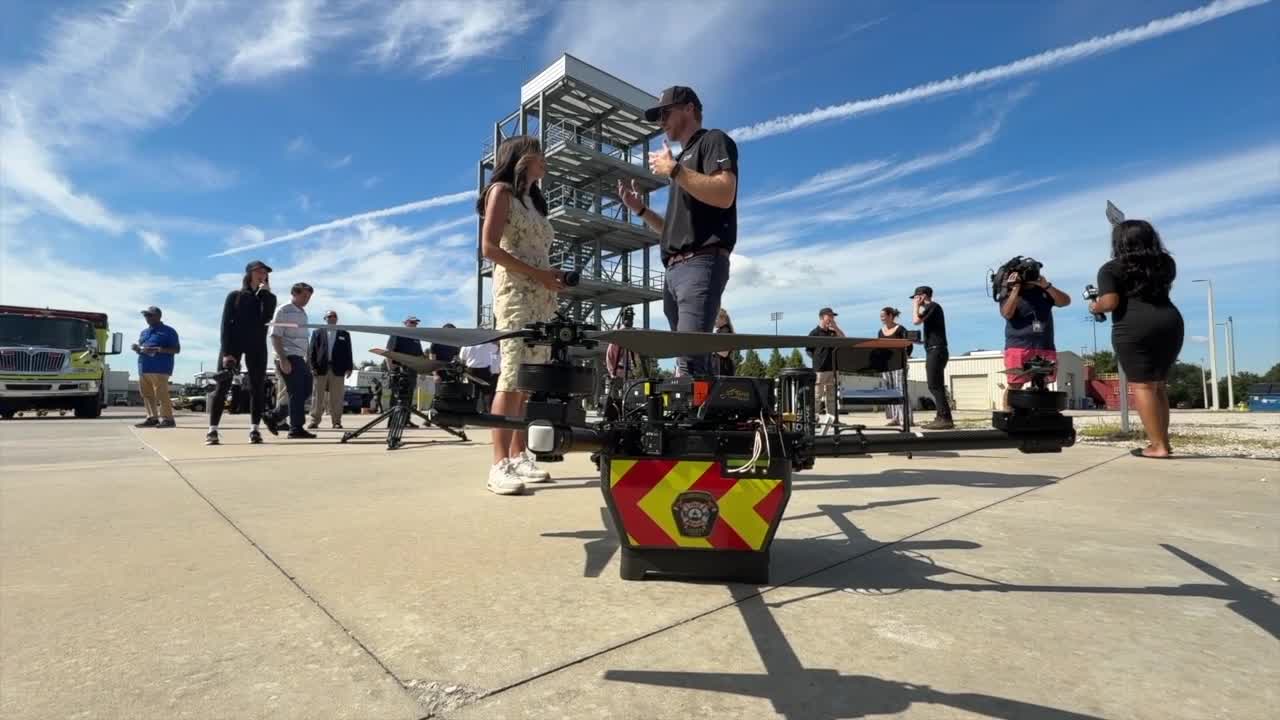
"This aircraft usually sits within a housing unit, so at the fire station, both 9 and 37, there is a large container that it sits inside of, that's climate controlled and so this sits loaded with blood and ready for deployment at a moment’s notice," said Gordon Folkes, founder & CEO of Archer First Response Systems.
"Can you show us where exactly the blood goes in?" asked St. Germain.
"In the front of this payload bay — we call our deployable payload — the deployable payload is what we actually lower to the ground," said Folkes.
The paramedics at the scene can request a unit of whole blood, and then the drone will take off from one of the two fire stations.
"When we arrive on a scene, we hover at about 197 feet above ground level, and we lower the deployable payload to the ground on a tether line," Folkes said.
Carnell said once HCFR determines a patient needs blood, it's about three and a half minutes until the blood can be administered to the patient. The drone delivery allows paramedics to begin the blood transfusion before a patient gets to the hospital.
Carnell said the biggest challenge is the temperature control and how tightly it's regulated with blood.
"What's it like for you to see this program come to fruition today?" St. Germain asked.
"Relief. There are just a lot of things you don't think about when you say you want to fly blood — the regulations, FAA restrictions and there are a lot of procedural things that have to be done, so we are excited to get it done, build a roadmap book and give it out to everyone," Carnell said.
Right now, the two operating areas are in unincorporated Hillsborough County. Each one covers 35 square miles from Interstate 4 and Interstate 75 to the north to just south of Gibsonton Drive.
The goal is to expand in the future to eventually cover the entire county.
