

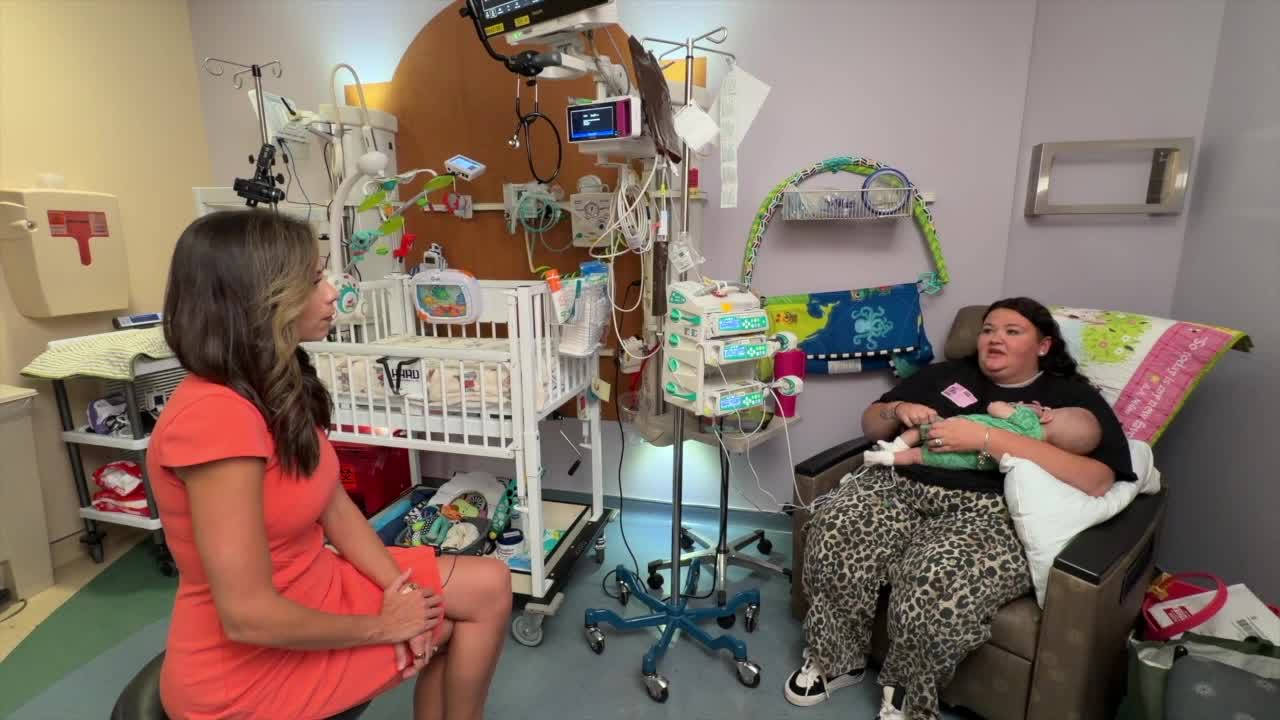


TAMPA, Fla. — The University of South Florida and Tampa General Hospital are studying how artificial intelligence can help babies in the neonatal intensive care unit.
Tampa Bay 28 Anchor Lauren St Germain covers medical news and is committed to informing the community about new technology that could impact their families. She went to TGH to learn how AI could benefit the youngest of babies.
Watch report from Lauren St Germain
“Two pounds. He was very small. 11 point eight inches long. Seeing that is terrifying because you are like how could be possibly live outside my body,” said Brooke Eccard.
She continued, “We just celebrated his half birthday here. We went on a parade and handed out cupcakes to all the nurses.”
Eccard’s son – Jefferson – is in the NICU at TGH and part of a study which is using artificial intelligence and cameras to detect pain in newborns.
Dr. Jacqueline Hausmann is one of the researchers with USF. She explained the cameras set up in the NICU track facial expressions, body movements, and vital signs. Researchers also record audio so they can track when the baby is crying.
“We take all of those different modalities and then we have the AI model. It’s basically monitoring the baby and the brain. The model system will output a level of intensity based on those different signals, so how much pain the baby is in right now,” said Dr. Hausmann.
“What is the goal of this whole study? What do you hope to achieve?” asked St. Germain.
“Provide a support system for nurses and parents that kind of indicates what type of pain a baby is going to be in. The goal of that is to really reduce any sort of opioids or extra medication that’s given to a neonate but still making sure that the baby doesn’t experience any pain,” said Dr. Hausmann.
“We’ve found in our research, it’s really important that a lot of times if you can help give nurses that signal of pain ahead of time, they can come in and give the baby sucrose or even sometimes physical contact will alleviate the baby’s pain and they don’t need the use of extra medication,” said Dr. Hausman.
“So, it’s almost like an early intervention?” asked St. Germain.
“Exactly. We call it an early warning system,” said Dr. Hausmann.
Research Eccard wants to be a part of to benefit other families.
“Any information they can gather to help someone in the future, do it. It’s the most important thing to maybe streamline card in the future,” said Eccard.
Dr. Hausmann told St. Germain it’s important to note this technology will work with the nurses, not replace them.
The study started in 2017 and at TGH, about 100 babies have taken part. Researchers are also collecting data from NICUs at Stanford University Hospital and Inova Hospital. She says they hope to have a full system up and running within the next year or so.
Share Your Story with Lauren
Our health and our happiness impact our lives so much. And Tampa Bay 28 Anchor Lauren St. Germain is focused on both. From highlighting the latest medical breakthroughs to celebrating the biggest Tampa Bay Lightning Fans; Lauren wants to hear for you. Use the form below to send her a note.
.
Auto glass company salesman pushes questionable windshield replacement at Tampa dealership
A Service Pros Auto Glass salesman said filing an insurance claim would not affect insurance premiums.
