

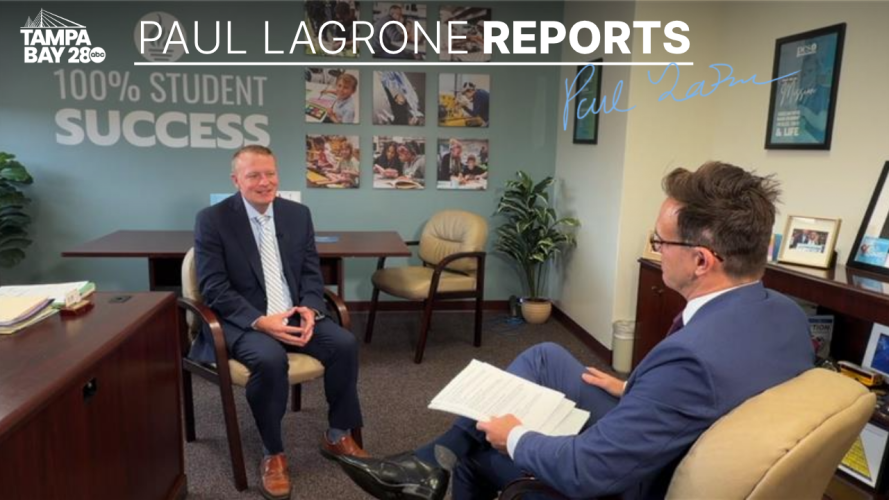


PINELLAS COUNTY, Fla. — Tampa Bay 28 is helping families prepare for the first day of school.
In Pinellas County students return to the classroom on Tuesday August 11. But before the first bell rings, Tampa Bay 28 anchor Paul LaGrone sat down with the Pinellas County Schools Superintendent Kevin Hendrick to discuss a wide variety of topics including cellphones, future of the district, and school consolidation.
WATCH: Pinellas County Superintendent talks about school consolidation, cellphones policies
Consolidating Schools
Paul: How do you convince parents that it is necessary to consolidate schools, and it's not just about cutting costs?
Kevin Hendrick: One is just be transparent about the data. We've had a lot of community meetings where we've shared data to say, here's what's happened in Pinellas County with birth rates over the last three decades. And whereas we used to have close to 11,000 babies born in Pinellas hospitals two decades ago, last year we had 7,000. So that natural attrition of less children being born comes into kindergarten, right? So, we graduated 7,000 seniors a few weeks ago, and we had 4,800 kindergarteners in our kindergarten class. So over 13 years, that's just going to play out through natural attrition.
Paul: Some parents might feel that the decisions have already been made before they're asked. So how do you convince these families that they are being heard, and that these decisions haven't already been made for them.
Kevin Hendrick: We ask them questions like, if we keep smaller schools open, what are you willing to give up in exchange for that? Are you willing to give up athletics? Are you willing to have fewer electives for your children? Maybe just one language instead of multiple languages. Maybe there's one arts pathway instead of multiple arts pathways, and then you know when we ask, well, what would you do? They say, well, I'm not sure. It's a really tough decision, right? And it normally relies on their neighborhood school and what they want to see. So, you know, trying to give some options, but the decisions are multifaceted. It's not just around enrollment. It's around age of facilities. It's around transportation, safe pathways to school. There's a lot of factors that go into that.
School Choice
Paul: When you talk about the competition from private schools, vouchers, charters, there's a puzzle when it comes to education now, and that diversification, lawmakers would say is good. Parents would say it's good. I have more options, but how do you compete for families who now do have more choices?
Kevin Hendrick: I think you have to show them from the beginning what your choices offer. Public schools will always have more academic offerings than any private school. Will always have more diversity of offerings and more diversity in our student body. So, parents have to decide what is important for them. The great thing about public schools is all of our data is transparent. You know if your child's reading, you know how they're doing in math, you can see their SAT, ACT scores, and you can compare that across all schools in the region or across the state. So, it's great transparency in what we do, and I think that's important for parents to see. In terms of that overall competition, public schools have basically had a net zero on the scholarships. You know, just as many students that leave come back. So, what you're seeing in the scholarships is the state is paying for students who are already going to private school. That's the vast majority of that four and a half $5 billion that the state has added have been students that are already attending private school.
Student Academic Challenges
Paul: We're several years removed from the pandemic. What do you see are the biggest challenges right now: reading, math, attendance, student behavior. Have they finally caught up academically?
Kevin Hendrick: So, researchers from Harvard and Stanford have put out something called the Education Scorecard, which looks nationally at the recovery since the pandemic. In Florida, most districts are not doing well. Pinellas is an outlier in that, far above statistically other districts in terms of recovery, we see that mostly because of our investment in early literacy and a real focus by our school board in keeping that going, regardless of all the other drama that was surrounding schools and reopening and all of that, for you know two or three years.
Cellphones in Classrooms
Paul: When you talk about that that sort of walk in that line between safety and cell phones and being connected, but everything that can come with the cell phones, from mental health to conflict in the schools, what is the biggest challenge that parents need to understand when it comes to what teachers deal with, and phones can help; they can also hurt.
Kevin Hendrick: It's basically off and out of sight K through eight, and in high school, students can have access at class change and in the cafeteria at lunchtime. I think one of the things we have to understand is that students are connected, especially our teenagers, to it. But they also know that and feel this sense of better mental health when it's not with them. And so, the fact that it's off in classrooms, I think the students really appreciate that. They've told us that. Yes, emergencies. Yes, the obvious things. Sometimes, you know, our families are some of our worst violators of sending their children. Hey, you know, I'll pick you up here after school, or this or that, and you know, expect a quick response, and that's not going to happen.
Future of the District
Paul: When you look back five years from now, and then you look ahead five years from now, what do you want Pinellas County School to be known for? What's the biggest decision you believe you have to get right?
Kevin Hendrick: We're an education institution, and while we're a large business, our focus has to be first on our students’ learning. Are they having fun in school, and are they contributing positively to society when they leave us? So, we will always look to those metrics of early literacy. Are they reading by third grade, what are they doing in terms of their progress in secondary school to have a job when they graduate, or the opportunity to have that? So, whether that's an industry certification or critical thinking skills, and then yes, graduation rates are something that we look at and is important as well. So that's going to be our backwards metric, and that's going to be our forward metric. How are we preparing our students for the future society that they'll live in to be critical thinkers. The rest of the things, you know, how do you run a business with a billion-dollar operating budget and make sure you're balancing it? What are politics going to look like and population trends and school choice? All that's important, but ultimately, is are we doing right by our kids and are they having the opportunities that we all want them to have? That's going to be our guiding light.
Paul: Kevin Hendrick. Thank you so much for your time. Appreciate it.
Share Your Story with Paul
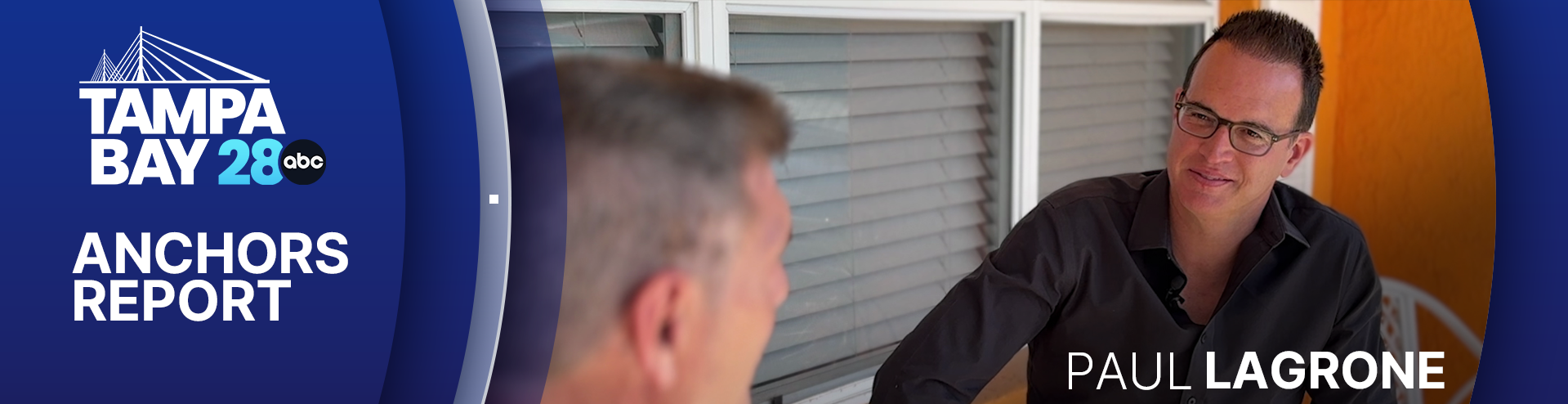
Tampa Bay 28 Anchor Paul LaGrone grew up in Plant City, so he’s seen firsthand how that part of Hillsborough County has changed over the years. As Tampa Bay 28’s leading political anchor he knows state and local politics impact decisions we make at home. Paul wants to hear how state policies impact you. Just use the form below to send him a message.
.
Saudi flight from Tampa, secret FBI probe reveal possible Saudi support network for 9/11 hijackers
Twenty years after the Sept. 11 attacks, more than 80,000 records compiled by the Tampa FBI Field Office remain classified. Newly declassified documents are pointing to a possible secret Saudi support network for the hijackers. Soon after the attacks, the FBI uncovered that 15 of the 19 hijackers were from Saudi Arabia.