



TAMPA, Fla. — A synthetic opioid said to be 13 times stronger than morphine is driving more calls to the Florida Poison Center, and officials warn the numbers only tell part of the story.
7-Hydroxymitragynine — known as 7-OH — comes from the kratom plant and carries a high potential for addiction and abuse. In the first four months of this year alone, Florida Poison Control received 95 cases involving 7-OH and related compounds, reported from homes and hospitals across the state.
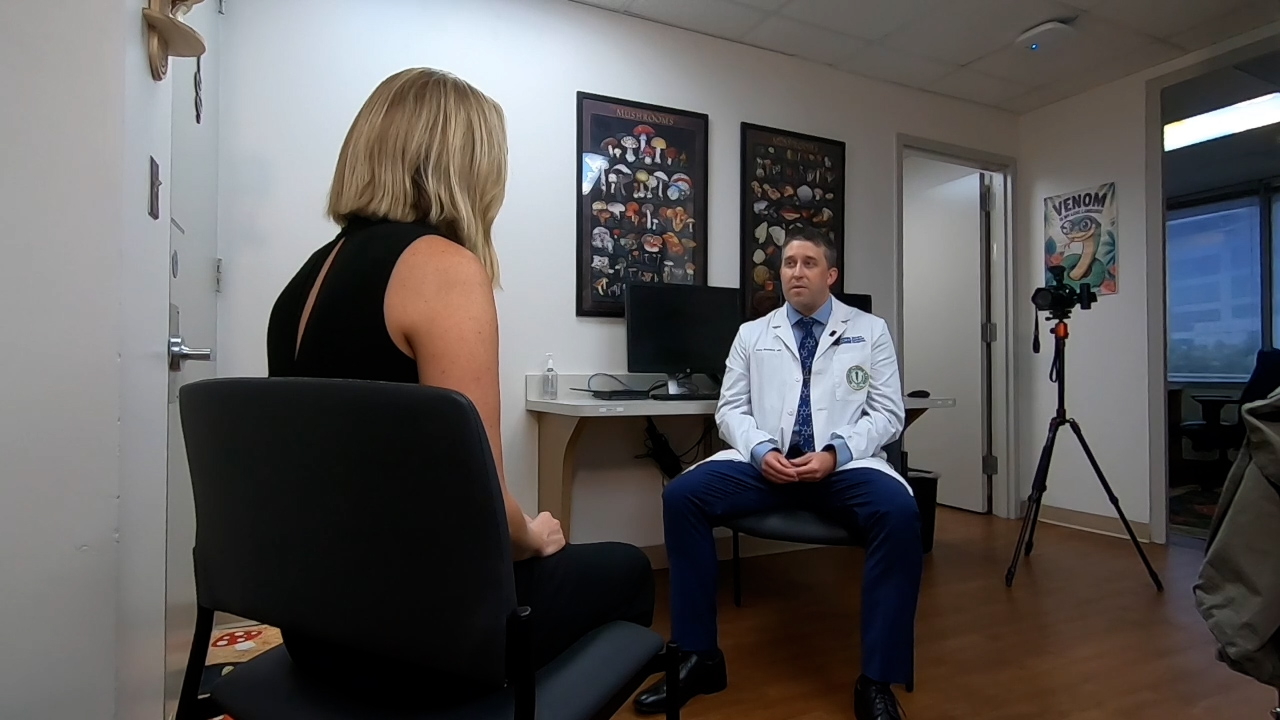
Dr. Cory Howard, an emergency medicine doctor at Tampa General Hospital who monitors calls coming into the Florida Poison Center, said the numbers are trending upward — and that tracking has lagged behind the problem.
"It's on track to out-compete the data we have from last year," Howard said.
WATCH: Synthetic opioid 7-OH driving surge in Florida Poison Center calls
Howard said officials are still catching up on accurately coding cases.
"We're a little bit behind the times, in terms of like — we did not even know like 7-hydroxymitragynine was really even a problem until early in 2025, and that's when we finally started coding it and some of the other compound derivatives we have expanded to code those later in the year, so likely — anything previous to like February 2025 was just being looped and correlated with kratom itself," Howard said.

Hospitals do not routinely test for 7-OH or similar synthetic opioids, Howard explained, further limiting the picture of how widespread the problem is.
Howard said cases have ranged from infants who accessed products due to improper storage — to elderly patients.
"I've seen people call in for their 90s and be exposed to these, and usually they had no idea that this was an opioid," Howard said.

When asked what those patients typically believed the product was, Howard said, "Usually like a wellness or an herbal supplement, because that's kind of how they advertise."
Howard also said addiction is emerging as a growing concern.
"We're seeing withdrawal go up a lot and having to place people on addiction therapies for their tolerance and their dependence and the withdrawal symptoms," he said.
When asked whether patients are surprised to find themselves in that situation, Howard said, "A lot of them are."
RELATED: Florida man survives kratom product overdose, warns others
Wes Griggs knows that shock firsthand.
"I never in a million years thought that that would happen to me," Griggs told the Tampa Bay 28 I-Team.

Griggs' story begins in 2019, when he was shot in the back and later hospitalized in two car crashes. Prescribed opioids for his pain, he said he was looking for another option.
"I didn't want to do them forever," Griggs said.
He turned to what he found at a gas station.
"You go into a gas station, and you see something right there that's 'all-natural supplement', plant-based — I felt relief," Griggs said.
In March, Griggs took a tablet of what he later learned was 7-OH and got back in his car. He was at Sophros Recovery, an addiction treatment program in Tampa, when he lost consciousness.
"I walked into treatment, and next thing you know — I fall asleep," Griggs said.
It took two doses of Narcan to revive him.
"I woke up with paramedics surrounding me — and… in complete fear," Griggs said.
Earlier this month, the U.S. Drug Enforcement Administration followed Florida's lead, moving to temporarily schedule 7-OH.
RELATED: AG Uthmeier signs emergency rule to control concentrated 7-OH products
RELATED: 'I don’t think we’ll ever win this war': DEA boss gets candid on America’s fentanyl crisis
The I-Team sat down with DEA Administrator Terry Cole in Orlando during the fentanyl summit.
"It puts everybody on notice," Cole said.

Cole said those involved in the distribution and sale of 7-OH will face consequences.
"They can and will be held accountable for distribution, for manufacturing, for selling, this poison," Cole said.
Cole added that the DEA intends to stay ahead of emerging threats.
"We will continue to stay on our front foot for any other synthetic opioid that comes across our radar that is harming our citizens and killing our kids," Cole said.

Griggs said the experience underscored the unknowns of these products.
"That's just the danger behind it," Griggs said.
The Florida Poison Center warns that these products are not the same as the traditional kratom leaf and should be recognized as potent opioids rather than herbal supplements. Officials also caution that labels may not accurately reflect the actual dose or ingredients.
If you need help with withdrawal symptoms, overdose, or any other concern, the Poison Help Line is available 24/7 at 1-800-222-1222.
Share Your Story with Kylie
Kylie McGivern works tirelessly to get results for the people of Tampa Bay. Her reporting has exposed flaws in Florida’s corrections system and unemployment process. Reach out to Kylie and our I-Team if you need help holding state leaders accountable.
.

Saudi flight from Tampa, secret FBI probe reveal possible Saudi support network for 9/11 hijackers
Twenty years after the Sept. 11 attacks, more than 80,000 records compiled by the Tampa FBI Field Office remain classified. Newly declassified documents are pointing to a possible secret Saudi support network for the hijackers. Soon after the attacks, the FBI uncovered that 15 of the 19 hijackers were from Saudi Arabia.