

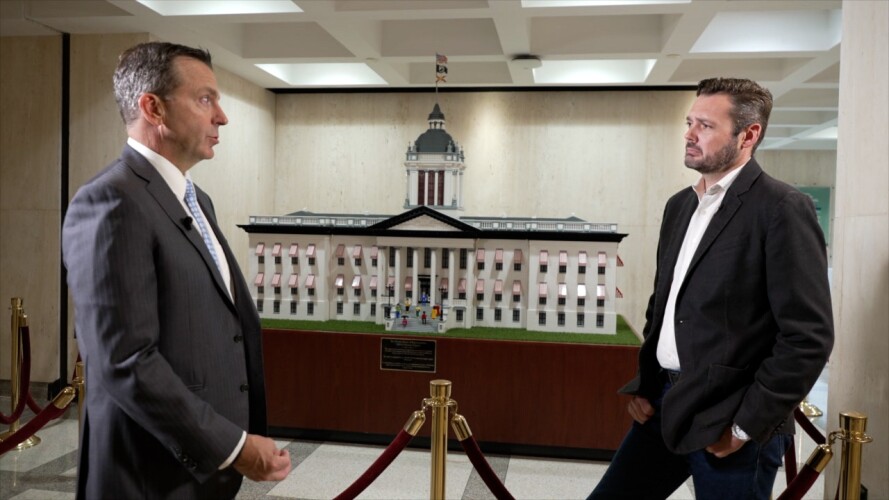


TALLAHASSEE, Fla. — Gov. Ron DeSantis’ push to overhaul Florida’s property tax system is heading into a special session next week, but the proposal is already facing questions from Democrats, local governments, and some Republicans over what it could mean for public services, schools, and taxpayers.
The governor’s plan would ask voters to approve a constitutional amendment raising Florida’s homestead exemption to $150,000 in 2027 and $250,000 in 2028. Lawmakers would then be required to create a schedule to eventually eliminate homestead property taxes entirely.
WATCH: Florida property tax proposal draws early scrutiny ahead of special session
Supporters say the proposal would provide major relief for homeowners. DeSantis has framed the effort as a way to make homesteaded property tax-free, telling supporters, “The primary purpose of that is to make your homestead property tax-free.”
But critics say the plan leaves major questions unanswered, including how cities, counties, schools, and public safety agencies would replace lost revenue.
Former Republican state Sen. Jeff Brandes, now with the Florida Policy Project, called the rollout “amateur” and said lawmakers need answers to numerous questions before moving forward. He posted a list of ten unknowns online, including what replaces lost revenue, who pays existing debt backed by property taxes, and whether the costs simply come back through fees, assessments, higher rents or higher costs on businesses.
“These are the unknown questions that you would think after a year, 15 months of talking about this, they would have answered,” Brandes said.
Democrats argue the plan could hurt local governments and shift costs elsewhere, including through higher fees, assessments, rents, or costs on businesses.
“We’re open to solutions that create affordability, but not at the expense of working families, our small businesses, and local governments,” House Democratic Leader Fentrice Driskell said on Wednesday.
Rep. Kelly Skidmore, D-Boca Raton, also criticized DeSantis’ public comments about using his veto pen as leverage, saying, “For him to publicly say that if he doesn’t get what he wants, he has his veto pen as retribution — it just sort of tells you where we are as a society.”
House Republicans say they are still reviewing the language. Rep. Toby Overdorf, R-Palm City, who led the House’s earlier work on property tax reform, said lawmakers are hearing from local governments, school boards, sheriffs, and others, and suggested the proposal could change.
“It’s very rare that a bill, and especially a joint resolution, comes in where there’s no amendments whatsoever,” Overdorf said. “I’m not sure what the final bill is going to look like. I’m not sure what the final joint resolution is going to look like. But we are certainly prepared, and we have the staff that's ready and willing to go.”
A second piece of the proposal would spend $5.5 million to mail notices to voters about the amendment and create an online calculator showing estimated taxpayer savings.
Lawmakers are expected to return Monday for a special session that could last just a few days. To reach the November ballot, the proposal would need support from 60% of both the House and Senate. If approved by lawmakers, it would then require 60% voter support to become part of the Florida Constitution.
Share Your Story with Forrest
Capitol Reporter Forrest Saunders is dedicated to sharing your voice with political leaders throughout the state. He works to hold our elected leaders accountable and amplify your concerns. Let Forrest know about the issues you want state leaders to focus on.
.

Puerto Rican kikiriki chickens winning hearts across Florida
Puerto Rican kikiriki chickens are becoming one of Florida's fastest-growing pet trends. A Tampa Bay breeder tells Tampa Bay 28 reporter Michael Paluska the demand for the miniature birds has exploded.
