

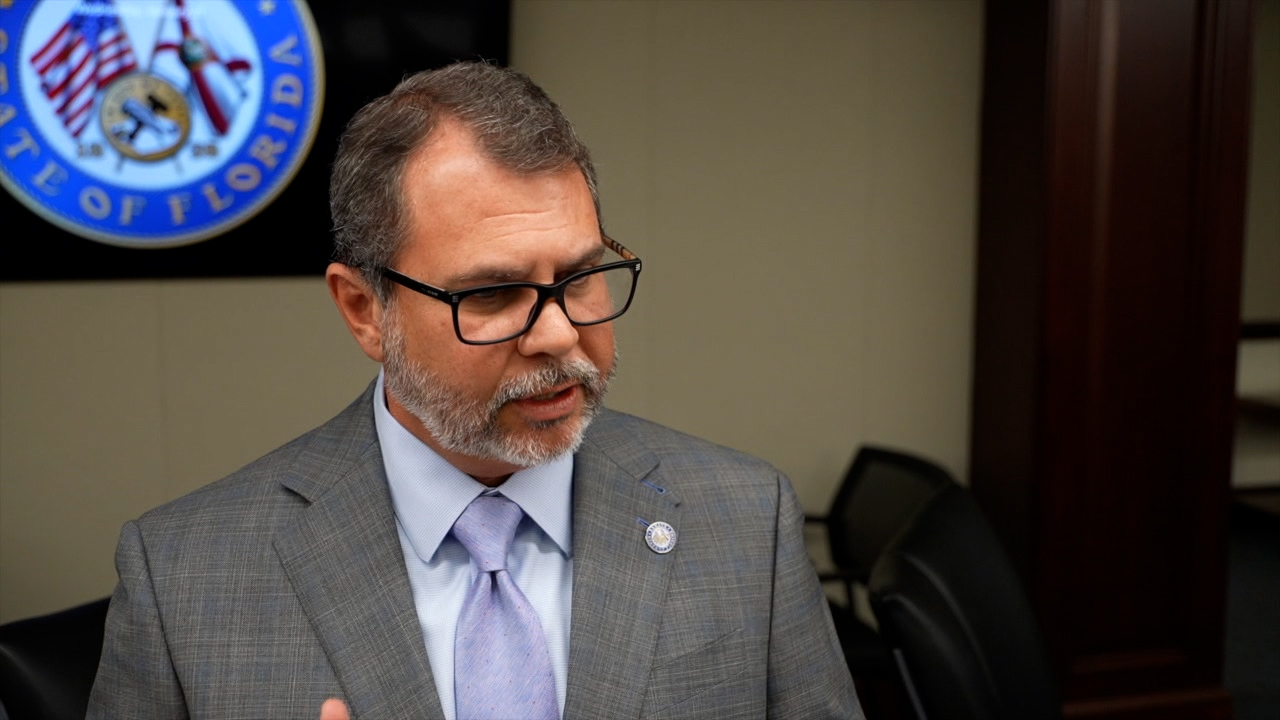


TALLAHASSEE, Fla. — Florida lawmakers are moving forward with a sweeping proposal aimed at regulating artificial intelligence, advancing what supporters call an “AI Bill of Rights. It’s a 2026 goal of Governor Ron DeSantis, who warned last week in his State of the State address that the rapidly evolving technology poses real risks, particularly for children.
The bill cleared its first Senate committee Wednesday with bipartisan support, as Republicans, Democrats, and the governor alike argue state leaders cannot wait for Congress to act.
“We can never relieve ourselves of our responsibilities to think for ourselves,” DeSantis said last Tuesday.
WATCH: Forrest's full report
The legislation, sponsored by Sen. Tom Leek, R-St. Augustine would establish new rules governing how artificial intelligence can be used by both government agencies and private companies. Leek says the proposal is intentionally narrow, focusing on privacy and child protection rather than broad regulation of the technology itself.
“It is purposely and deliberately targeted at those protections, and not the world, the universe of things that could be done,” Leek told lawmakers.
Among its key provisions, the bill would bar state and local governments from contracting with AI companies tied to certain foreign countries, restrict companies from selling or sharing personal data unless it is stripped of identifying information, and add new protections for minors using AI-powered chatbots. Those protections would require parental consent and oversight for certain “companion” chatbots designed to simulate human interaction.
The bill would also limit the use of AI to generate or exploit a person’s name, image, or likeness without consent.
Lawmakers on both sides of the aisle described the proposal as a necessary first step.
“I think that this AI Bill of Rights is a strong and a necessary first step,” said Sen. Carlos Guillermo Smith, D-Orlando. “It recognizes that innovation and individual rights can go hand-in-hand, really.
The measure also drew support from a wide range of outside groups, including family advocacy organizations and labor unions, who warned the technology is moving faster than existing safeguards.
“The AI industry is a highly unregulated industry that really needs guardrails to be put in place,” said John Labriola of the Christian Family Coalition. “The AI industry has been responsible for some very serious incidents recently.”
Labor leaders echoed that concern, calling AI a concern for working-class Americans.
“We see it as the next industrial revolution, and we want to make sure that there is a regulatory framework in place to take care of the workers,” said Dr. Rich Templin of the AFL-CIO.
Still, the bill is not without critics. Some opponents cautioned that parental access requirements could push platforms to collect more identity data, potentially creating new privacy and security risks. Others argued the proposal does not go far enough to address broader concerns such as workplace automation, discrimination, or transparency in AI decision-making.
The debate also comes as President Donald Trump pushes for a national approach to AI regulation, warning that a patchwork of state laws could slow innovation and investment. Trump recently signed an executive order to shape federal AI policy.
“If they had to get 50 different approvals from 50 different states, you could forget it,” Trump said last month. “Because it’s not possible to do.”
Leek says his bill does not conflict with that goal, framing it instead as a stopgap until Congress acts.
“I think President Trump is right,” Leek said. “This is one of those issues on which we probably need to have a national standard. I just don’t think we can wait on Congress to act… You’re talking about protecting children.”
The bill still faces several more committee stops in the Senate, and a companion measure must move through the House. Leek has indicated changes to definitions and language are likely, but only if they strengthen the bill’s protections.
If the proposal clears both chambers, it is expected to land on the governor’s desk, where DeSantis is likely to sign it into law.
Share Your Story with Forrest
Capitol Reporter Forrest Saunders is dedicated to sharing your voice with political leaders throughout the state. He works to hold our elected leaders accountable and amplify your concerns. Let Forrest know about the issues you want state leaders to focus on by emailing him.
.

'Left in the dark': Families say they weren't notified during Aviata evacuation
Tampa Bay 28 heard from multiple families with similar questions and concerns about the lack of communication.
