



TALLAHASSEE, Fla. — A Florida law designed to keep people at a distance from first responders is heading to Washington, and reopening a familiar debate over public safety and First Amendment rights.
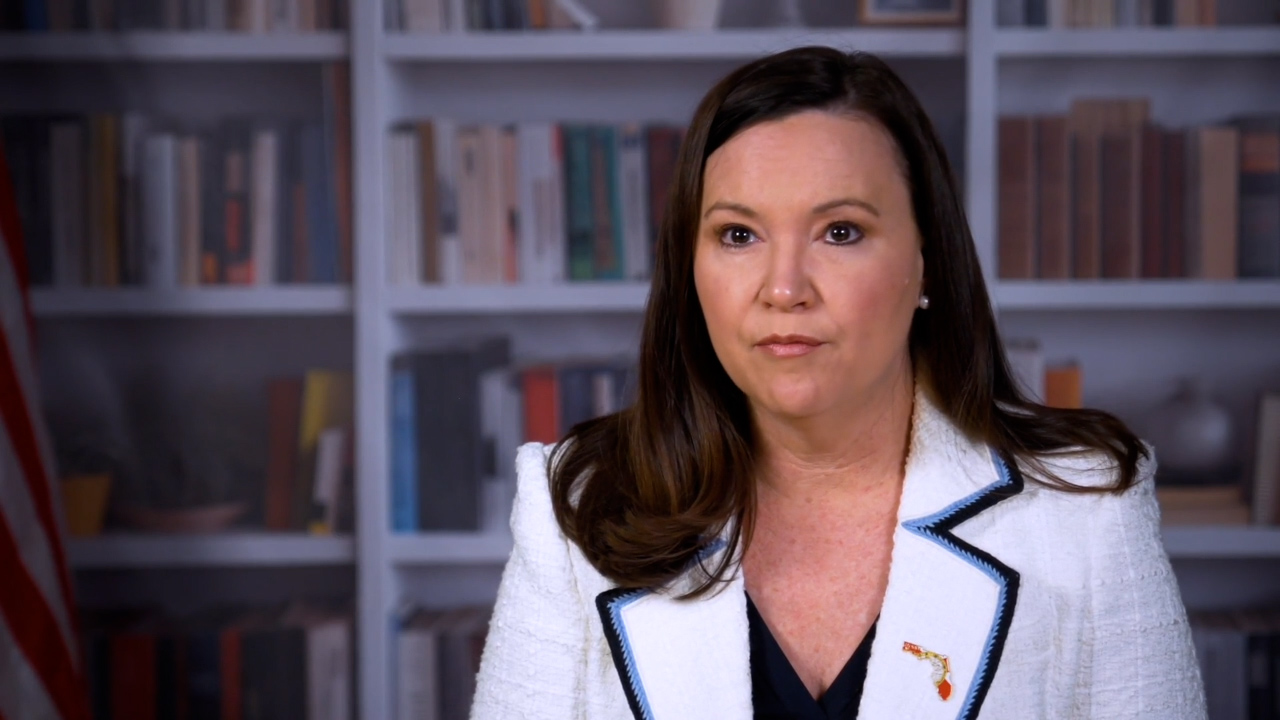
U.S. Sen. Ashley Moody has introduced the Halo Act, a bill that would make it a federal crime to knowingly approach or remain within 25 feet of a federal immigration enforcement officer after being told to stay back— if the intent is to interfere with the officer’s work, threaten physical harm, or harass them.
WATCH: Florida-style ‘Halo Act’ heads to Capitol Hill amid ICE enforcement tensions
Moody says the proposal is a response to increasingly volatile scenes involving immigration arrests across the country.
“You can watch your television pretty much any day of the week right now and see the dangerous situations that some of our federal officers are being placed in,” Moody said. “This is about protecting the men and women who are carrying out very dangerous duties.”
Under the bill, violations could be punished by a fine, up to five years in prison, or both. The legislation is modeled after Florida’s state-level Halo Law, which lawmakers approved last year after weeks of heated debate and which took effect in January.
That state law drew criticism from Democrats and civil rights advocates who warned it could be used to discourage citizens from recording police activity — something courts have repeatedly said is protected speech.
“The ability of citizens to document and witness events as they unfold is a crucial aspect of our democratic society,” said Rep. Angie Nixon, D-Jacksonville, during debate on the Florida bill. “If a picture is worth a thousand words, how much more is video?”
Other lawmakers questioned how the law would be enforced in practice, including how officers would determine whether someone crossed the 25-foot boundary.
“If they are arrested for breaching the 25 feet, who’s measuring it?” asked Rep. Ashley Gantt, D-Miami. “How do we know?”
The concept behind the law came from Miami Republican Rep. Alex Rizo, who has said he and others first sketched out the idea on a napkin at a pizza shop — drawing a stick figure surrounded by a circle meant to represent a protective “halo.”
Supporters argue the buffer zone gives officers room to safely operate during tense arrests. Critics say extending the idea to federal immigration enforcement could amplify existing concerns about racial profiling, ICE raids, and the treatment of immigrant communities.
Moody has pushed back on claims that the bill would infringe on free speech or the right to record police.
“No one is asking people not to exercise their First Amendment rights,” she said. “We just want to remove unnecessary dangers while officers are already facing very dangerous situations.”
The Halo Act has several co-sponsors, including U.S. Sen. Rick Scott, and now heads to the Senate Judiciary Committee for consideration. Its path forward remains uncertain, especially with Congress set to leave Washington for the holidays and return in January.
Share Your Story with Forrest
Capitol Reporter Forrest Saunders is dedicated to sharing your voice with political leaders throughout the state. He works to hold our elected leaders accountable and amplify your concerns. Let Forrest know about the issues you want state leaders to focus on.
.

Body cam video, court records reveal years of warning signs before Hillsborough deputies were shot
Christopher Dmuchowski wounded 2 deputies who responded to a domestic violence call in Ruskin. Records show warning signs dating back years.
