


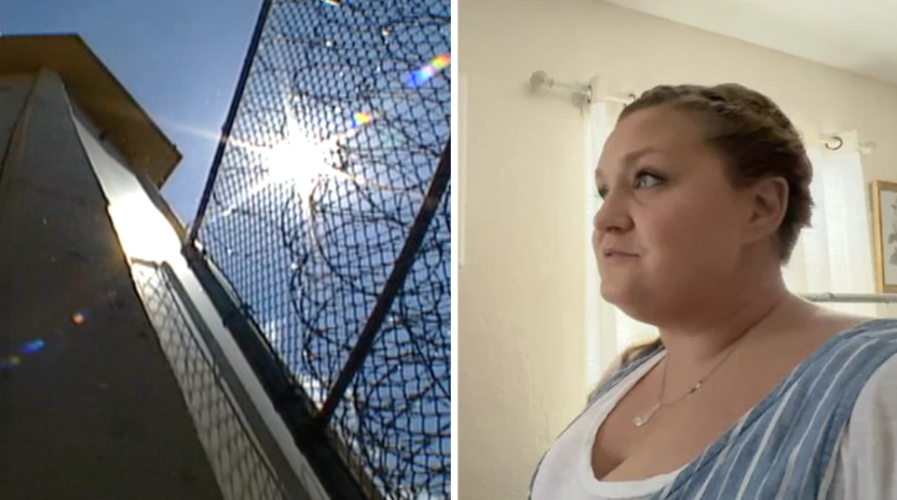


TAMPA, Fla. — Standing in front of her air conditioning unit, adjusting the temperature to make her home even cooler, Danielle Horst said, "This is heaven to me."
Heaven, after being released nearly two years ago from what Horst said felt like hell.
WATCH I-Team reporter Kylie McGivern talk to anchor Paul LaGrone about the push for an air conditioning pilot program in Fla. state prisons
"Any time I’m in heat? I go right back to being there," Horst said. “Right back to the torture of what it was.”
I-Team Series | Crisis in Corrections
Heat is a trigger for Horst, who spent three years as a prisoner inside Lowell Correctional Institution.

"It wasn't abnormal for you to walk by and have a girl laid out on the on the ground and medical being called because they've done passed out from the heat," Horst told I-Team Reporter Kylie McGivern, who first began reporting on extreme heat in prisons more than four years ago.
Mock prison cell meant to raise awareness of what life is like locked up
Horst survived. But a lawsuit the Florida Justice Institute (FJI) filed in 2024 against the Florida Department of Corrections alleges extreme heat has contributed to recent deaths at Dade Correctional Institution. The lawsuit listed details surrounding four inmate deaths. An expert retained by FJI to evaluate the heat index at the facility documented indexes topping 119 degrees.
Horst said, at Lowell, she witnessed a captain and sergeants use thermometer guns to check the temperature inside her dorm.
"They would hit the thermometer and gauge it, and I know the dorm that I was in was upwards of 130 degrees," Horst said. "It was 130 degrees inside that dorm."
Horst said she worked in the medical unit for a short time and saw the toll the heat took on inmates.
"We had at least one or two that were shipped out to the hospital for heat exhaustion or heat related issues, um, in just the short month or two that I was working in medical," Horst said.
With the stakes that high, Horst said people were desperate for relief.
"Girls would actually get into fights, do whatever they could to go to confinement to get out of the heat," Horst said.
"You would literally figure a reason to go to medical so that way, you know, you, you had a little, a little comfort from the heat, you know, a little few minutes out of it and stuff and they would get you in trouble. That would get you in trouble. You would get CC's for it and a CC is an automatic three days where they take off your gain time. So it's literally down to, well, do I want to go home three days earlier? Or do I want relief from the heat for a few minutes?" Horst said.
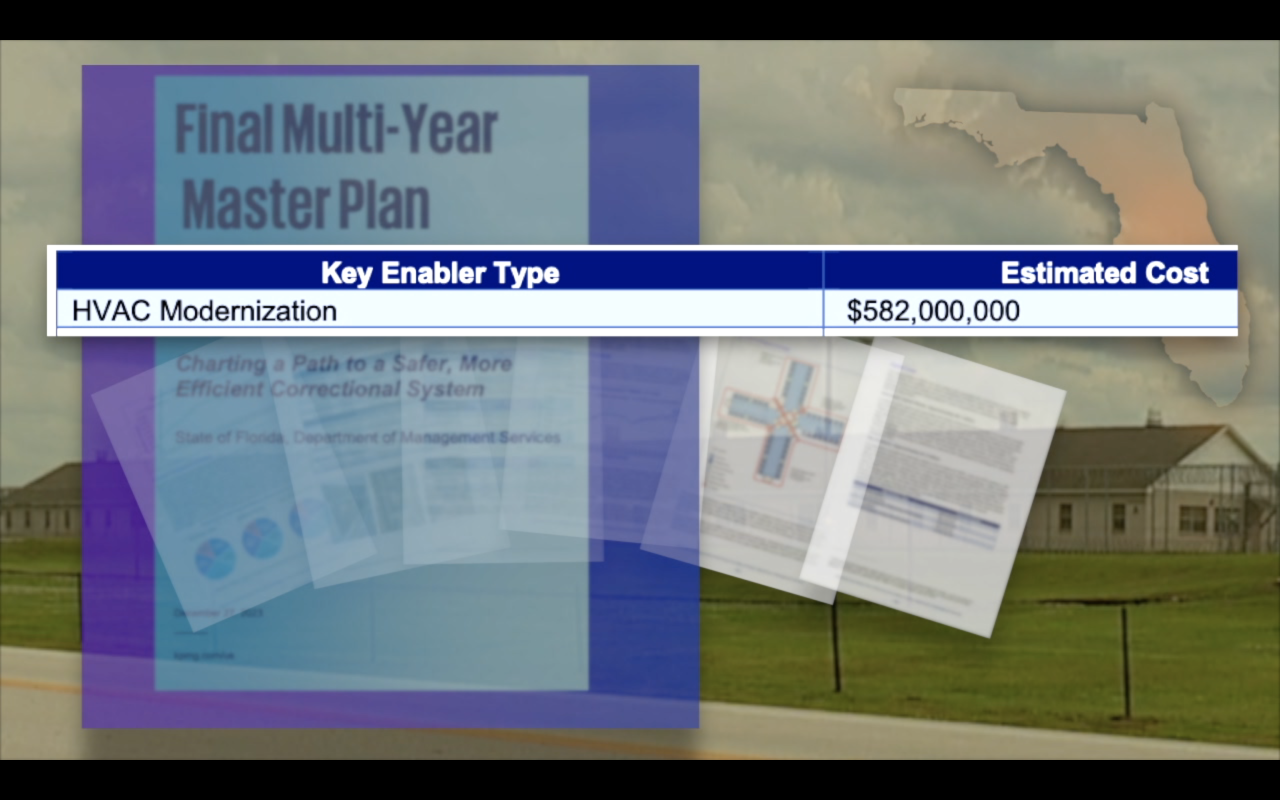
A 20-year master plan released in 2023 estimated that installing HVAC systems in all 515 of the state's unconditioned housing units would cost $582 million.
Connie Edson has been advocating for relief in Florida prisons since 2020.
"They're never going to put millions of dollars into 30, 40, 50-year-old facilities," Edson said. "But the point is we still have a problem."
Edson said she is motivated to keep pushing for change even though her loved one is no longer incarcerated.
"Even though my loved one is out, I can't imagine anyone living in something like that with no air," Edson said.
Record-high temperatures prompt 'heat crisis' in Florida prisons without air conditioning
Bill aims to require air conditioning at every Florida state prison
Edson said she spoke with someone who is currently incarcerated about the conditions.
"He's like, Connie, it's like going in a black car and you can't put the air on. There's no door, it's a steel door, the windows don't open and there's no fan," Edson said.
Edson is proposing a more cost-effective solution for facilities without existing ductwork: split mini air units.
"I have a general contractor that I've been working with and he told me that the split mini air unit is the only solution for these facilities that have no existing ductwork," Edson said.
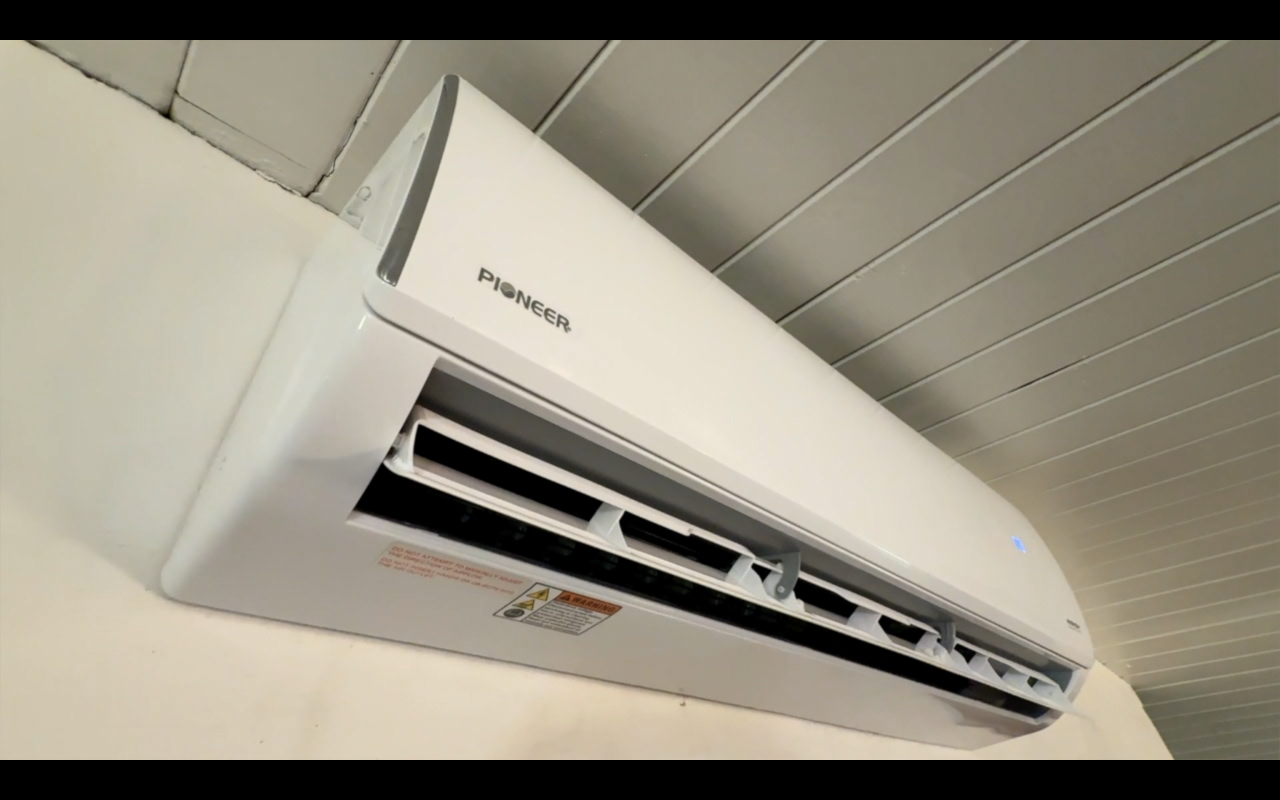
Edson previously met with Secretary Dixon and donated a split mini air unit to a prison dog program at Lowell.
"They put walls up and they now have an air conditioned dog program," Edson said.
Edson is now pushing for an air conditioning pilot program at three state prisons. The program would target sleeping dorms, education dorms, dog program areas, and two-man cells. She has gathered more tha 150 letters of support for the initiative.
"Letters from the staff, correctional officers, incarcerated, loved ones," Edson said.
Excerpts from letters written by corrections employees highlight the dangers of the heat.
One employee wrote, "This is not just uncomfortable — it is dangerous... Tempers shorten. The risk of incidents increases. Heat affects decision-making, patience, and overall safety for both staff and inmates... At a time when Florida prisons are already facing staff shortages, working in these extreme temperatures only makes recruitment and retention worse."

Another letter stated, "Heat-related incidents require additional staff response, medical attention, and sometimes outside transport. Each of these situations impacts manpower, overtime costs, and security coverage."
“Hearing people's stories, I just can't leave anybody in there in that situation without trying to help them," Edson said.
Florida Department of Corrections Full Statement:
The Florida Department of Corrections (FDC) has air-conditioned housing units serving the most vulnerable inmate populations, including the infirmed, mentally ill, pregnant, and geriatric.
Newly constructed institutions are designed with air conditioning throughout. However, many existing FDC facilities were built before air conditioning was commonplace and were instead designed to maximize natural ventilation and airflow to help with cooling.
In all other housing units, various climate control measures are used to reduce heat, including industrial fans, exhaust systems that promote high air exchange, and ceiling or wall-mounted circulation fans. In addition, all housing units contain refrigerated water fountains to provide a source of cool water for the inmate population, and uniform restrictions have been temporarily restricted, permitting inmates to dress in Class C uniforms.
It is also important to note, every institution is audited and compliant with standards from the American Correctional Association regarding ventilation and HVAC systems.
Additionally, FDC staff is informed on best practices to avoid heat exhaustion and heat stroke. Advisories and informational materials are distributed to ensure that staff can recognize the symptoms of heat stroke and heat exhaustion and provide treatment. Medical staff provides instruction during the initial reception process and during each institutional orientation to educate inmates on ways to prevent heat-related illness.
Share Your Story with Kylie

Kylie McGivern works tirelessly to get results for the people of Tampa Bay. Her reporting has exposed flaws in Florida’s corrections system and unemployment process. Reach out to Kylie and our I-Team if you need help holding state leaders accountable.
.

Bradenton community responds after 20-year-old volleyball star dies from disease that affects 2 in a million
The 20-year-old IMG Academy volleyball star and Under Armour All-American died Sept. 16 after a three-month battle with the rare blood disorder — even though doctors had found her a 100% bone marrow match, her mother, Tanya Mack tells Tampa Bay 28 reporter Haley Zarcone.