


TALLAHASSEE, Fla. — Gov. Ron DeSantis has officially delayed Florida’s special session on congressional redistricting, moving it from April 20-24 to April 28-May 1 and expanding the agenda to include artificial intelligence and legislation similar to this year’s “medical freedom” bill.
The move puts in writing what DeSantis hinted at a day earlier, when he said the session might shift slightly to better line up with other unfinished work in Tallahassee.
“I haven’t made any decisions on that,” DeSantis said. But, he added, “maybe you do a few days or a week, but not more than that.”
His amended proclamation keeps redistricting at the center of the session, but also adds an AI package and a health measure modeled on Senate Bill 1756. The order says lawmakers will consider an “AI Bill of Rights for Floridians,” public-records exemptions tied to AI investigations, and medical-freedom legislation similar to the Senate bill that passed earlier this year.
New guidance from Senate President Ben Albritton offers a clearer picture of how the special session is expected to unfold. In a memo to senators Wednesday, Albritton said the Senate is “not drafting or producing a map” ahead of the session and instead expects a proposal to come from the Governor’s Office, similar to the process used during the 2022 special session on congressional reapportionment.
Albritton said that once the Senate receives a proposal from the governor, Senate President-designate Don Gaetz intends to file it as a Senate bill for consideration during the special session. Albritton also said he expects the Governor’s Office to present its proposal to the Senate Rules Committee on April 28.
Beyond the proposed redraw — in simple terms — the AI bill would put new rules on how some AI systems are used in Florida. The Senate bill from last session says government agencies and local governments would face limits on contracting for certain AI tools, chatbot platforms would need parental consent before minors could hold accounts and bot operators would have to regularly tell users they are interacting with a bot.
The medical-freedom bill, Senate Bill 1756, would loosen some vaccine-related rules. A Senate analysis says it would create a conscience-based exemption from school immunization requirements, allow ivermectin to be sold behind the counter without a prescription in some cases, and require parents to receive specific information before a vaccine is given to a minor. The bill passed the Senate on March 9 but stalled in the House.
The session delay comes as DeSantis keeps pushing for a rare mid-decade redraw of Florida’s congressional map, a fight with potentially major consequences for control of the U.S. House. He has argued Florida should revisit the map because of population changes and legal uncertainty. That’s while supporters of a new round of redistricting, like U.S. Rep. Byron Donalds (who is running for governor) have made a more openly political case.
“You have California and Virginia responding to Texas,” Donalds said Tuesday. “And we’ve been watching all this kind of happen in Florida, and because of what now has been done in Virginia, now, Florida needs to respond.”
But the delay also highlights the uncertainty around the effort. No draft maps have been released publicly, and Democrats say the lack of transparency shows the push is shaky both politically and legally.
At a Wednesday press conference, Florida Democratic Party Chair Nikki Fried said Republicans were “infighting about whether to execute an illegal gerrymandering scheme designed to protect their own power.” She also said “drawing district lines in the middle of a decade for partisan political purposes is illegal, expensive, unnecessary and anti democratic.”
State Sen. Carlos Guillermo Smith, an Orlando Democrat, said the changing explanations from the governor’s side showed the administration was scrambling.
“The reason they’re hedging is because they need more time to find new excuses to make what’s happening look less illegal,” he said. He added, “The more they hedge and delay, the less likely it is that we actually go through with this illegal map rigging scheme.”
Democrats also tied the redistricting fight to the Legislature’s failure to finish a state budget during the regular 60-day session.
“We have one constitutional duty in the legislature, and that is to pass a balanced budget,” said State Rep. Christine Hunschofsky. She argued lawmakers should be focused on affordability instead of another special-session fight.
Behind the scenes, hesitation has not been limited to Democrats. Some Republicans, including members of Florida’s congressional delegation, have privately worried that a redraw meant to strengthen the GOP could instead weaken current districts and expose incumbents in a tougher political environment. Those concerns have grown after recent Democratic overperformances in Florida special elections, fueling fears that a mid-decade redraw could create new risks instead of locking in gains.
In prior reporting, one Republican member of Congress, speaking on background, described the effort this way: “DeSantis doesn’t care about us having a majority — DeSantis cares about DeSantis.”
For now, no new congressional map has been made public. What is clear is that a session once set to begin next week has now been delayed, broadened and pulled deeper into an already volatile political fight.
Share Your Story with Forrest
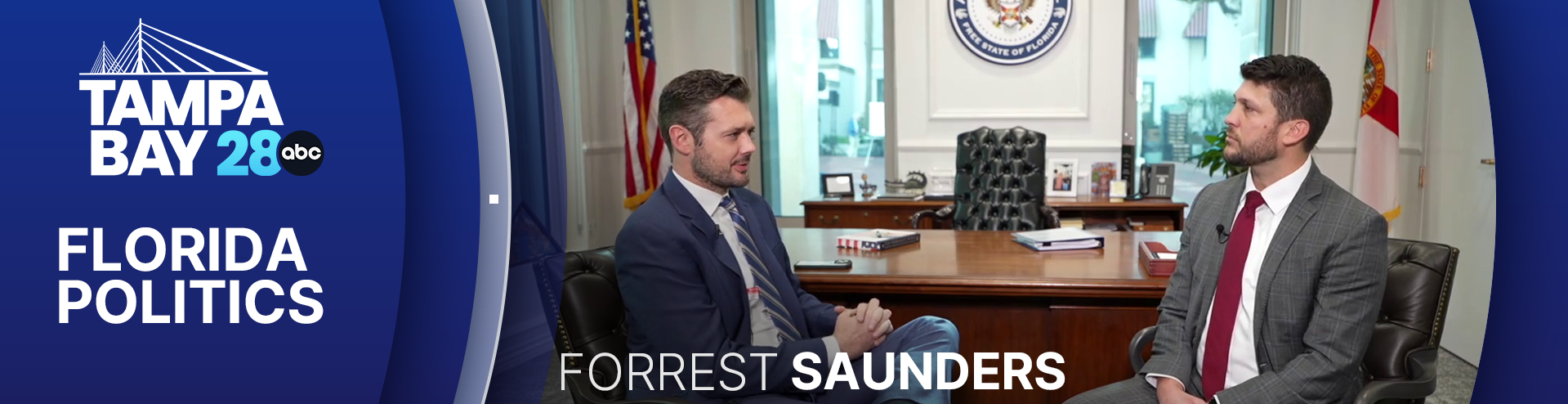
Capitol Reporter Forrest Saunders is dedicated to sharing your voice with political leaders throughout the state. He works to hold our elected leaders accountable and amplify your concerns. Let Forrest know about the issues you want state leaders to focus on.
.

Pasco County physician reunites with medical team after widowmaker heart attack
A Pasco County internal medicine physician was reunited Tuesday with the medical team who saved her life after she suffered a widowmaker heart attack nearly two years ago.
