


TALLAHASSEE, Fla. — Florida’s first major Republican debate for governor was dominated by the candidate who skipped it.
Former House Speaker Paul Renner, Lt. Gov. Jay Collins and businessman James Fishback took the stage Thursday night, each trying to prove he is the strongest alternative to U.S. Rep. Byron Donalds, the Trump-backed frontrunner. Donalds mentioned by name at least 60 times throughout the two-hour event.
Moderator Patrick Bet-David opened by calling Donalds “the elephant not in the room.” He said he had urged Donalds to attend, but Donalds’ position was that he has raised roughly $100 million, is polling between “48% to 58%,” and would only consider debating once another candidate hits double digits. “Till then, I’m not showing up,” Bet-David said, summarizing Donalds’ response.
Collins hit Donalds for refusing to debate, saying, “We don’t do kings in the United States of America. We sure don’t do them in Florida.” He added that if Donalds wants the governor’s mansion, “you’ve got to grow a spine, you’ve got to stand up, and you’ve got to fight for the people of Florida.”
Renner called Donalds’ absence disrespectful. “Every voter in this audience, everyone watching, everyone in the state deserves a debate,” he said. Renner argued Donalds is avoiding the stage because he cannot prove he is better qualified.
Fishback contrasted Donalds’ fundraising with his own ground game. Donalds may have made history raising money, Fishback said, but “our campaign made history by being the first campaign in Florida running for governor to visit all 67 counties.”
Donalds told WPLG previously, “If the race was close, and we were battling it out, we would be debating right now.”
The debate itself centered on affordability, property taxes, insurance and hyperscale data centers. They’re all issues the candidates used to argue they would carry forward Gov. Ron DeSantis’ conservative tenure.
On property taxes, Fishback went furthest, saying, “I don’t support relieving your property taxes. I don’t support reforming your property taxes. I support one thing, and one thing only, and that is completely and totally abolishing property taxes in the state of Florida.” He promised to take a “chainsaw” to local government spending.
Collins said cities and counties have “a spending problem” and need more accountability. Renner said the current property-tax amendment does not go far enough, pitching his own “Florida First” plan to eliminate most homestead property taxes while shifting more burden to tourists, out-of-state investors and large corporations.
The sharpest clash came over data centers. Fishback promised to “reject and remove every experimental data center” in Florida. Renner said he would call a special session to stop hyperscale projects. Collins urged local control with state “guardrails,” prompting Fishback to mock his answer as a “word salad.”
That exchange captured the bigger problem for the field: the anti-Donalds lane is still split.
Renner leaned on his record as House Speaker. Collins leaned on his military service and role in the DeSantis administration. Fishback leaned on outsider energy and sharper attacks. All three made the case against Donalds, but also against each other.
So does the debate matter? Maybe, but only if one candidate can turn it into momentum.
The debate gave Renner, Collins and Fishback clips, contrasts and a chance to pressure Donalds over skipping the stage. But with Donalds still holding the polling, fundraising and endorsement advantage, one debate without him is unlikely to reset the race by itself.
For now, Thursday night looked less like a campaign-changing showdown and more like an audition, with three candidates trying to prove which one deserves a one-on-one fight with the frontrunner.
Share Your Story with Forrest
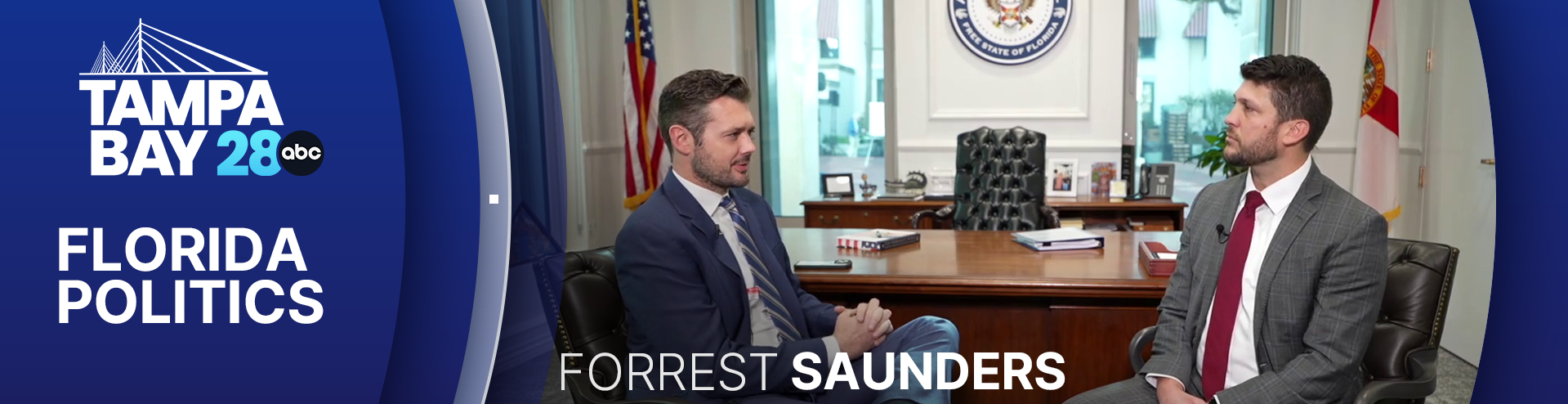
Capitol Reporter Forrest Saunders is dedicated to sharing your voice with political leaders throughout the state. He works to hold our elected leaders accountable and amplify your concerns. Let Forrest know about the issues you want state leaders to focus on.
.
Bradenton community responds after 20-year-old volleyball star dies from disease that affects 2 in a million
The 20-year-old IMG Academy volleyball star and Under Armour All-American died Sept. 16 after a three-month battle with the rare blood disorder — even though doctors had found her a 100% bone marrow match, her mother, Tanya Mack tells Tampa Bay 28 reporter Haley Zarcone.
