



TALLAHASSEE, Fla. — Gov. Ron DeSantis has likely wrapped his final regular bill-signing season, closing one of his last major opportunities to shape Florida law from the governor’s desk.
With the new fiscal year underway and DeSantis term-limited from seeking another consecutive term, the regular lawmaking window for his administration is essentially closed — barring a future special session, emergency response or other extraordinary action. Florida’s Constitution bars a governor who has served more than six years across two consecutive terms from being elected to the succeeding term.
WATCH: DeSantis closes final bill-signing season with Florida lawbook transformed
A review of regular-session action shows the scale of DeSantis’ eight years in office: 2,037 regular-session bills signed since 2019, along with 66 regular-session vetoes. His busiest year came in 2023, when 341 regular-session bills became law. His lightest was his first year, 2019, with 189.
Those laws reshaped major parts of Florida life.
Under DeSantis, Florida expanded school choice, with the governor signing HB 1 in 2023 to eliminate income restrictions and open scholarship programs more broadly to students across the state. He also signed new abortion restrictions, including Florida’s six-week ban, after first approving a 15-week restriction earlier in his tenure.
The list goes on: permitless carry, expanded immigration enforcement, COVID-era limits on vaccine and mask mandates, new election laws, restrictions on diversity, equity and inclusion programs, and major property insurance changes. DeSantis also signed 2026 legislation giving Florida new authority tied to “terrorist organization” designations and additional limits on local DEI programs, continuing a broader conservative policy push in his final years in office.
That agenda became central to the national brand DeSantis promoted as the “Florida blueprint” — a fast-moving conservative policy model powered by Republican control of the Legislature and the governor’s office.
But DeSantis’ legacy is not only defined by what he signed.
He also used his veto power to block dozens of bills. In 2022, he vetoed a net-metering bill that critics said would have hurt rooftop solar customer incentives. That same year, DeSantis vetoed an alimony overhaul, citing concerns about retroactivity.
In 2024, he vetoed hemp restrictions, arguing the bill would impose heavy regulatory burdens on small businesses. And in 2026, he vetoed a sovereign immunity bill that would have increased lawsuit limits against state and local government entities.
Then there is the budget.
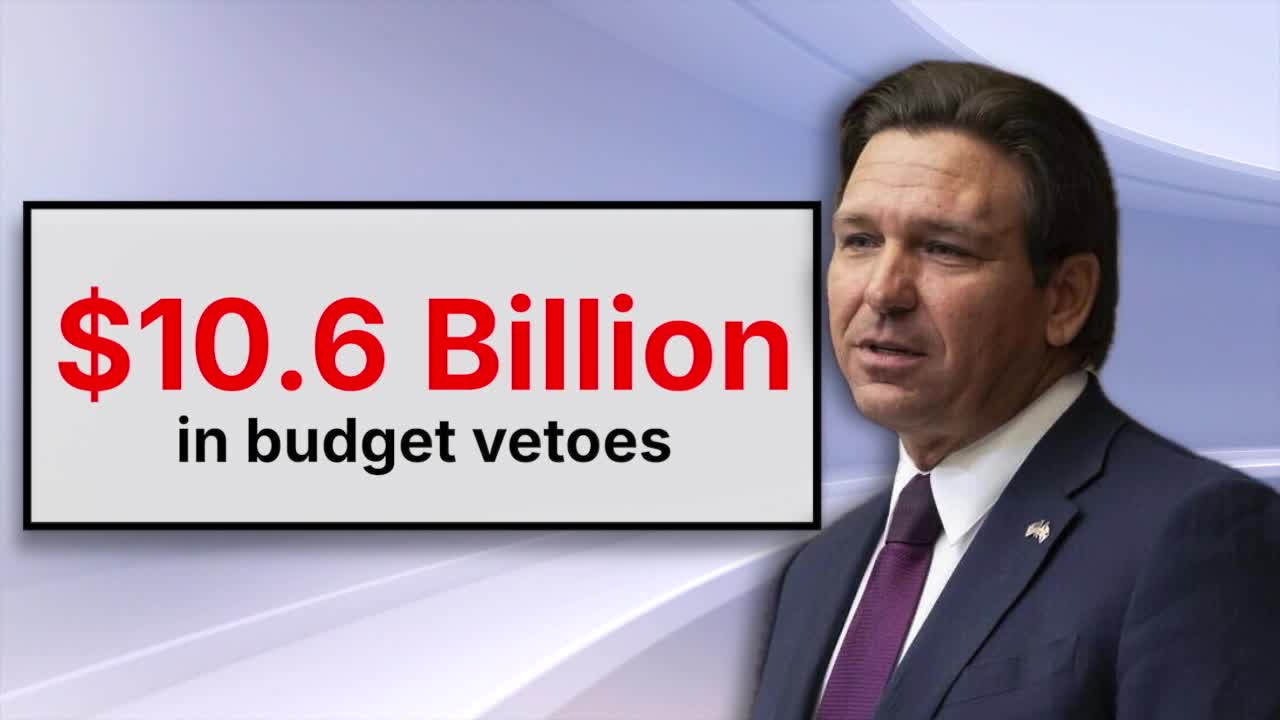
Over eight years, DeSantis vetoed roughly $10.6 billion in spending, using Florida’s line-item veto power to cut local projects, trim legislative priorities and reinforce his image as a fiscal conservative.
His final budget signing continued that pattern. In June, DeSantis signed a $117.6 billion budget for the 2026-27 fiscal year after nearly $810 million in line-item vetoes, with his office calling it the fourth straight year of declining state spending.
Democrats and local officials have often criticized those cuts, arguing they hit community projects, infrastructure needs and social services. DeSantis and his allies have defended them as necessary discipline in a fast-growing state budget.
The bottom line: after more than 2,000 regular-session bills signed, 66 regular-session vetoes and billions cut from state spending, DeSantis leaves behind a Florida lawbook that looks far different than the one he inherited in 2019.
The next governor will decide how much of that blueprint gets continued, revised or challenged.
Share Your Story with Forrest

Capitol Reporter Forrest Saunders is dedicated to sharing your voice with political leaders throughout the state. He works to hold our elected leaders accountable and amplify your concerns. Let Forrest know about the issues you want state leaders to focus on.
.

'My heart breaks': Woman describes helping injured students after deadly school bus crash in Polk County
A woman on her way to work Monday morning found herself helping injured Winter Haven High School students after a school bus crash that killed two people.
