

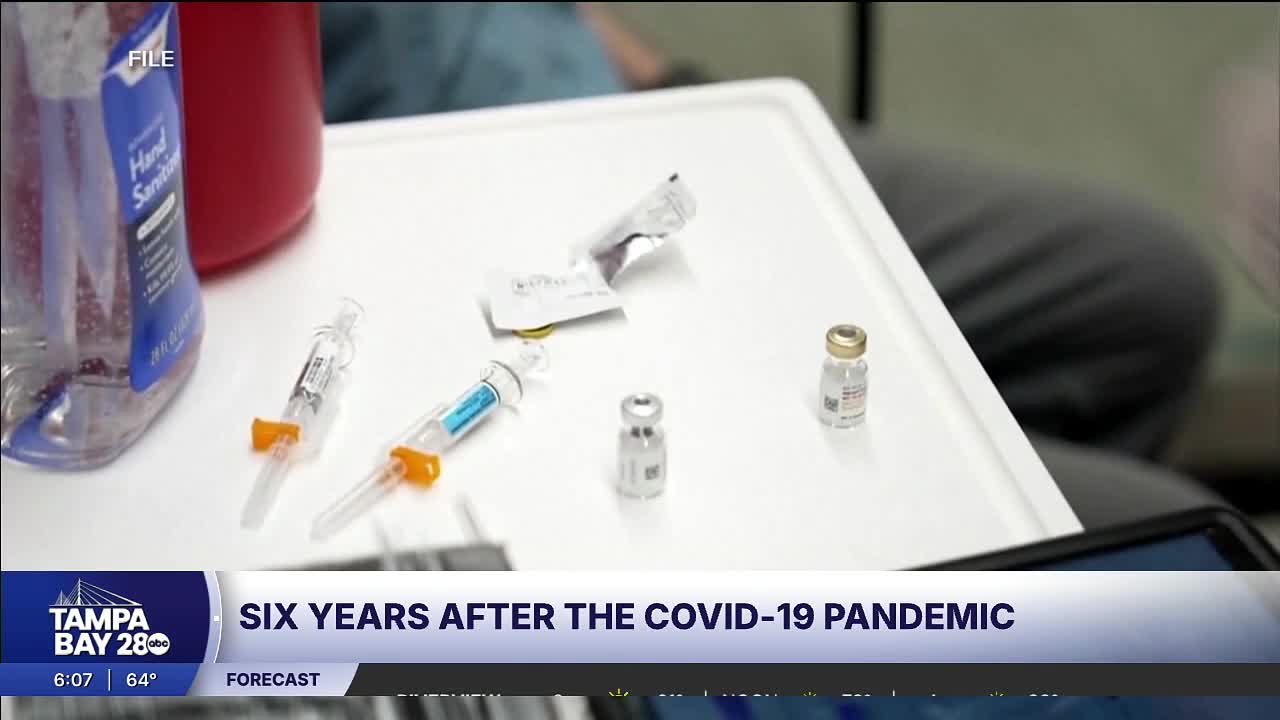


TAMPA, Fla. — The CDC reported the first laboratory-confirmed COVID-19 case in the United States on Jan. 20, 2020.
The virus then started to spread across the country, with Florida reporting its first case in March of 2020.
WATCH full report by Larissa Scott
What followed were lockdowns, masks, and social distancing.
The cases were severe, hospitalizations skyrocketed, and sadly, many people died.
“Just the ERs and the Urgent Cares were inundated with those cases,” said Dr. John Morrison, a family medicine physician with AdventHealth.
“As we know, COVID was one of the leading causes of death for quite a while,” said Dr. Jason Salemi, a professor of epidemiology and interim chair of the Department of Epidemiology at USF.
About 1.2 million COVID-19-related deaths have been reported in the U.S.
“When you look at those numbers… we certainly didn’t overreact to the situation that we were facing,” said Salemi.
“With the onset of COVID, we all had to learn, right? So it was a new virus, something we hadn’t seen before, and we had to learn quickly,” said Morrison.
We saw major shifts in variants that increased how contagious the virus became.
Experts told Tampa Bay 28 that the height of all of this happened between 2020 and 2023.
Since then, things have drastically changed for the better.
“Right now, COVID accounts for about .3% of deaths. So one in every 333 deaths is due to COVID, and so what that means is, although COVID hasn’t disappeared, it tells us we’ve moved from a crisis phase to a much more manageable risk,” said Salemi.
That’s thanks to vaccinations, herd immunity, and better clinical care as doctors learned more about COVID-19.
Today, tracking has declined, as cases have decreased.
We currently don’t have the most accurate picture of the most recent virus data, but all signs indicate to it being well under control.
“If we use wastewater surveillance data, test positivity, emergency department visits, all of those again indicate minimal community circulation right now,” said Salemi.
Health officials believe the virus is now in a more stable, endemic state, meaning the risk for severity for younger, healthier people is low.
However, Morrison wants to remind people that the virus hasn’t gone away, especially for our vulnerable populations.
“There are different aspects of the virus, especially what I’ve seen in the last 6,7 months. Things like sore throat, things like a little bit more fatigue,” said Morrison.
“We still spike around September and January, even last year and January of this year, the number of cases spiked still, so it’s still with us,” he added.
Overall, experts believe as long as nothing unexpected happens, they feel confident about the future of COVID-19.
“We’re in a much, much better place at the 6-year anniversary than obviously we’ve been in the past,” said Salemi.
Doctors still recommend vaccinations for our vulnerable populations.
“Older adults, the immunocompromised, diabetics, folks with COPD respiratory illnesses, folks with cancer being treated, or even kidney disease, 100% I think they should get the vaccine,” said Morrison.
Share Your Story with Larissa
Larissa Scott stays on top of everything related to education and public health for Tampa Bay 28. If you have a story you want to share, send Larissa a message below.
.
Bradenton community responds after 20-year-old volleyball star dies from disease that affects 2 in a million
The 20-year-old IMG Academy volleyball star and Under Armour All-American died Sept. 16 after a three-month battle with the rare blood disorder — even though doctors had found her a 100% bone marrow match, her mother, Tanya Mack tells Tampa Bay 28 reporter Haley Zarcone.
