



TAMPA, Fla. (WFTS) — When the Hillsborough Recovery Coalition hands someone a box of Narcan, the organization wants that person to leave with more than a medication that could reverse an opioid overdose.
Each box also includes a sticker and QR code connecting people to recovery resources.
Watch report from Jada Williams
It reflects the message peer specialists inside the Tampa organization want the community to understand: Narcan can help keep someone alive, but the work cannot end there.
"Narcan is a wonderful lifesaving tool, and it has saved so many people's lives and has given them a second chance or a third or a fourth chance," program director Monica Gonzalez said. "But at the end of the day, Narcan is not the solution."
Naloxone, commonly known by the brand name Narcan, can reverse an opioid overdose when it is administered in time. The Centers for Disease Control and Prevention says it works by blocking the effects of opioids and can restore breathing after an overdose involving substances such as fentanyl, heroin or prescription opioids. More than one dose may be needed when stronger opioids such as fentanyl are involved.
The medication is an emergency intervention, however, not a treatment for opioid use disorder.
Gonzalez said that distinction is at the center of the coalition's work.
"The solution is recovery support. The solution is prevention. The solution is connection," she said. "It's health services. It's housing. It's access to treatment."
Recovery support built on lived experience
The Hillsborough Recovery Coalition describes itself as a recovery community organization built by and for people in recovery. It supports people and families affected by substance use and co-occurring disorders through peer services, education, advocacy and community partnerships.
Inside its building, the organization hosts several pathways of recovery, including Alcoholics Anonymous, Narcotics Anonymous, SMART Recovery and All Recovery meetings. It also offers activities such as yoga, exercise classes, karaoke and other events intended to give people a safe place to connect.
A central part of its work is direct service. Peer specialists meet one-on-one with people, help them identify goals and connect them with resources while supporting the recovery path that works for the individual.
"There's more than one way to recover" is also part of the coalition's stated approach. Its peer-support program emphasizes helping people set their own goals, explore options and build plans that can evolve over time.
Vanessa Angilella is one of the peer specialists doing that work.
"Everybody who works here is a certified recovery peer specialist," Angilella said. "We are all in recovery ourselves."
In Florida, Certified Recovery Peer Specialist is a professional credential requiring documented lived experience and specialized preparation. The Florida Certification Board says full certification includes approved training, supervised work experience and passage of a certification exam.
Angilella said that shared experience changes the conversation between a peer specialist and someone seeking help.
"There is that special factor that, 'Hey, I've been in your shoes. I know the way out. Let me help you,'" she said. "There's just a very big impact when there's someone who's gone through the same thing, and they're there to help you."
A personal recovery journey becomes a new purpose
Angilella began her own recovery journey about two and a half years ago.
At the time, she was feeling burned out in the field where she worked. During a meeting, she shared what she was experiencing with a friend who suggested she consider working in recovery.
That friend introduced her to two people connected with the Hillsborough Recovery Coalition.
Angilella said they explained their vision for the organization and offered to place her in its training course. After completing the training, she was asked to join the team.
"I love what I do," she said.
For Angilella, the work is a chance to use the difficult parts of her own experience to support other people.
"Everything that I have been through led me to where I am today, good or bad," she said.
Taking Narcan and recovery education into the community
The coalition's work extends beyond its Tampa building.
Staff members attend community events, set up informational tables, distribute Narcan and talk with people about overdose prevention and available recovery options.
Angilella said outreach is one of the organization's primary responsibilities. It allows peer specialists to provide overdose education while also confronting the stigma that may keep people from seeking support.
"A lot of people don't reach out because of stigmas," she said.
Angilella said she has noticed that college-age people and other young adults are particularly willing to accept Narcan and learn how to use it.
"The younger generation is very, very open to learning the safeties and having and being prepared," she said.
She said some young people have encountered overdoses at parties or heard stories from people who have.
Rather than taking offense when the organization offers Narcan, Angilella said many understand why carrying it may matter.
"We used to be anonymous"
While Narcan distribution is one part of the coalition's mission, Gonzalez said another significant change is taking place in the way people talk about recovery.
Her recovery date is in November 2014. At that time, she said people were beginning to identify publicly as being in recovery, but a deeply private and anonymous culture still surrounded it.
Over the past decade, Gonzalez said that has shifted.
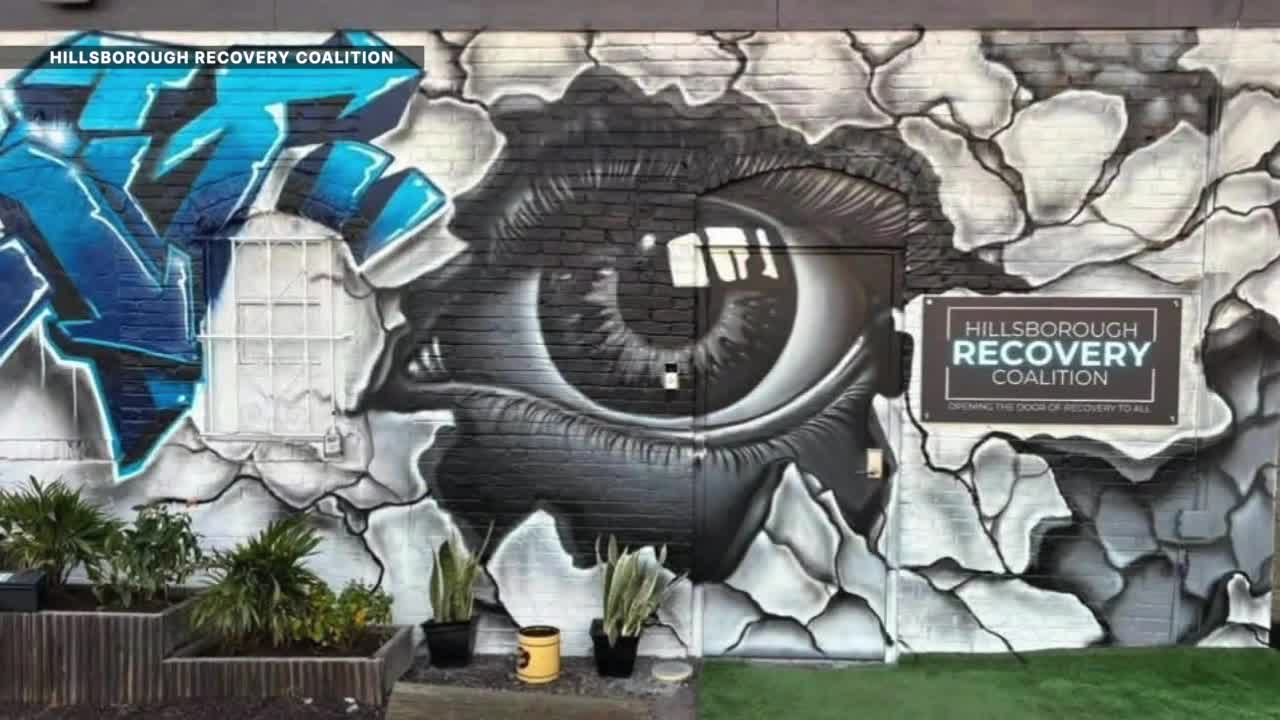
"We as people in recovery used to be anonymous," she said. "Now we have this building that has recovery on the back of it nice and big, and we're not anonymous anymore."
Gonzalez said people once carried a narrow image of what a person struggling with substance use was supposed to look like. That image could prevent people from recognizing their own struggles if their lives did not match the stereotype they had seen on television or elsewhere.
"I didn't identify with that," she said of the image she remembered seeing while growing up. "But I feel like there's some type of problem."
A person, she explained, can be struggling emotionally and experiencing serious consequences from substance use even if the outward signs do not fit that stereotype.
Today, Gonzalez said more people are willing to put their names and faces alongside their recovery stories.
"We are able to give the other side a face," she said.
Recovery as part of the larger community
Gonzalez believes the opioid epidemic affected public perceptions because people increasingly saw substance use touch families and communities across different circumstances.
She pointed to college students, older adults, people experiencing homelessness and people in prominent positions as examples of how substance use does not fit one identity or background.
That growing awareness, she said, helped more people understand that addiction and recovery are not limited to a single type of person.
"We're integrating recovery into the larger community," Gonzalez said. "So it's no longer the community and the recovery community. It's just the community, and recovery is a part of that community."
She acknowledged that the stigma has not disappeared.
Some people may not feel safe discussing their recovery publicly because of their employment, family circumstances or cultural expectations. But Gonzalez believes each person who speaks openly makes it easier for someone else to recognize that recovery is possible and ask for help.
The goal is not to pressure people into publicly sharing a private experience. It is to make sure people know they do not have to hide before seeking support.
Narcan opens the door to another chapter
Gonzalez said Narcan can give someone another chance after an overdose, but whether that person pursues recovery remains an individual decision.
She offered the example of someone who loses opioid tolerance during incarceration, returns to using the same amount after release and overdoses. Narcan may reverse that overdose, but it does not address the conditions that could lead to the cycle happening again.
That is where recovery support, health care, housing, prevention services, treatment access and relationships become critical, she said.
A person may not be ready to seek help immediately. Gonzalez said the coalition still wants that person to have access to information when the moment comes.
"If not, at least this resource is in your pocket," she said. "So when you're ready for it, if you're ready for it, it's there."
That is the purpose of placing recovery information directly on the Narcan boxes the organization distributes. The medication may help someone survive an overdose. The QR code can point that person toward what comes afterward.
"Narcan is going to help bring me to that next page," Gonzalez said. "And that next page can look like finding that support, finding healing."
For Gonzalez, there is no recovery journey without first preserving a person's life.
"At the end of the day, I can't get any of those things if I'm not alive," she said. "So that's where Narcan comes in."
Pasco County mom of 5 takes in 3 children left without food or power whose mother faces neglect charges
Jasmine Young, a mother of 5, opened her home to three neglected girls as their mother faces child neglect charges for leaving them without food, power or water.
