



ST. PETERSBURG, Fla. — As artificial intelligence accelerates the spread of misinformation, journalists rely on digital forensics, verification tools, and transparency to track, verify, and expose false content.
As News Literacy Week kicks off in partnership with Scripps News, Tampa Bay 28 reporter Michael Paluska sat down with fact-checkers at PolitiFact to learn how they combat misinformation in the age of AI.
WATCH AI is making fake news harder to spot: How journalists at PolitiFact debunk it
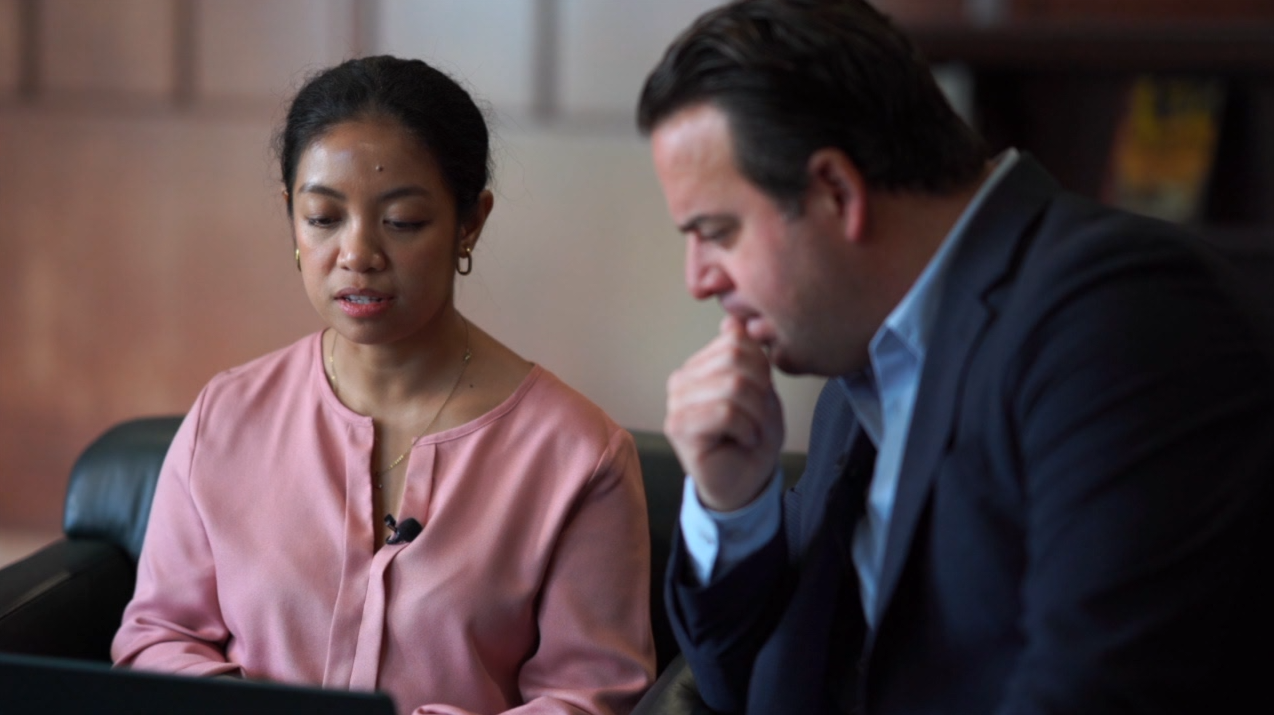
At the Poynter Institute in St. Petersburg, Paluska spoke with Katie Sanders, editor in chief of PolitiFact, and staff writer Loreben Tuquero, both specialize in identifying and debunking false information spreading across social media platforms.
"I cover artificial intelligence and misinformation and how those two interact and intersect," Tuquero said. "So I start with just looking at what's going viral on social media."
Recent examples highlight the scope of the problem. After events in Venezuela and ICE raids in Minnesota went viral, AI-generated content began flooding social media feeds.
"They showed the masked agent who shot Renee Good, but a lot of people turned to artificial intelligence chatbots and asked it to unmask the agent," Tuquero said. "But an AI bot is not capable of that, and any output it'll produce is fictional."
The AI created a fake face, which people then associated with a real person who had nothing to do with the incident and did not even live in Minneapolis.
One post about the federal agent received 73,000 shares and 164,000 likes, demonstrating how quickly misinformation can spread.
Tuquero's reporting process is transparent, meticulously showing readers the steps taken to verify information. Her fact-checking articles include detailed sourcing and methodology.
"It is getting harder by the day to determine immediately if an audio is AI-generated audio, or some deep fakes are so sophisticated that it'll take a minute, and they won't have those telltale signs," Tuquero said.
However, she noted that misrepresented videos remain more common than AI-generated content, though both appear regularly in fact-checking work.
"One of the first steps we do is run a frame of the video, or multiple frames of the video, and run them through Google reverse image search," Tuquero said.
Fact-checkers also examine metadata using Chrome extensions and other tools to surface additional information about content origins.
Paluska previously reported that industry experts are also struggling to keep up. In December, Paluska sat down with John Licato, an associate professor at the USF Bellini College of AI, Cybersecurity, and Computing, and the CEO of Actualization AI. Licato warned about the rapid evolution of AI's video and audio capabilities. This shift has surprised even experts in the field.
"The capability of generating realistic images and videos is dramatically better than it was even six months ago," Licato said during our earlier conversation about AI's impact.
News literacy is a topic Paluska has reported on for years sitting down with young journalists going behind the lens.
Paluska also reported on how a new crops of journalists at USF are eager to change the industry.
Sanders described much of the AI-generated content as "rage bait" and "slop" designed to inflame existing tensions.
"What concerns me, what keeps me up at night, is that AI is getting better," Sanders said. "We've been an intensely polarized, partisan, divided society for many years now. AI is not making that better. AI is making it really easy to inflame tension that already exists."
The problem extends beyond obviously fake content. Even seemingly harmless AI-generated videos, such as animals performing stunts, can contribute to the normalization of artificial media.
"People share those animal videos a lot, and they don't realize it's AI," Tuquero said. "It's important to maintain a healthy skepticism of things that evoke an emotional response in you, and be wary of things that might grab your attention really quickly."
Sanders emphasized the importance of sharing verified information from reputable sources rather than AI-generated content designed to provoke reactions.
"Let's share vetted information. Let's share vetted anecdotes and vetted stories from reputable sources, and not AI creators whose entire page is just specializing in rage bait," Sanders said.
Despite the challenges, Tuquero noted that spotting false information often does not require sophisticated tools.
"In a lot of these cases, it doesn't really take much to debunk it," Tuquero said.
The key, she said, is maintaining vigilance and using available verification tools to separate authentic content from the growing flood of AI-generated misinformation.
This story was reported on-air by Michael Paluska and converted to this platform with the assistance of AI. Paluska and our editorial team verify all reporting on all platforms for fairness and accuracy.
Share Your Story with Michael

A lot goes into the price of paradise and Michael Paluska focuses on every aspect. From the job market and housing to how Florida’s growth impacts our state’s wildlife. Send Michael tips to keep these important conversations going.
.

Bradenton community responds after 20-year-old volleyball star dies from disease that affects 2 in a million
The 20-year-old IMG Academy volleyball star and Under Armour All-American died Sept. 16 after a three-month battle with the rare blood disorder — even though doctors had found her a 100% bone marrow match, her mother, Tanya Mack tells Tampa Bay 28 reporter Haley Zarcone.
