

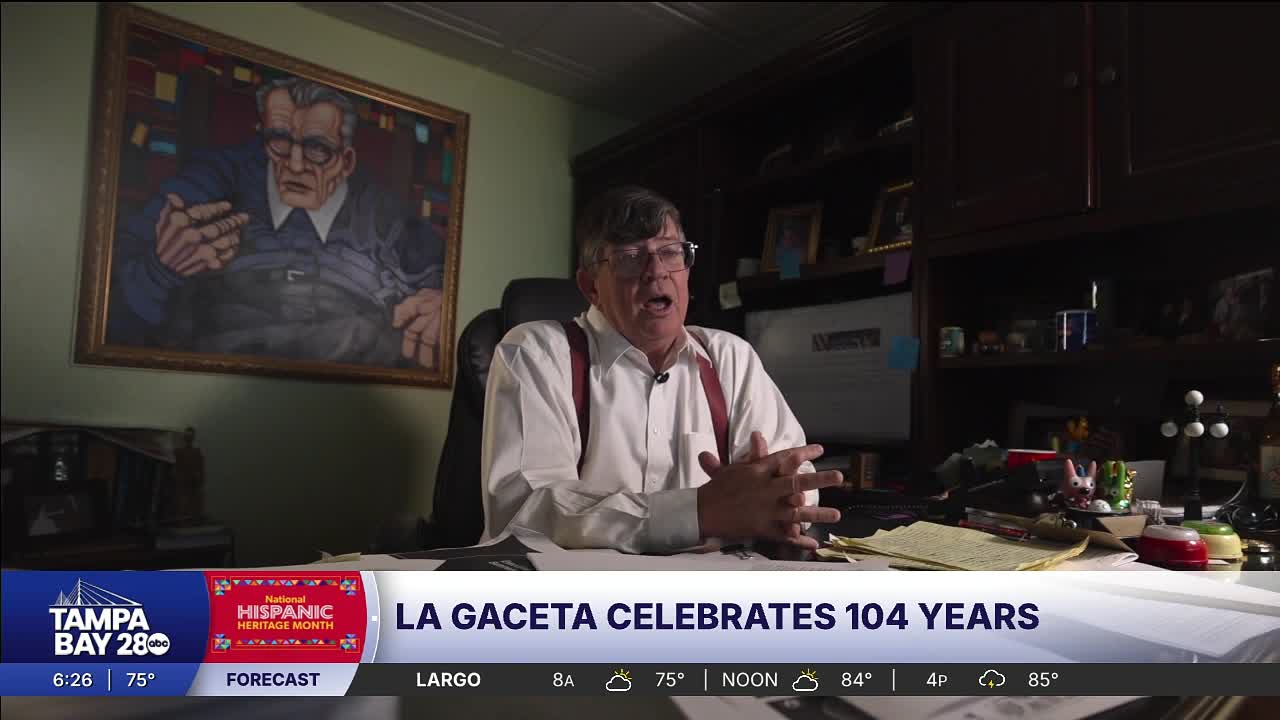


TAMPA, Fla. — La Gaceta, the nation's only trilingual newspaper, has served Tampa's Hispanic community for 104 years and still prints the old-school way.
Founded in 1922 by Cuban immigrant Victoriano Manteiga, the Ybor City-based paper publishes in English, Spanish and Italian. Thousands of copies go out weekly, each one costing 50 cents.
Watch report from Michael Paluska
Patrick Manteiga, the third-generation editor and publisher, said the paper has no plans to go fully digital.
"We haven't even started to switch to digital. So the issue is that we have a website. We put little blurbs on it, like from my column. But it says if you want to read the rest of this, go buy a newspaper," Manteiga told Tampa Bay 28 reporter Michael Paluska.
The paper's trilingual identity reflects the shared history of Tampa's immigrant communities.
A statue of Victoriano Manteiga can be found on Tampa's Riverwalk.
"Tampa is one of the few places that, when you say the word Latin, it means Italians, and the reason why was because the Italians came here and had much of the same experience that the Cubans and the Spaniards immigrated here. They were part of Ybor City, they're part of the immigrant community; they were part of the cigar factory industry; and therefore they were treated as badly by the Angloes as the Latins were, and so we were kind of all in the same punch bowl, and we had the same enemies and the same friends."
Manteiga said the paper holds a unique place in American journalism and in the history of Ybor City's immigrant communities, continuing to publish in English, Spanish, and Italian.
"We're the oldest Spanish language newspaper in America, under continuous publication, and the nation's only trilingual newspaper, and we're still that today,” Manteiga said.
Victoriano Manteiga started as a "lector," a reader to cigar rollers, before launching the paper.
"He kind of just instead of being the reader of the newspaper, he became the newspaper."
Manteiga followed in the footsteps of his grandfather, Victoriano, and his father, Roland.
“You still get ink on your hands when you grab your paper?” Paluska asked.
"When the kids were born, you had to let them eat a little bit of paper, get some of that ink in their blood. So they become a newspaper man. Absolutely."
In 1955, Victoriano Manteiga met Fidel Castro in Ybor City, where cash was being raised to fund the revolution to overthrow Batista. The meeting prompted the FBI to open a file on Victoriano, and J. Edgar Hoover labeled him a communist.
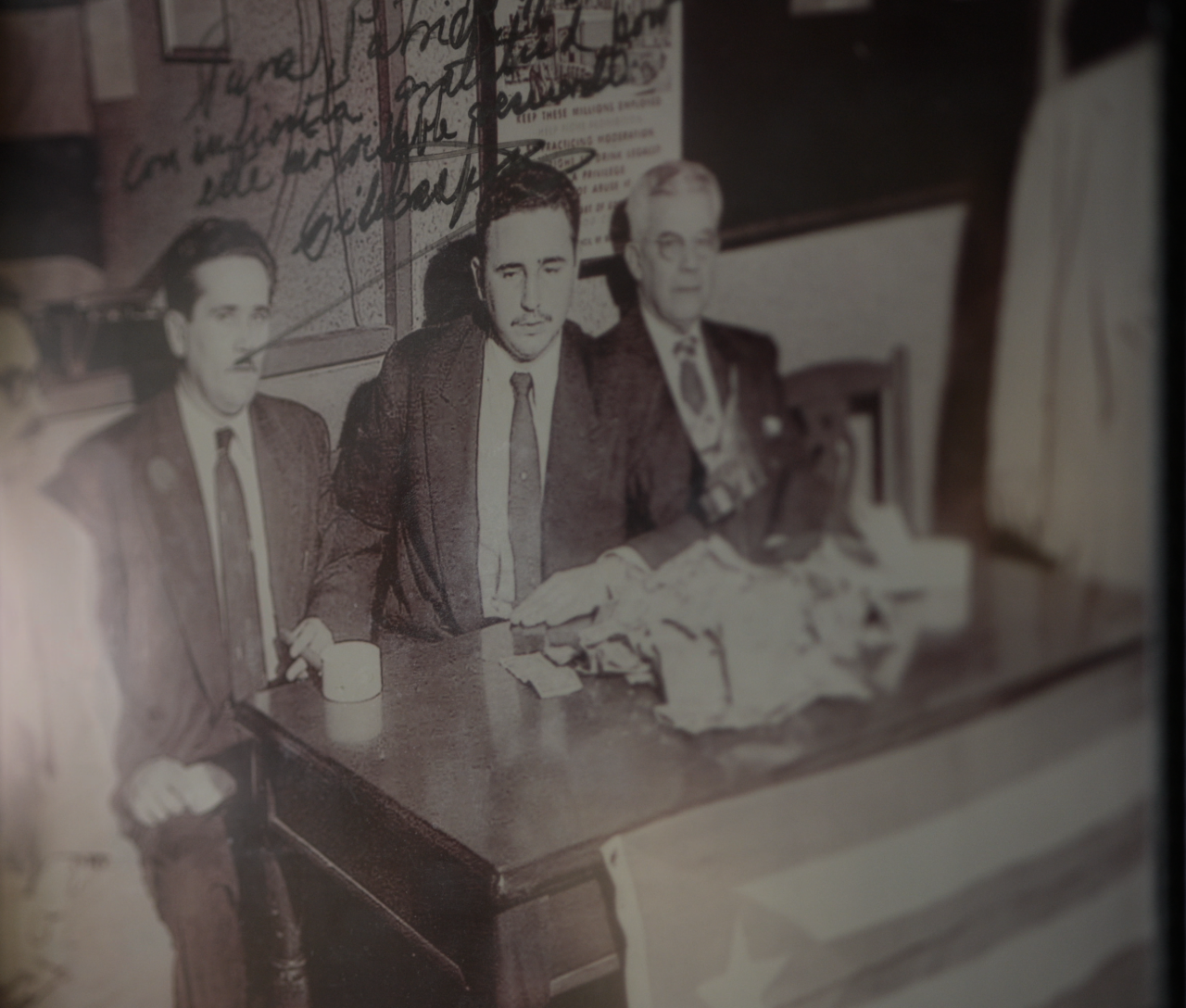
"Hoover labeled him a communist in documents that we received when we got his files from the FBI later on. The FBI wrote a document saying that he was not a communist,” Manteiga said.
Victoriano's reporting on the Cuban government also put his life at risk. An October 1929 newspaper article states bullets went through his door, "missing him by inches."
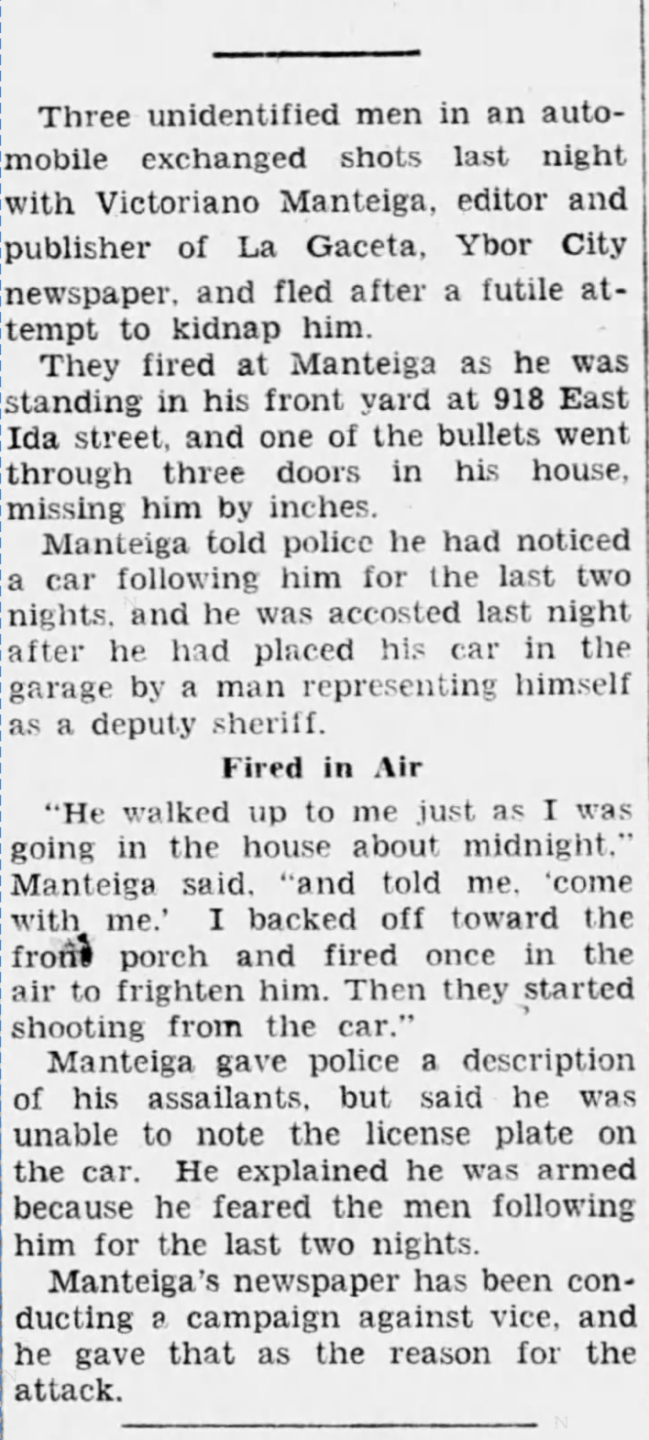
"At one point, he wrote about one of the presidents of Cuba, and they tried to kidnap him and take him to Cuba. There was a Cuban naval ship here; the sailors were charged to try and kidnap him, and they failed.”
A newspaper article in the Tampa Morning Tribune, from Oct. 26, 1929, reported on the incident, stating that Victoriano Manteiga's kidnappers "fired at Manteiga as he was standing in his front yard at 918 East Ida Street, and one of the bullets went through three doors in his house, missing him by inches."
"These were rough and tumble days of the world of journalism. But you know, frankly, people don't realize this is in today's Latin American countries, this is happening, and this is happening bad.”
According to the Committee to Protect Journalists, Latin America was the deadliest region for journalists in 2022.
Manteiga said he writes on topics some might consider controversial but does so in the spirit of his father and grandfather. Unlike mainstream outlets, he said, he answers only to his readers.
"You have to be neutral,” he said, referring to Paluska as a local news reporter. "I don't have to be. I can write as a Democrat. I can write as a Latino. I can write as an outraged taxpayer. I can write as a person of the establishment who wants the establishment to win on this issue, you know, and I do.”
“How’s that feel?” Paluska asked.
“It makes up for the lack of money. Being able to get your opinion out. How many people have that ability of being able to, and you know, to be able to reward your friends and punish your enemies, to be able to crusade against something and say I don't like this, and I'm just going to go against it and the heck with it because I got nobody to answer to, until everybody says I'm not buying your newspaper anymore."
“Through the lens of Hispanic heritage. What do you think Victoriano would think?” Paluska asked.
"I think he'd be a little bit disappointed in the lack of motivation in journalism nowadays. I think it's a lot more calculated and money and revenues and clicks and things like that as opposed to writing what you feel people should understand. Now I think we chase what we think people are going to read."

Bradenton community responds after 20-year-old volleyball star dies from disease that affects 2 in a million
The 20-year-old IMG Academy volleyball star and Under Armour All-American died Sept. 16 after a three-month battle with the rare blood disorder — even though doctors had found her a 100% bone marrow match, her mother, Tanya Mack tells Tampa Bay 28 reporter Haley Zarcone.
