

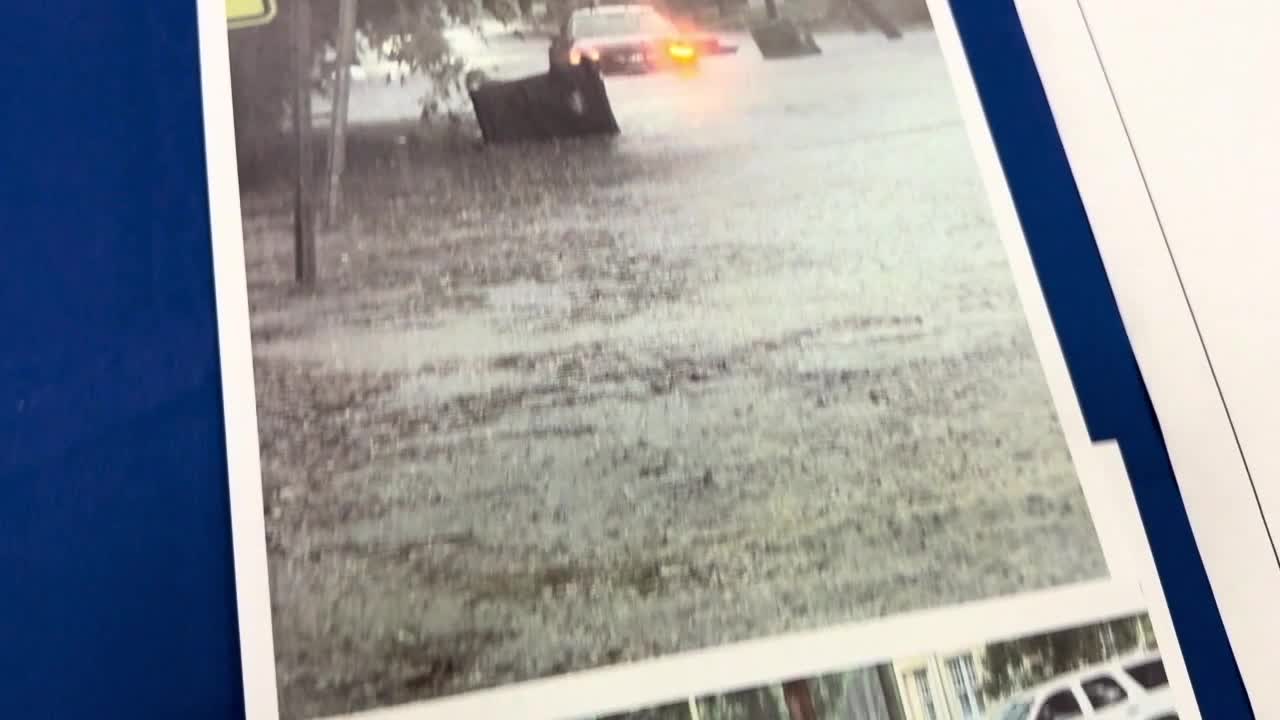


TAMPA, Fla. — Tampa City Council members will vote Thursday on whether to approve the South Howard Flood Relief Project, a $92.7 million stormwater infrastructure effort that the city says could protect more than 1,000 homes and businesses from recurring flooding.
The vote will determine whether the city moves forward with a plan to build roughly a mile of 10-by-10-foot underground box culverts, described as an "underground river," to move millions of gallons of stormwater out of the Palma Ceia Pines and Parkland Estates neighborhoods and into the bay.
WATCH BELOW: Flood relief project up for make-or-break vote
Brandon Campbell, the City of Tampa's mobility director, said the project is ready to proceed.
"We've done the design. We are ready to go. Our contractor awaits approval," Campbell said.
If approved, utility relocations would begin later this year, with major construction starting in the spring.
"The main digging for the box will start just after Gasparilla season, so in the spring," he said.
Campbell said Thursday's vote is a hard deadline with no alternative path forward.
"If it is not approved tomorrow, the project does not move forward," he said.
Campbell said the $92.7 million figure covers construction costs, with a separate agenda item Thursday addressing the financing plan. He said the city has a fully funded plan in place and is continuing to pursue additional grant funding that could reduce the debt load.
He also said the project would not prevent other stormwater improvements from moving forward across the city, noting the city has more than $100 million coming in from the remaining stormwater improvement assessment.
Campbell said the city evaluated more than two dozen alternative routes before settling on South Howard Avenue.
"If we could avoid South Howard, we would. South Howard provides the most direct route to the bay, and it is again the most effective and efficient way to move the water out of the neighborhoods," he said.
He acknowledged construction will be disruptive but said the city plans to phase the work in 400- to 600-foot sections, restoring each segment as crews move from south to north. The city also plans to help businesses maintain customer and pedestrian access, assist with deliveries, and promote South Howard businesses throughout construction. When complete, the rebuild of South Howard Avenue will include wider sidewalks, new lighting, new trees, and brick accents.
Campbell also addressed concerns about maintenance, saying the city's modeling confirms that deferred maintenance is not the cause of the flooding.
The project would benefit more than 1,000 homes by preventing streets from flooding and cutting off access to neighborhoods, according to the city. It would also stop structural flooding of nearly 100 homes and businesses during strong summer rainstorms.
If a hurricane similar to Milton struck Tampa, advanced modeling shows structural flooding would be reduced by up to 70%, saving more than 220 homes and businesses. The box culverts would also serve as a spine that future projects can connect to, protecting additional South Tampa neighborhoods.
Residents and business owners who spoke in support of the project Wednesday described flooding that has become a recurring crisis.
David Adams, a 35-year Parkland Estates resident, said the problem is severe and worsening.
"We have 2 to 3 feet of water on our streets during normal heavy rainstorms, two of which happened in August," Adams said. "This flooding problem needs to be fixed."
Adams said the city's engineers have produced documented, approved, and signed and sealed engineering drawings for the solution. He also warned that further delays would cost more money, noting that if the vote fails, the price freeze on the Kimmins guaranteed contract will expire and the project will have to be rebid.
Tina Adams said the flooding has taken a serious toll on her neighbors.
"I know people, and I've welcomed them into my home during flooding events. They've lost their cars, and they don't have enough insurance to replace the car that they lost. I know children who have had to go into therapy because they're so afraid in their homes," she said.
She said the project has only grown more expensive with each delay and urged the council to act.
Maegen Peek-Luka, who owns a home in Palma Ceia Pines, a home in Parkland Estates, and a storage unit that also flooded, said the debate has created an unnecessary divide.
"It's disappointing that this project has pitted flood victims against the South Howard businesses. The businesses on South Howard are important, and we recognize that. But they are no more important than the businesses and the homes and even the church that continually flood or are unable to reach their own doors because of heavy rainwater," Peek-Luka said.
She said the council should recognize that there will never be a perfect time or a route that pleases everyone, but the need to act is constant.
Luis Calvo, office manager at Pediatric Epilepsy and Neurology Specialists, a pediatric neurology office in South Tampa, said the flooding directly threatens patient care.
"I've dealt with staff literally not being able to leave our office when it starts pouring, as well as patients not able to get to our office when it starts pouring. Neurology is something that you don't want to delay," Calvo said.
He said his office, located at South Tampa Medical Center at the corner of South Havana and De Leon, was unable to use its first-floor suite for more than four months after Hurricane Milton. The building also lost elevator service for several months, affecting all tenants.
Calvo said the flooding affects children with severe epilepsy, seizure disorders, migraines, severe autism and other complex neurological conditions.
"Not going through with this project will put lives at stake, put children's lives at stake," Calvo added.
Dr. Mark Allen Abdoney, whose dental office has been located at 2714 West Azeele St. since 2002, said the flooding poses a direct threat to emergency medical response in South Tampa. He said ambulances navigating floodwater to reach hospitals create a dangerous situation for patients, including those experiencing strokes, where response time is critical.
He said the Palma Ceia Pines medical district, which supports HCA Florida South Tampa Hospital, cannot continue to operate under these conditions.
Abdoney said the city has known for years that the area sits in a depressional region of South Tampa and has failed to act.
"We do not live in a flood zone. We chose not to. We expect to be able to live and pursue our dreams and livelihoods, pay our staff, without the constant fear," Abdoney said.
Not everyone supports the project. The South Howard Business Alliance held a press conference on Sept. 1, cautioning against it. Steve Michelini said the project is "full of discrepancies between what they're telling us on sworn depositions and what they present to the public."
At a Sept. 3 city council meeting, council members raised questions about the project's funding. Campbell said Thursday's agenda includes a fully functional financing plan and that the city is not depleting other stormwater funds to pay for the project.
I will be inside city council chambers Thursday to report on the vote.

Saudi flight from Tampa, secret FBI probe reveal possible Saudi support network for 9/11 hijackers
Twenty years after the Sept. 11 attacks, more than 80,000 records compiled by the Tampa FBI Field Office remain classified. Newly declassified documents are pointing to a possible secret Saudi support network for the hijackers. Soon after the attacks, the FBI uncovered that 15 of the 19 hijackers were from Saudi Arabia.
