



TAMPA, Fla. (WFTS) — Hillsborough County is at the center of a dengue fever outbreak unlike anything seen in the continental United States in the modern era, and health officials are now investigating whether the disease has claimed a local life.
Watch full report from Jada Williams
The Florida Department of Health confirmed it is actively investigating the recently reported death of a Hillsborough County resident possibly associated with a dengue virus infection. The department said it is unable to provide additional details, as information about specific cases is confidential under Section 381.0031(6) of Florida Statutes.
Doctors at Tampa General Hospital say they are seeing a significant rise in cases, and one of the country's leading infectious disease experts says the numbers are historic.
"We've never had this many local cases in the mainland U.S.," said Dr. Kartik Cherabuddi, Chief Hospital Epidemiology Officer at Tampa General Hospital and a professor of infectious diseases at USF.
To find numbers this high, Cherabuddi said you have to go back to the 1930s and 1940s, when dengue was locally endemic in Florida and other states. Some local cases were recorded in Key West in 2011, and cases popped up across southern states including Florida, Texas, and Louisiana in 2023 and 2024. But nothing in the modern era compares to what Hillsborough County is seeing right now.
So how did it get this bad, this fast?
Dr. Carla Fry, Administrator and Health Officer for the Hillsborough County Health Department, said it is a combination of factors. The summer heat creates ideal breeding conditions for mosquitoes. The near-daily afternoon rain this year has been heavier than in recent years, leaving standing water everywhere. And travel to dengue-endemic regions like Central and South America and Cuba has brought the virus back home with returning residents, many of whom do not even know they are carrying it.
That last point is where things get complicated.
"When a mosquito bites them, the mosquito will indeed take that dengue in via their saliva, turn around and bite somebody else, and give dengue to them. So, I think, you know, we have running around Hillsborough County is a bunch of people who potentially can be spreading it by virtue of getting bit," Fry said.
Fry said only about 1 in 4 people infected with dengue will actually feel sick. The other three have no idea they are carrying the virus. They go about their lives, and every mosquito that bites them becomes a potential new delivery system for the disease. It is a cycle that is very difficult to break, and it is a big reason why Fry said the county will be living with this outbreak for a while.
"We probably have so many people who are asymptomatic but indeed have contracted and carried it," Fry said.
That also means the true number of cases in Hillsborough County is almost certainly much higher than what is being officially reported.
What dengue actually does to your body
For most people, dengue will feel like a bad flu. Cherabuddi said the main symptoms are fever, severe body aches, and headaches, particularly behind the eyes. Some people also develop a rash. Unlike a typical cold or flu, dengue does not usually cause much cough or congestion, at least not early on.
But for some people, it gets much worse.
Cherabuddi said dengue moves through three distinct phases. The first is the febrile phase, when patients run a fever and feel miserable. Most people push through this part. The second phase is the one that catches people off guard. In the 24 to 48 hours after the fever breaks, patients enter what doctors call the critical phase. This is when the body is most vulnerable, and it is when people who are going to get seriously ill tend to deteriorate. The third phase is recovery, when the body begins to heal.
"Can this cause fatalities, including really, complicated illness? Yes. Are we seeing folks who are presenting reasonably sick, with high fevers, with body cell counts that are low, and are requiring hospitalization for a few days? Yes. So I think that, in general, saying, yes, we are seeing moderate disease, we are seeing severe disease, and that's the most important thing to take from here," Cherabuddi said.
Among those who develop severe disease, Cherabuddi said as many as 5 to 13% can experience life-threatening complications. He said the risk is highest for people at the extremes of age, those with underlying health conditions, and those who have had dengue before. In fact, a second infection can sometimes be worse than the first, which is an important distinction for anyone who has traveled to dengue-endemic regions in the past.
Cherabuddi also pointed out that because the United States is not a dengue-endemic country, most people here have never been exposed to the virus before. That means the population has little to no natural immunity, and the numbers seen in countries where dengue is common may not accurately reflect how serious cases could get here.
"I would take it more seriously, not less seriously," Cherabuddi said.
What Tampa General is doing about it
Tampa General Hospital has been on the front lines of the outbreak. Cherabuddi said the hospital is using its hospital-at-home service and transitional clinic to monitor patients daily after discharge, tracking lab results and watching for warning signs. The goal is to keep a close eye on patients through that critical phase, even after they leave the building.
The hospital is also working closely with the Hillsborough County Health Department, which is calling dengue-positive patients directly to check on their condition. Cherabuddi called it a critical collaboration.
There is no specific antiviral treatment for dengue. Care is focused on keeping patients hydrated, monitoring organ function, and watching platelet counts closely, since dengue can cause dangerous drops in platelets that lead to bleeding complications. Cherabuddi said when the disease is managed well and caught early, the complication rate drops significantly.
What you should do right now
The county is spraying neighborhoods day and night to knock down the mosquito population. But officials say residents need to do their part too.
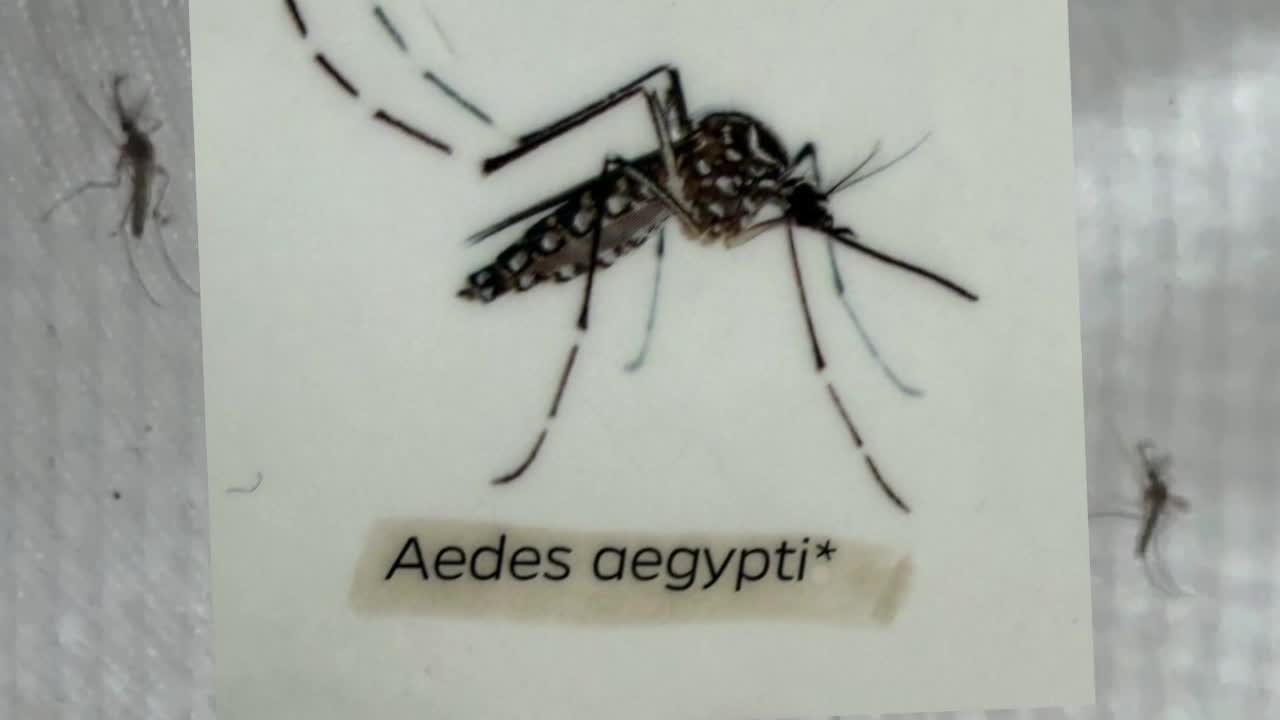
The Aedes aegypti mosquito, the species responsible for spreading dengue, breeds in standing water. Even a small amount of water in an old tire, a flower pot, a clogged gutter, or a forgotten container in the backyard is enough. Fry said do not assume you are safe just because you live in an urban area. Mosquitoes are everywhere, and the disease is showing up across all types of neighborhoods.
The Florida Department of Health recommends taking precautions, especially during sunrise and sunset, when mosquitoes are most active. That means wearing long sleeves, long pants, and light-colored clothing when you are outside. If the heat makes that impractical, the next best option is EPA-approved insect repellent. Look for products with DEET listed on the label, and reapply as directed. Fry said the repellent does not last forever, so treat it like sunscreen and keep reapplying.
If you start feeling feverish, achy, or develop a headache behind your eyes, do not try to wait it out. Fry said people should contact their health care provider or the local county health department for guidance on how to seek care safely. She said to avoid ibuprofen and other non-steroidal anti-inflammatory medications, and stick with acetaminophen instead. Staying hydrated is critical, especially in the summer heat.
Anyone experiencing signs of bleeding should go to the emergency room or call 911 immediately.
"Dengue is preventable, it's recognizable, manageable. The key is avoiding mosquito bites and seeking medical care early if symptoms develop," Cherabuddi said.
Share Your Story with Jada

Jada Williams is focused on the issues that matter most to people in who live in Tampa and West Hillsborough County. From downtown Tampa to Town ‘n’ Country and Westchase, Jada works to bring you updates and solutions on everything from crime to infrastructure. Reach out to Jada below with your concerns for your neighborhood.
.

Pasco County mom of 5 takes in 3 children left without food or power whose mother faces neglect charges
Jasmine Young, a mother of 5, opened her home to three neglected girls as their mother faces child neglect charges for leaving them without food, power or water.
