



TAMPA, Fla. (WFTS) — Hillsborough County commissioners unanimously approved new restrictions on concentrated kratom products Tuesday after an emotional public hearing that brought dozens of people before the board, some pleading for a complete ban and others warning that eliminating traditional kratom could harm people who rely on it as an alternative to other substances.
Fifty-three people signed up for public comment as commissioners considered amendments to the county's Synthetic Drug Ordinance.
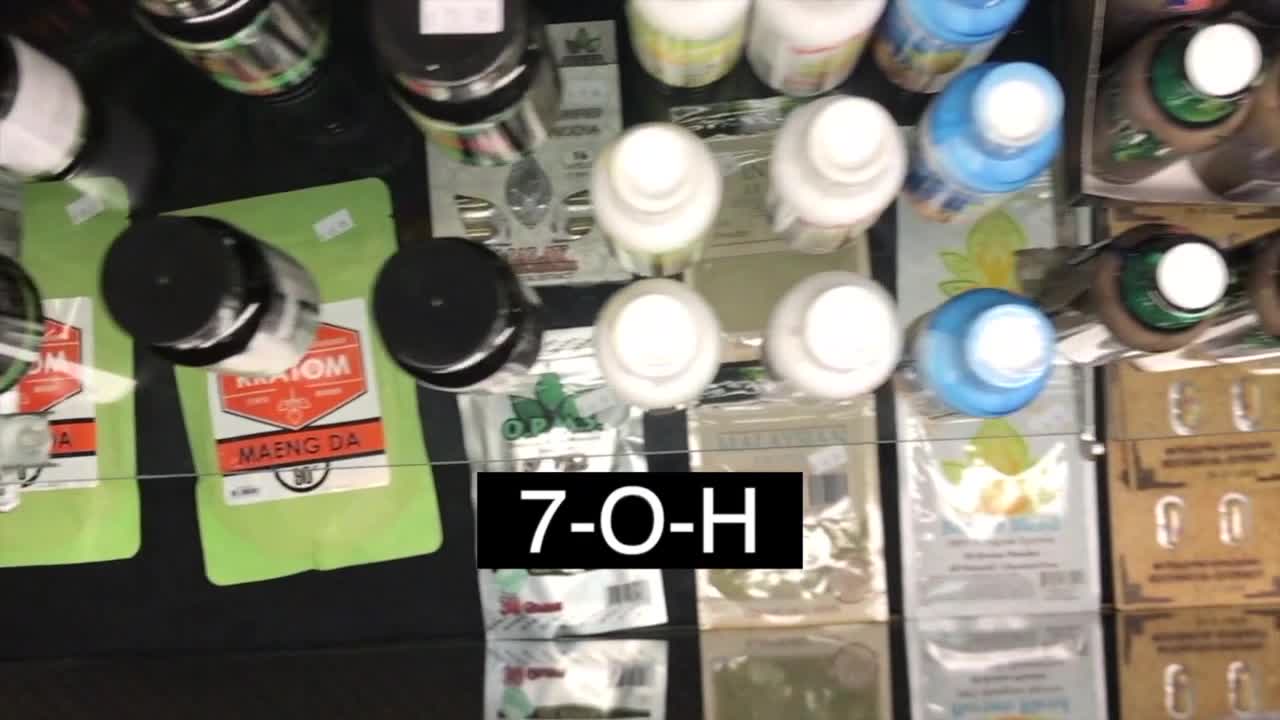
At the center of the debate coming from the public was an important distinction: the ordinance does not ban traditional whole-leaf kratom. Instead, it targets concentrated 7-hydroxymitragynine, commonly called 7-OH, and several related derivatives.
Kratom, or Mitragyna speciosa, is a tropical tree native to Southeast Asia. According to Hillsborough County's ordinance documents, its leaves contain psychoactive compounds and can be crushed, brewed into tea or placed into capsules.
County documents describe 7-OH as a compound naturally found in kratom at low levels that can also be isolated or concentrated into much more potent opioid-like products.
But much of Tuesday's hearing focused on a larger question: Should Hillsborough County go further and ban all kratom?
Families call for broader ban
For some families who came before commissioners, the answer was an emphatic yes.
Karen Buckner spoke on behalf of the family of Frankie Ortiz, a 42-year-old father who she said began using kratom after struggling with other medications.
“He thought that something that was sold openly in the smoke shops and marketed as something natural would be a safer choice,” Buckner told commissioners.
She said Ortiz died June 30, less than a month after he began taking kratom.
His 9-year-old son was with him.
“His son Jace was sleeping next to him, and he awoke to find his dad dead,” Buckner said.
Another speaker, Colt MacDonald, told commissioners about his own addiction and the loss of his twin brother, Cade.
MacDonald said he first tried natural kratom at a café in August 2024.
“I was told it helped people relax. I felt euphoric. All worries vanished,” MacDonald said.
He said he initially believed what he had read about the product being natural and safe.
“I began to use it more and more as I grew more tolerant,” he said. “Soon, all I cared about was kratom.”
MacDonald said his dependence eventually left him isolated, depressed and failing classes.
Then his brother died.
“Upon learning of his death, my first thought was needing kratom,” MacDonald told commissioners.
He said he ultimately went to rehabilitation and endured weeks of withdrawal.
“I didn't get here because of pain pills or terrible friends,” MacDonald said. “I got addicted because of a strawberry-flavored tea.”
His plea to commissioners was deeply personal.
“If natural kratom didn't exist, I would be graduating next to my twin brother,” he said. “Instead, I'm going to AA meetings and planting flowers at his grave.”
Cade and Colt's mother, Dana MacDonald, also addressed commissioners.
She described Cade as her “beautiful, forever 20-year-old son” and said he died from acute mitragynine toxicity.
“Cade's life mattered,” she said. “He deserved better, and so do the next lives that you can save.”
The county's own agenda documents say the Hillsborough County Medical Examiner Department reported mitragynine intoxication contributed to 34 deaths in Hillsborough County during the past two years.
The wording is important here. The county says mitragynine intoxication contributed to those deaths, rather than saying kratom was necessarily the sole cause of all 34 deaths.
Kratom’s easy availability becomes part of the debates
Another concern repeated throughout Tuesday’s hearing was just how easy kratom products can be to find, with speakers pointing to gas stations, convenience stores, smoke shops and vape shops as places where they are sold.
The concern is also brought up in the county ordinance. It says synthetic compounds have proliferated at gas stations, convenience stores, smoke shops and online retailers, making the products easily accessible to the public.
For Colt MacDonald, that accessibility was part of his warning to commissioners.
“Any student can walk into a store or cafe and walk out an opioid addict,” MacDonald said. “I didn't get here because of pain pills or terrible friends. I got addicted because of a strawberry-flavored tea.”
Another speaker questioned why kratom products promoted as a way to help people move away from other drugs can be so readily available in everyday retail settings.
“If this substance is being promoted as a tool for recovery, why is it being sold alongside candy bars and energy drinks in our gas stations?”
The new county ordinance does not prohibit stores from selling lawful, non-concentrated kratom. But businesses regulated as retail food establishments that sell kratom will now have to place a warning directly next to the products telling customers that sales to anyone under 21 are prohibited and that kratom “may cause serious adverse health effects.”
That requirement applies even to lawful whole-leaf products, which remain exempt from the county’s synthetic-drug prohibition.
County ordinance specifically targets concentrated products
The county began working on the changes months before Tuesday's vote.
According to the agenda documents, commissioners directed the County Attorney's Office on June 17 to work with county staff and other stakeholders, potentially including the Hillsborough County Sheriff's Office, on changes that would prohibit the sale of 7-OH and make that prohibition enforceable.
County attorneys said they also conferred with the sheriff's office, State Attorney's Office and County Code Enforcement.
The resulting ordinance is much more specific than an across-the-board kratom ban.
Under the amendment, a kratom product can be considered chemically enhanced or altered when laboratory analysis shows more than 1 milligram of 7-OH per gram in a solid or powdered product, including capsules, or more than 1 milligram per milliliter in a liquid, including beverages, extracts and tinctures.
The ordinance also addresses products that do not contain at least 100 parts mitragynine for every one part of 7-OH by mass.
It additionally identifies 7-acetoxymitragynine and two derivatives known as MGM-15 and MGM-16.
The county's stated intent is to prohibit products deliberately manufactured to contain concentrated opioid-like compounds while leaving traditional botanical kratom outside that prohibition.
Whole-leaf kratom remains exempt
The ordinance expressly exempts whole-leaf kratom, including raw or dried leaves intended to be chewed, crushed or steeped in tea.
It also exempts other products intended for human consumption that are not chemically enhanced, chemically altered or otherwise concentrated for increased potency.
That difference drew support from several people who spoke Tuesday.
Kenneth Hoyumpa, who said he represents Grassroots Coffee House in Tampa and has served kratom for nearly 17 years, urged commissioners to preserve access to traditional tea made from leaf, water and lemon juice.
“I'm advocating for the continued access to pure leaf kratom tea,” Hoyumpa said.
He argued that the county should focus on enforcing existing restrictions rather than banning traditional products.
“I implore this commission to continue to allow responsible access to kratom as outlined in the current Florida law,” he said.
Another person told commissioners he credits kratom with helping him get away from more dangerous substances.
“I myself was able to get off harder drugs, get back to a normal life and avoid the downfalls of addiction by managing my withdrawals with kratom,” he said. “Kratom saved my life.”
Joseph Petrie, who described himself as a longtime professional in mental health and substance-use treatment, also argued that commissioners should distinguish natural kratom leaf from highly concentrated products.
“Kratom is part of the solution, not part of the problem,” Petrie told commissioners.
He argued that a gummy, tablet or highly concentrated product should not automatically be treated the same way as traditional leaf.
“Leaf, that is kratom,” Petrie said, “and that is part of the solution, not part of the problem.”
Veteran describes why the distinction is personal
After Tuesday's meeting, I spoke with Brandon Odom, a veteran who came to the county center because he wanted commissioners to preserve access to whole-leaf kratom.
Odom said he and his brother both suffered injuries while serving in the military. He said they were both given prescription medications but ultimately took different paths.
“I opted to use raw-leaf kratom, and he died of an overdose due to those prescriptions,” Odom said.
Odom said he believes traditional kratom can offer veterans and others another option for dealing with pain, and he wants consumers to have access to properly tested products.
“I just wanted to make sure raw leaf was kept available,” Odom said.
For him, though, the issue goes beyond policy.
When asked how his life changed after turning to kratom, Odom became emotional while talking about his son.
“I have a beautiful son,” he began before stopping to collect himself.
“Sorry,” he said.
After a pause, he continued.
“Yeah, I have a beautiful son. Makes me very proud,” Odom said. “He plays rugby at Penn State, and I wouldn't have been a father for him without kratom.”
The county's documents warn of potential serious health effects from kratom use and cite the medical examiner's finding that mitragynine intoxication contributed to 34 deaths over the past two years.
New warning signs required
Even though legal whole-leaf products are exempt from the synthetic drug prohibition, businesses selling kratom will face additional requirements under the amendment.
Retail food establishments regulated by the Florida Department of Agriculture and Consumer Services that sell kratom in any form must post a clear and conspicuous sign next to the product.
The ordinance specifies the warning:
“THE SALE OF KRATOM TO PERSONS UNDER THE AGE OF 21 IS PROHIBITED. PROOF OF AGE IS REQUIRED FOR PURCHASE. THE USE OF KRATOM MAY CAUSE SERIOUS ADVERSE HEALTH EFFECTS.”
Hillsborough County Code Enforcement is authorized to investigate violations of the signage requirement.
A violation can carry a fine of up to $500 for a first offense and subsequent offenses.
Florida law already prohibits sales of kratom products to anyone younger than 21.
Criminal penalties added
The amendment also clarifies criminal consequences for violations involving products that qualify as synthetic drugs.
Production, manufacturing, distribution, sale, display for sale, marketing or advertisement of a synthetic drug can be prosecuted as a misdemeanor.
Under the ordinance, a conviction can result in a fine of up to $500, up to 60 days in the Hillsborough County Jail, or both.
County Code Enforcement handles the administrative provisions, while criminal violations are enforced by law enforcement.
The county projects no financial impact from adopting the ordinance beyond the cost of publishing required legal notices.
Why commissioners didn't ban all kratom Tuesday
Several speakers urged commissioners to eliminate the whole-leaf exemption immediately.
The county's background document notes that, when the amendment was drafted, there was “no legal impediment” to commissioners adopting a more comprehensive prohibition by eliminating the proposed exemptions.
But the procedural situation had changed by the time Tuesday's advertised public hearing arrived.
During the meeting, commissioners discussed whether they could remove the whole-leaf exemption. County attorneys explained that the ordinance advertised to the public concerned the synthetic and concentrated-product framework. A broader change involving natural leaf would require going back through the public-notice process.
Commissioner Joshua Wostal acknowledged the complexity of what commissioners had heard.
“It is tough for the government to intervene on natural, truly natural prohibitions,” Wostal said.
He said some people clearly believe kratom has helped them move away from highly addictive drug use, while acknowledging the devastating stories told by families calling for a ban.
“There's no way to empathize with the amount of loss that you have all felt,” Wostal said.
Another commissioner said Tuesday's action should be viewed as a first step, while expressing interest in going further with a total ban on kratom sales.
Ultimately, commissioners voted 7-0 to approve the ordinance as written.
The ordinance will become effective after it is filed with the Florida Department of State.
Share Your Story with Jada
Jada Williams is focused on the issues that matter most to people in who live in Tampa and West Hillsborough County. From downtown Tampa to Town ‘n’ Country and Westchase, Jada works to bring you updates and solutions on everything from crime to infrastructure. Reach out to Jada below with your concerns for your neighborhood.
.

HOA said yes, but the CDD says no: Sun City Center homeowners ordered to remove backyard fences
For years, homeowners in one Hillsborough County neighborhood had fences around their backyards — fences that were approved by their homeowners' association. But now, another organization with government powers says some of those fences are blocking drainage easements and have to go, at the owners' expense.
