

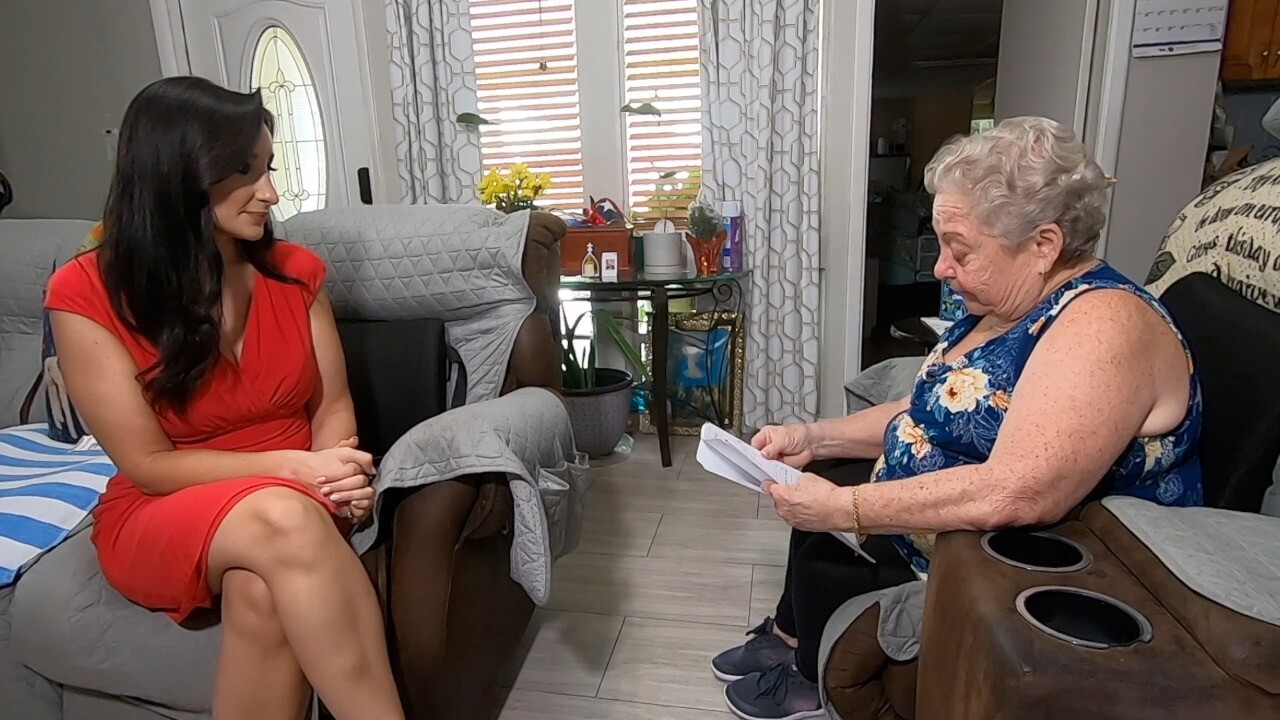


TAMPA, Fla. — A new report claims Latino homeowners in Florida are paying significantly more for home insurance than those in predominantly white neighborhoods — but Florida's insurance regulators are pushing back. It comes as one Cuban grandmother in Tampa says she hopes isn't true.
A Tampa Bay homeowner's story
We met Sara Henry at her home on a Tuesday in Septemeber.
Inside, her home full of memories as she made us a cup of Cuban cafecito.

Memories that included her husband David, who had recently passed.
"He would have been 73. Still young," Henry said holding back tears.
The pressure of paying for everything these days mounting with the anxiety we were met with when she was was about to open her home insurance renewal that just came in the mail.
"I'm kind of scared to open it," Henry said ripping the envelope. "So, oh, that's uh quite a jump. So the insurance for this year is going to be $4,098."
Her new premium is now $655 more than last year.
WATCH: 'I was outraged': Latinos in Florida pay 58% more for home insurance, new report finds
When asked how she would afford the increase, Henry said she was uncertain.
"I don't know. A lot of people keep telling me, why don't you just sell, start fresh?" Henry said. "And the last thing my husband used to tell me I said don't sell, don't sell, that's our whole, it's our memories. So I don't know."
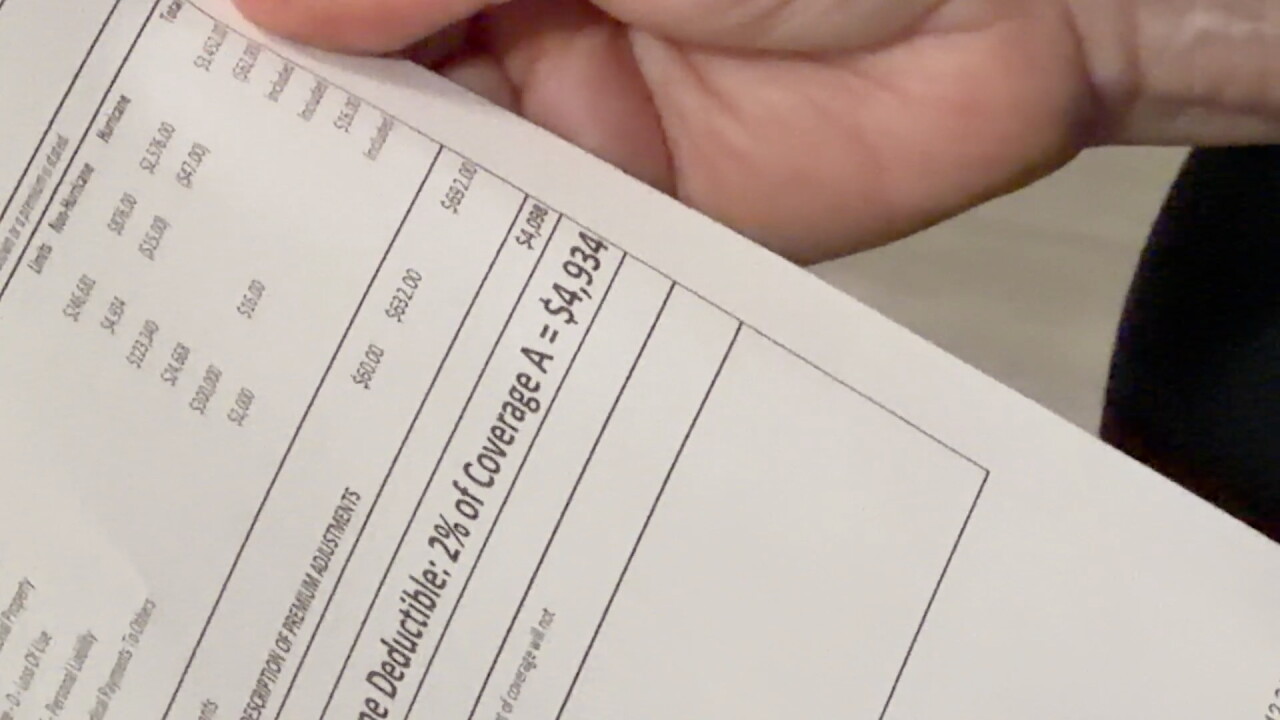
Henry's situation is one a new report claims is hitting Latino homeowners across Florida harder than their white neighbors.
'Redlined': The report
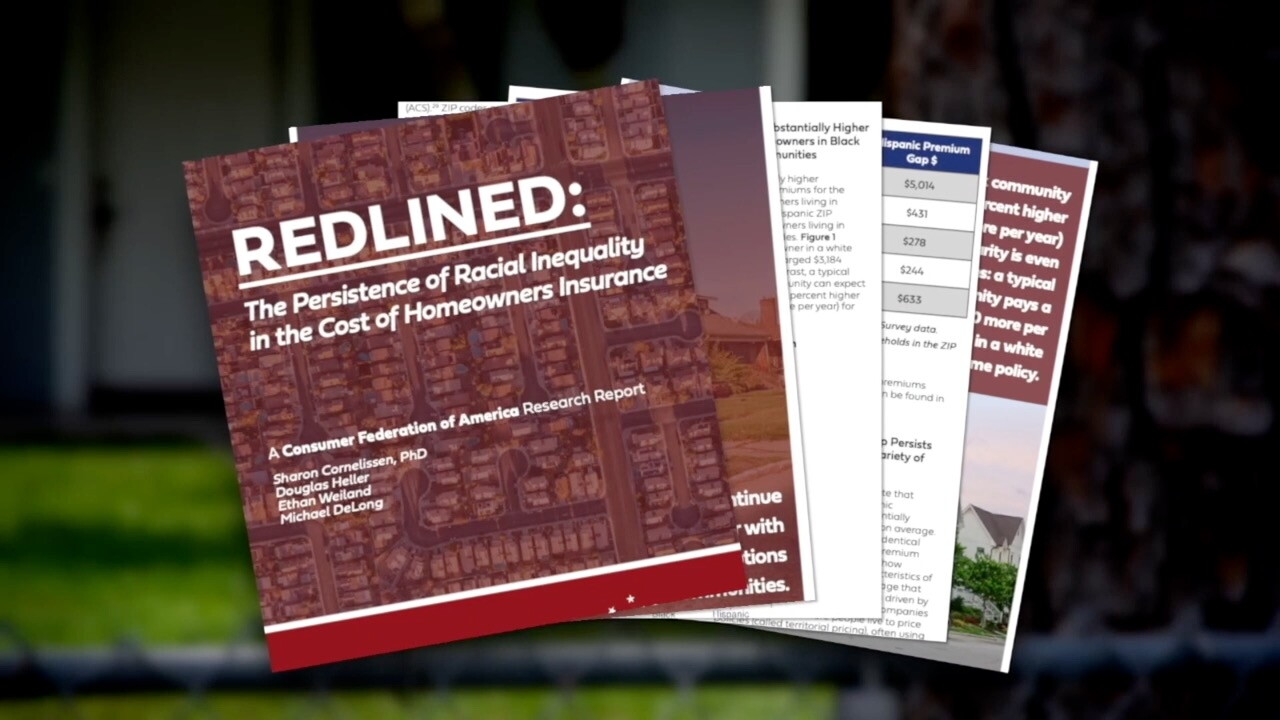
The report, titled "Redlined," was released by the Consumer Federation of America in July 2026. The term "redlining" was coined during the Civil Rights era, when lenders were accused of drawing red lines around minority neighborhoods to mark them as high-risk and deny loans. The Consumer Federation of America now claims the same practice is happening with insurance in Florida — and it is targeting Latino neighborhoods.
"When I saw the results, especially in Florida, which has the highest disparities for residents of Latino communities, I was outraged," researcher Doug Heller said.
The report found that Latinos in Florida pay 58% more for home insurance in their neighborhoods compared to predominantly white neighborhoods — roughly $5,000 more per year.
Heller said the researchers compared identical homes and homeowners across different zip codes to arrive at their findings, accounting for several underwriting risks like the age of the home, roof of the home, proximity to the coast, and more.

"What we were comparing was apples to apples. If you took exactly this home with exactly this family and placed them in each and every zip code in Florida, what would they be charged to get the exact same coverage? So, what we found was apples to apples, the exact same person, if they live in a Latino community is going to pay on average 50% more in Florida than if they live in a predominantly white community for the exact same product," Heller said.
What a local insurance agent found
Umer Shafiq, is an insurance agent with ProLines Insurance in Tampa Bay, where 75% of his clients are Latino. Shafiq put the report's theory to the test by comparing rates for the same property across different zip codes.
"It was, you know, a little bit higher number than I was anticipating for the same, same property," Shafiq said. "That was really surprising."
In his comparison, the Latino homeowner was paying about $200 more for the same property.
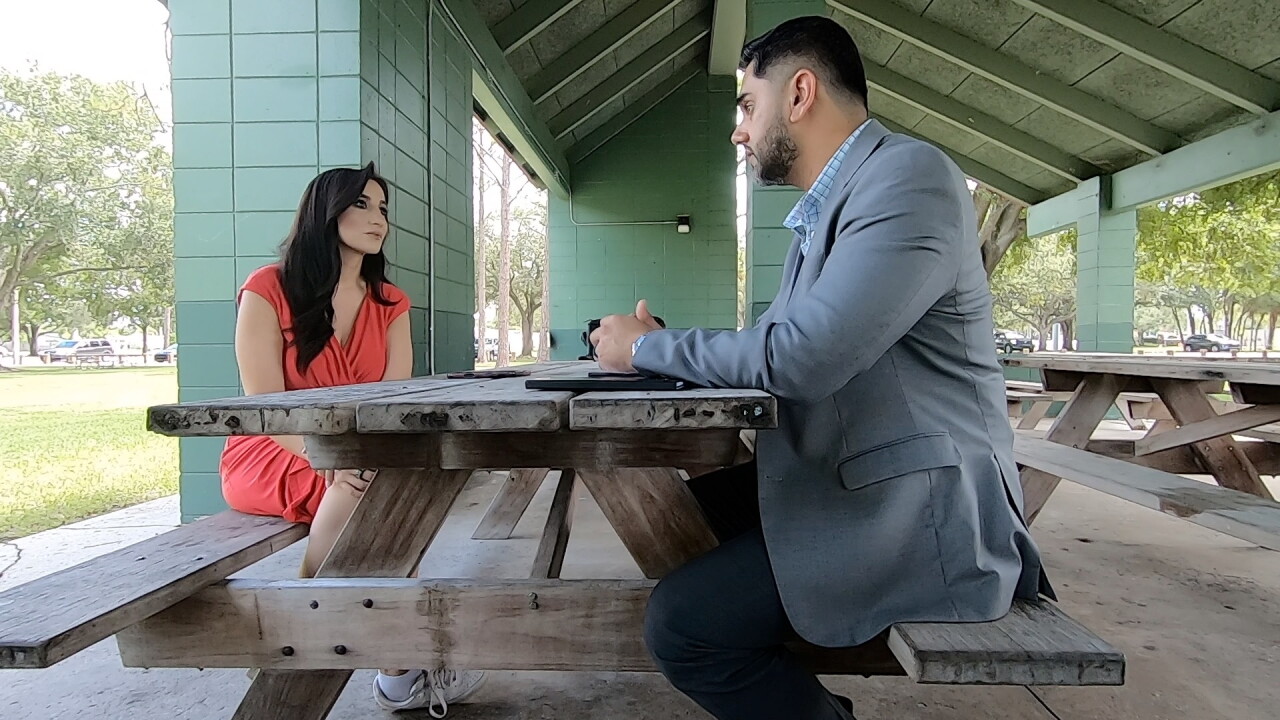
Shafiq noted that several factors can affect a homeowner's premium, including a personal insurance score, which incorporates a credit score — something the "Redlined" report also highlights.
"It's a soft score, um, and they do look at that," Shafiq said. "How do we improve this? I think educating them on their credibility for their, um, you know, just everyday purchasing their assets, what they have, their credit score needs to improve."
Shafiq said Latino homeowners should take action by comparing rates.
"I think that they should just shop to see what the carriers are really looking for in your particular area. What are they offering rates wise, and then compare it with your peers or your friends or family to say, Hey, I'm paying this. You live in the same area zip code. How much are you paying? To see what's the difference," Shafiq said.
The pressure on regulators
The report calls on Florida insurance regulators to examine the data and protect all homeowners, regardless of the neighborhood they live in.
"They can tell us it's not intended, that doesn't make it any easier for people who have to pay the bills," Heller said.

For Henry, the findings were a surprise.
"I really honestly thought that we were, you know, um, all paying the same. It didn't have to be Latino or Russian or whatever, you know, you're, we're all the same," Henry said.
Florida Office of Insurance Regulation response
The Florida Office of Insurance Regulation disputes the report's findings, though they did say insurance company use "highly-localized data" to help determine premiums along with several other factors. Here's part of the response below:
"While we acknowledge public concerns over housing costs, the Florida Office of Insurance Regulation strongly refutes the premise of the report that insurance premium differences are driven by racial discrimination," their statement read.
They provided us with three principles on how the state regulates how premiums are set for homeowners.
Strict legal bans: Florida law strictly prohibits insurers from using race, ethnicity, or demographic traits — directly or indirectly — in setting rates or making underwriting decisions. Rates must be applied neutrally to all applicants who share the same objective risk profile.
Actuarial and risk-based pricing: Homeowners insurance premiums are tied strictly to localized risk factors and actuarial data. Geographic differences in pricing reflect localized hazards — such as hurricane vulnerability, flood zones, property replacement costs, housing age, and local litigation or claims history — rather than the demographic makeup of a ZIP code.
Rigorous regulatory oversight: The office requires insurers to submit all rating plans and algorithms to its actuaries for thorough review. Under Florida statutory guidelines, the office verifies that approved rates accurately reflect expected future losses and expenses so that they are never "excessive, inadequate, or unfairly discriminatory."

Auto glass company salesman pushes questionable windshield replacement at Tampa dealership
A Service Pros Auto Glass salesman said filing an insurance claim would not affect insurance premiums.
