

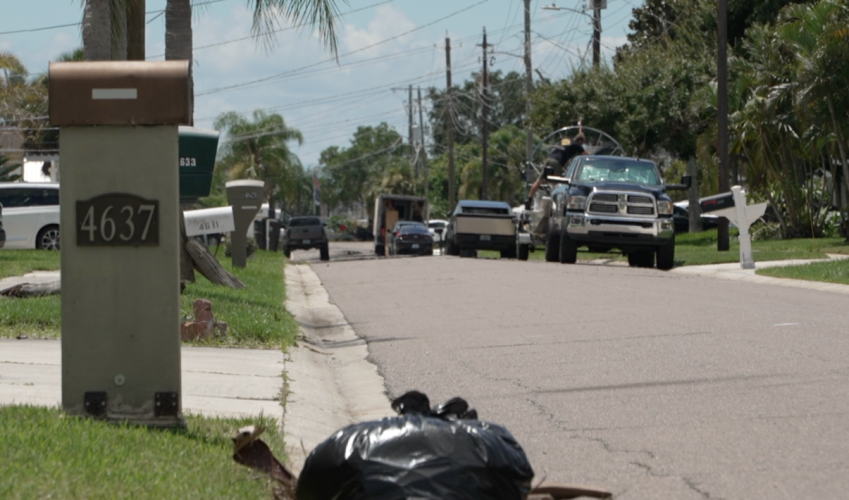


TOWN 'N' COUNTRY, Fla. (WFTS) — Hillsborough County commissioners voted 7-0 to move a proposed short-term rental ordinance toward a public hearing, but residents of Bay Crest Park and other single-family neighborhoods in unincorporated Hillsborough County say the draft does not go far enough to protect their neighborhoods.
WATCH: Bay Crest Park residents say proposed short-term rental ordinance doesn't go far enough
The public hearing is scheduled for September 2 at 10 a.m. If approved, the ordinance would take effect January 1.

The number of short-term rentals in Bay Crest Park has grown from 91 earlier this year to 121, a figure that was still climbing the morning I spoke with residents. More than 20% of the neighborhood, zoned exclusively for single-family residential use, is now operating as a short-term rental.
"When does it stop?" said Samantha Freeland, one of three residents who has been actively tracking and documenting short-term rental activity in the neighborhood. "It's like the Wild West."
What the county voted on
Commissioner Harry Cohen introduced the ordinance, framing it as a business regulation rather than a land use regulation, a distinction he said allows the county to work around state law that restricts local governments from regulating the zoning locations of short-term rentals.
"A growing number of counties and municipalities throughout the state have enacted registration requirements for short-term rentals," Cohen said during the commission meeting. "Requiring short-term rentals to register with the county promotes identification and supports monitoring and coordination with rental owners."
Among the ordinance's key provisions, Cohen said, is a requirement that every short-term rental owner designate a local responsible party who can be contacted by code enforcement or law enforcement 24 hours a day, 7 days a week, and who must be able to arrive at the property within one hour of a reported violation. The ordinance also requires that guests be informed of local rules, including the noise ordinance, trash and recycling pickup schedules, and parking requirements.
Cohen said the ordinance is also structured so that the city of Tampa could opt into it, should the city choose to do so. The county attorney confirmed the draft would be written to make it implementable in Tampa and other cities as well.
"It would give their code enforcement officers and Tampa Police Department the same tools that we're giving our code enforcement and the Hillsborough County Sheriff's Office," Cohen said. "And uniformity."
Cohen said Hillsborough County has more than 3,000 short-term rentals in unincorporated areas alone.
Commissioner Wilstel, who seconded the motion, acknowledged the challenges code enforcement has faced, including constitutional protections that limit inspections of properties operating as accessory dwelling units.
"They have a restricted visual, they can't just waltz in, and it has presented challenges," Wilstel said.
He also pointed to a new state mandate, SB 48, set to take effect later this year, which he said could provide additional enforcement tools. The bill requires that any garage conversion to a short-term rental or accessory dwelling unit must account for lost parking on the property, and that the primary resident must continue to occupy the site if an accessory dwelling unit is present.
"I think that those are very powerful tools that will enhance the sheriff and code enforcement to take serious action," Wilstel said.
Commissioner Hagan praised the approach, comparing it to a registration model the county used during the foreclosure crisis.
"The structure is reminiscent of during the recession years ago how we dealt with the foreclosure crisis," Hagan said. "We created essentially a registration model, and it proved to be very effective back then."
Cohen said the goal is to have the registry and processes in place before the winter rental season, spring break, and other high-volume periods.
"Those are the times that lead some of our citizens to so much frustration," Cohen said.
What the draft ordinance is missing
While residents acknowledge the proposed ordinance is a step forward, they say it falls significantly short of what other Florida counties have already implemented. Freeland, along with neighbors Mark Kiddo and Michelle Cuilla, began organizing in January after the number of short-term rentals in Bay Crest Park approached 100. They attended a county commissioners meeting, even though short-term rentals were not on the agenda, to raise the issue publicly, and have since built a detailed database using publicly available records from the county property appraiser and the state of Florida.
"Within two days, three days, we had put together a spreadsheet where we were able to get the information from the county appraiser," Freeland said. "We're talking people, just normal people. We were able to extract that information."
Kiddo presented Cohen with a document outlining seven specific suggestions. The three most critical, he said, are mandatory fire safety inspections before a short-term rental license is issued, a 24/7 complaint line and online portal routing violations directly to code enforcement and the sheriff, and technology-based monitoring that cross-references listing photos with actual property records.
Residents say the current draft ordinance contains significant gaps when compared to stronger programs already in place in peer jurisdictions such as Pinellas County. Specifically, they say the draft includes no mandatory life-safety inspection under the Florida Building Code and Fire Prevention Code before a registration can be issued, allows inspections only upon request rather than as a condition of approval, contains no dedicated 24/7 short-term rental hotline or online complaint portal, provides no technology for monitoring listing platforms or verifying properties against county assessment records, includes no commitment to increased code enforcement staffing or proactive enforcement, and establishes no clear progressive fine structure for operating without registration.
"In the ordinance, it talks about inspections upon request," Cuilla said. "We're saying no, not upon request."
Cohen addressed the inspection question directly in his post-vote interview.
"These properties are subject to the noise ordinance. They're subject to fire codes, occupancy requirements, and all of the things that we normally inspect for," Cohen said. "Part of this ordinance is that if code enforcement or law enforcement requests it, the responsible party is obligated to allow an inspection of the property, and that's a very, very important component."
Cuilla said that is not enough. She pointed to Pinellas County, where fire inspections are mandatory before a license is issued, and cited research showing Hilton Head reduced fires in short-term rental homes by 75% after requiring pre-licensing inspections. She also noted that the state of Florida mandates fire inspections in some areas for any home rented for less than 30 days more than three times a year.
"If I was to open a restaurant on one of the strip plazas, I would be required to have a fire inspection and occupancy rating," Cuilla said. "We are having short-term rentals right next door to single-family residences with families that are technically businesses. They are paying tourist taxes. They have to get a license with the county. Why are they not being inspected for fire safety issues and maximum occupancy?"
The concern is not hypothetical. Residents said they recently became aware of a fire at a short-term rental in Weeki Wachee that spread to other homes.
"Think of that in Bay Crest Park," Cuilla said. "A short-term rental that has not been inspected, that has four units of unpermitted work in a single-family residential zone. How close the homes are together. If that short-term rental owner did that unpermitted work and caused a fire, how many residents would pay for that?"
Code enforcement failures and a hazard left unresolved
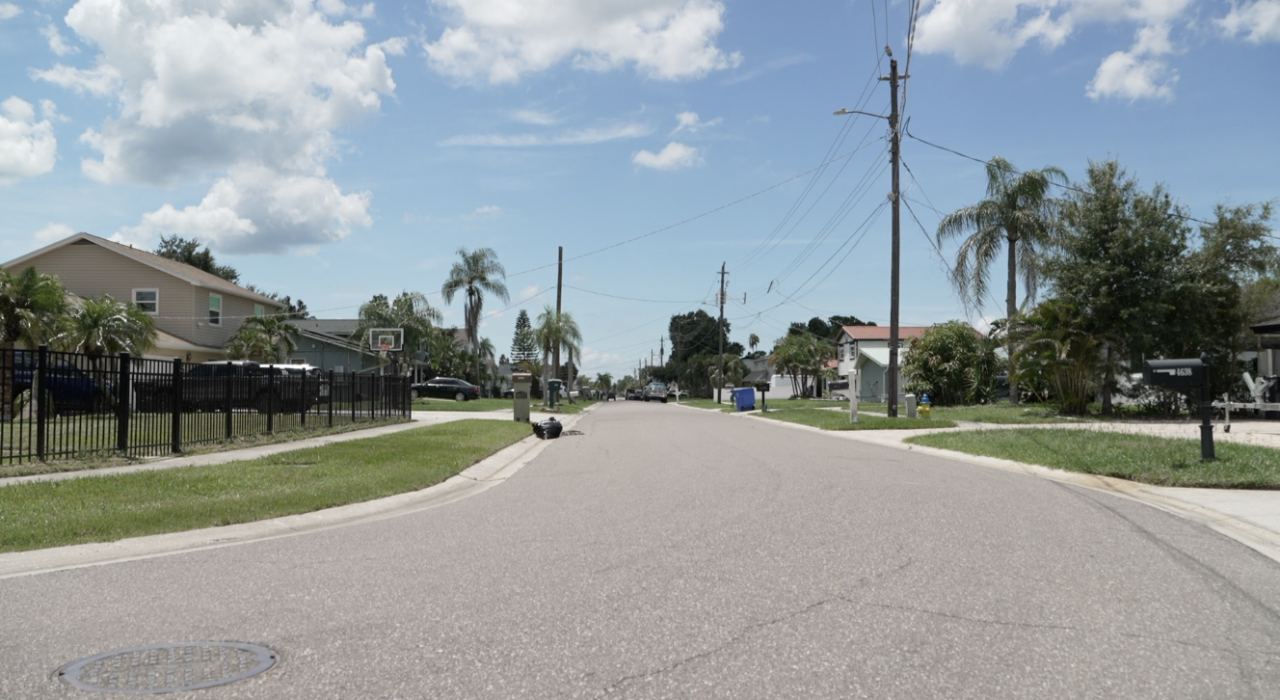
Residents say the gaps in the proposed ordinance are not theoretical. In one recent case in Bay Crest Park, residents documented a home being used as a vehicle rental operation and sent clear photographic evidence of an unlicensed vehicle and a safety hazard near an electrical panel directly to the Director of Code Enforcement, the county attorney, and county commissioners. Despite the escalation, the hazard remained unresolved for weeks, with officials citing limitations on property access.
Short-term rentals operating in residential areas have created ongoing quality-of-life problems throughout the neighborhood, including excessive noise, illegal parking, trash, overcrowding, and commercial activity inconsistent with single-family zoning.
Under current Hillsborough County code, short-term rentals are defined as stays of six nights and seven days. Residents say the neighborhood is saturated with listings offering rentals of one, two, or three nights, in direct violation of that ordinance, and that enforcement has been slow or nonexistent.
"We've been contacting code enforcement on a regular basis," Cuilla said. "There's complaints in their systems that we monitor. We've been contacting the other agencies. We've been contacting the commissioners."
She said response times from code enforcement have sometimes stretched to a month.
"By that time, it's already too late," Cuilla said.
Kiddo said investigators have in some cases compared listing photos on Airbnb to the actual property, and when the photos do not match, violations go unaddressed.
"You could have a one-bedroom Cape Cod that you're renting out on Airbnb with a picture of a mansion," Kiddo said. "Why aren't they more proactive when it comes to looking at these violations and prosecuting these violations?"
Residents also questioned the consistency of rulings at the code enforcement magistrate and code enforcement board, saying penalties vary widely from case to case.
"There needs to be consistency on that board," Cuilla said.
Illegal conversions and unpermitted work
Residents say several homes in the neighborhood have been illegally subdivided into multiple rental units with no permits pulled for the work.
Cuilla described a single-family home on her street that has been converted into three separate Airbnb units, with a fourth portion occupied by a long-term tenant. Kiddo described another home that has been subdivided into four Airbnb units, two upstairs and two downstairs, with a common area at the entrance. A home on Memorial Highway operates as six Airbnb units: four inside and two additional structures built illegally in the backyard.
"Yes, the county knows about it," Kiddo said. "They do nothing."
Residents also described a home where a garage was illegally converted into a room that sleeps eight people. The home itself, under fire code as a three-bedroom house, is legally permitted to sleep eight people total.
"You have a house that is sleeping eight just in that garage, and sleeps up to 21," Cuilla said. "That's a fire hazard."
On the street where I met with residents, 10 short-term rentals operate on a single block. One property sleeps up to 18 people. Another nearby home sleeps more than 20.
"You are now renting a boutique hotel in the middle of a single-family residential neighborhood," Cuilla said.
Homestead exemption fraud and flood remediation concerns
The resident's database has also flagged what they describe as potential homestead exemption fraud. Some short-term rental owners appear to be claiming the homestead exemption on properties where they do not live, and in some cases, residents say, the owners do not even live in the state of Florida.
"We know, according to the property appraiser, that there are some people that are taking advantage of the homestead exemption, and they don't even live here," Freeland said. "In some cases, they don't live in the state."
She said those cases have been reported to the property appraiser, but that nothing has been done.
Residents also raised concerns about homes damaged in past flooding events that were subsequently sold to investors without the required remediation documentation. Under county mandate, homeowners were required to fill out a substantial damage and substantial improvement form following flood events. Failure to do so places a hold on the property's parcel, preventing future permits from being pulled.
Residents say some of those properties appear to have been bought by investors, remediated without permits, and converted into short-term rentals, with unpermitted electrical and structural work that has never been inspected.
"Who knows? Maybe somebody gets away with that for a quarter, and then they turn around and sell the property," Kiddo said. "Now this new buyer ends up having to deal with the unpermitted work, which may or may not be quality work."
Beyond short-term rentals: car rentals and unlicensed businesses
The problems residents describe extend beyond Airbnb-style rentals. They said two car rental operations using the Turo platform are running out of single-family homes in the neighborhood, with as many as 18 cars listed from one address. One of the operators, residents said, is a renter himself, running a business out of a home he does not own.
At the corner of Baycrest Drive and Baycrest Lane, residents said a home is being used to sell cars with transporter plates without a license. They said both code enforcement and the sheriff's office are aware of the situation.
"Can I open up a restaurant in the middle of this block and not have to apply for anything, not have to post anything, not have to get any inspections?" Freeland said.
Quality of life and community impact
Residents described a neighborhood fundamentally changed by the volume of short-term rental activity. They cited noise complaints, trash left on neighbors' lawns, cars parked bumper to bumper on both sides of narrow streets, and strangers cycling through every two to three days.
"My whole backyard smelled like pot for a whole weekend because the people that were renting smoked so much pot in their backyard," Freeland said.
Kiddo described an elderly couple on his block who were afraid to leave their home after renters at a neighboring short-term rental urinated on their car in the driveway. Kiddo also described a situation at a short-term rental across the street from him where a man struck a woman's windshield with a hammer during an argument.
"We're left to pick up the mess that the county is not being proactive in handling," Kiddo said.
Residents also said the influx of investor purchases is contributing to the broader housing crisis, with first-time homebuyers being outbid by investors paying all cash, above asking price, with no inspection contingency.
"These investors are coming from out of state, contributing to the housing crisis and jacking up the prices of the homes in our neighborhood, and not even giving the fair local residents a chance to buy a home," Cuilla said. "It's not right. It's not fair, and it needs to be stopped."
Freeland, who has lived in the neighborhood for 13 years, said the change has eroded the sense of community that made Bay Crest Park what it was.
"I didn't buy to live next to a hotel," Freeland said. "Every two days I have a new neighbor.
What other counties are doing and what residents want next
Residents say they are not seeking a ban on short-term rentals. Florida Statute 509.032(7)(b) already limits local governments from regulating rental duration or frequency. However, residents say the same statute allows counties to require registration, safety inspections, responsible-party designation, and meaningful enforcement of existing codes, and that Pinellas County has already implemented these tools while remaining fully compliant with state law.
They also cited the cities of Clearwater, Oldsmar, and Dunedin, as well as Santa Rosa and Walton counties in North Florida, and Miami-Dade County as examples of jurisdictions with stronger protections than what Hillsborough County is currently proposing. Pinellas County has a 24/7 complaint hotline and an online portal routing complaints directly to code enforcement and the sheriff. Indian Rocks Beach holds code enforcement hearings multiple times a month to address violations. The city of Clearwater has contracted with a third-party company to monitor short-term rentals and verify licensing compliance.
Cuilla noted that registration fees alone could generate up to $600,000 under the proposed ordinance, and that fines from documented violations could make the enforcement operation largely self-sustaining.
"There's so much opportunity for the county to generate revenue from this," Cuilla said. "If these homes were being cited and fined the way that they should, they would be generating so much revenue for themselves."
Bay Crest Park is a special dependent taxing district where homeowners already pay an extra $100 annual assessment on top of their regular property taxes, making them directly dependent on the county to enforce the rules that protect their neighborhood.
Residents are also asking Cohen to schedule an evening public meeting on the ordinance before September, arguing that current weekday morning meetings exclude the working residents most affected.
Cohen said he is open to amendments as the process moves forward.
"Once we pass the ordinance, we can make amendments as gaps come up," Wilstel said. "Hopefully we can set this on the right path."
Residents say they are not willing to wait.
"We don't want excuses," Kiddo said. "We don't want parroted answers from somebody that tells you, 'Well, the preemption law.' No. All of these other counties are doing it. We're asking for Hillsborough County to be proactive and not reactive. To listen to their citizens. To not ignore us. To enforce the law and to keep us safe."
Freeland was direct.
"Show us results," Freeland said. "Don't tell us that you know we can do this. Do it."
The public hearing on the proposed ordinance is scheduled for September 2 at 10 a.m.
Share Your Story with Jada

Jada Williams is focused on the issues that matter most to people in who live in Tampa and West Hillsborough County. From downtown Tampa to Town ‘n’ Country and Westchase, Jada works to bring you updates and solutions on everything from crime to infrastructure. Reach out to Jada below with your concerns for your neighborhood.
.

Saudi flight from Tampa, secret FBI probe reveal possible Saudi support network for 9/11 hijackers
Twenty years after the Sept. 11 attacks, more than 80,000 records compiled by the Tampa FBI Field Office remain classified. Newly declassified documents are pointing to a possible secret Saudi support network for the hijackers. Soon after the attacks, the FBI uncovered that 15 of the 19 hijackers were from Saudi Arabia.
