



TAMPA, Fla. — The Tampa Bay Rays are asking Hillsborough County, the City of Tampa, and the Community Redevelopment Agency (CRA) to commit nearly $1 billion in public funds toward a new $2.3 billion ballpark and mixed-use development. Team officials and local elected leaders say the project could generate up to $75.5 billion in economic impact over 30 years.
Independent economists say that number cannot be trusted.
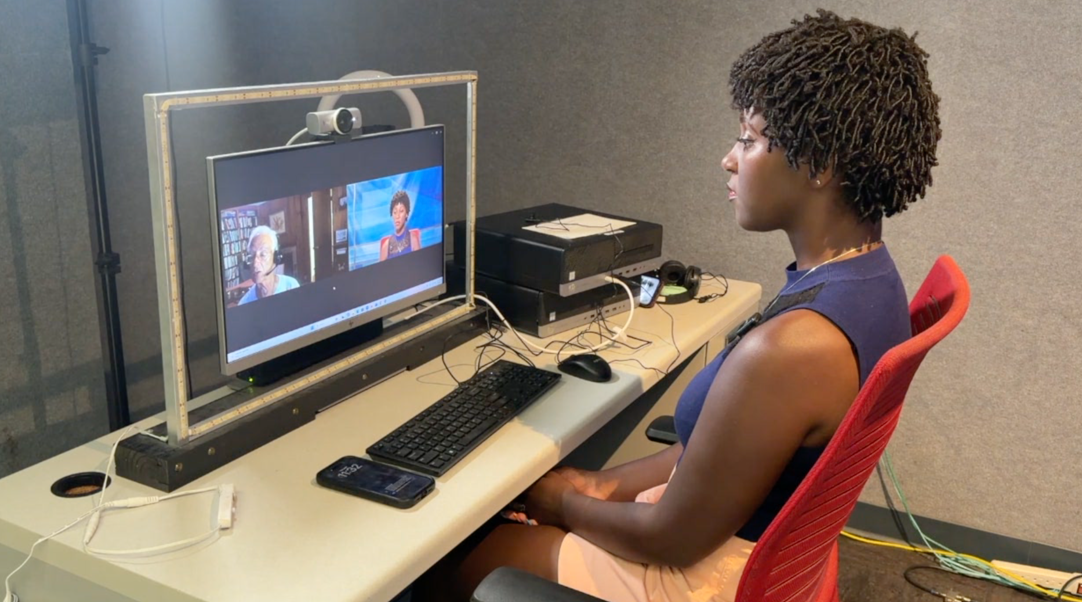
"There is no positive economic impulse from building a new stadium or from bringing a team to the area," said Andrew Zimbalist, a sports economist who has studied the economics of professional sports venues for 36 years.
WATCH: Jada Williams' report
Zimbalist is not alone. John Charles Bradbury, another sports economist, reached by email, was more direct: "The evidence is clear: stadiums are bad public investments."
A sweeping peer-reviewed study published in the Journal of Policy Analysis and Management — authored by economists John Charles Bradbury of Kennesaw State University, Dennis Coates of the University of Maryland, and Brad Humphreys of West Virginia University — concluded that "research consistently demonstrates that professional sports stadiums generate little to no tangible economic impacts in host communities; therefore, typical public subsidies for the construction of new stadiums generally exceed any meager economic benefits they may confer."
The study adds that there is "universal agreement among economists that sports venues represent poor public investments."
What's on the table in Tampa
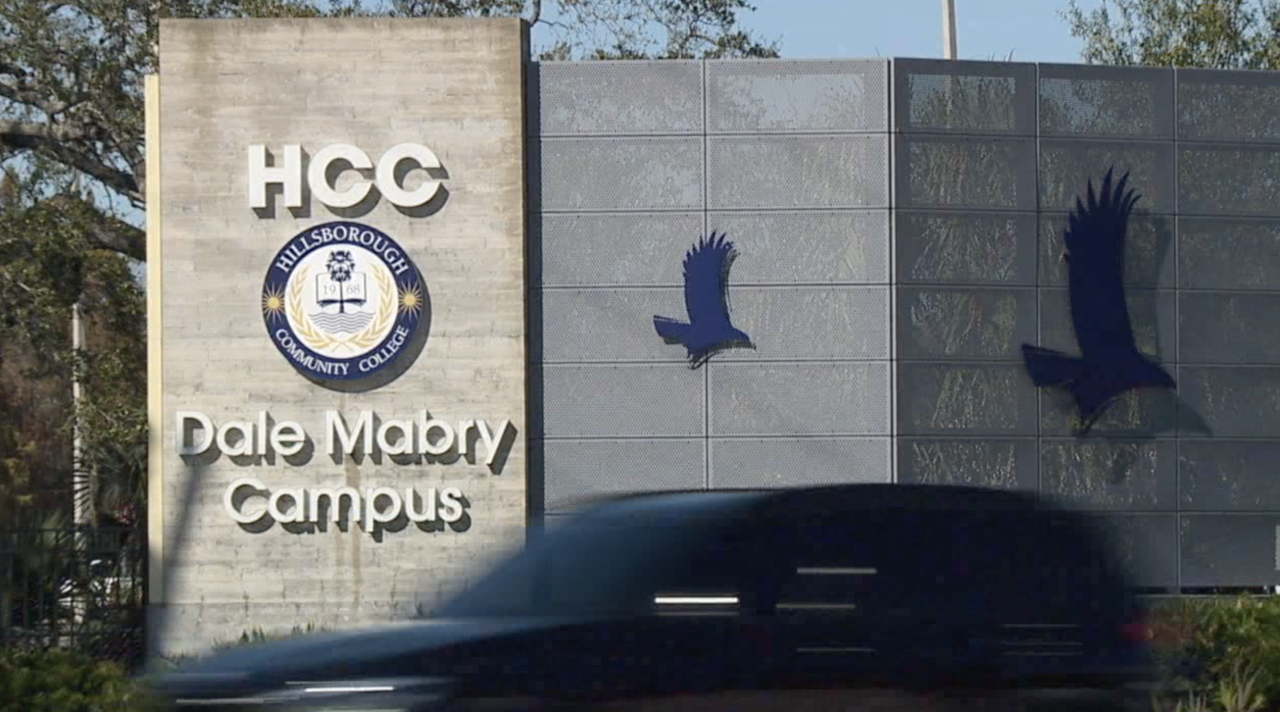
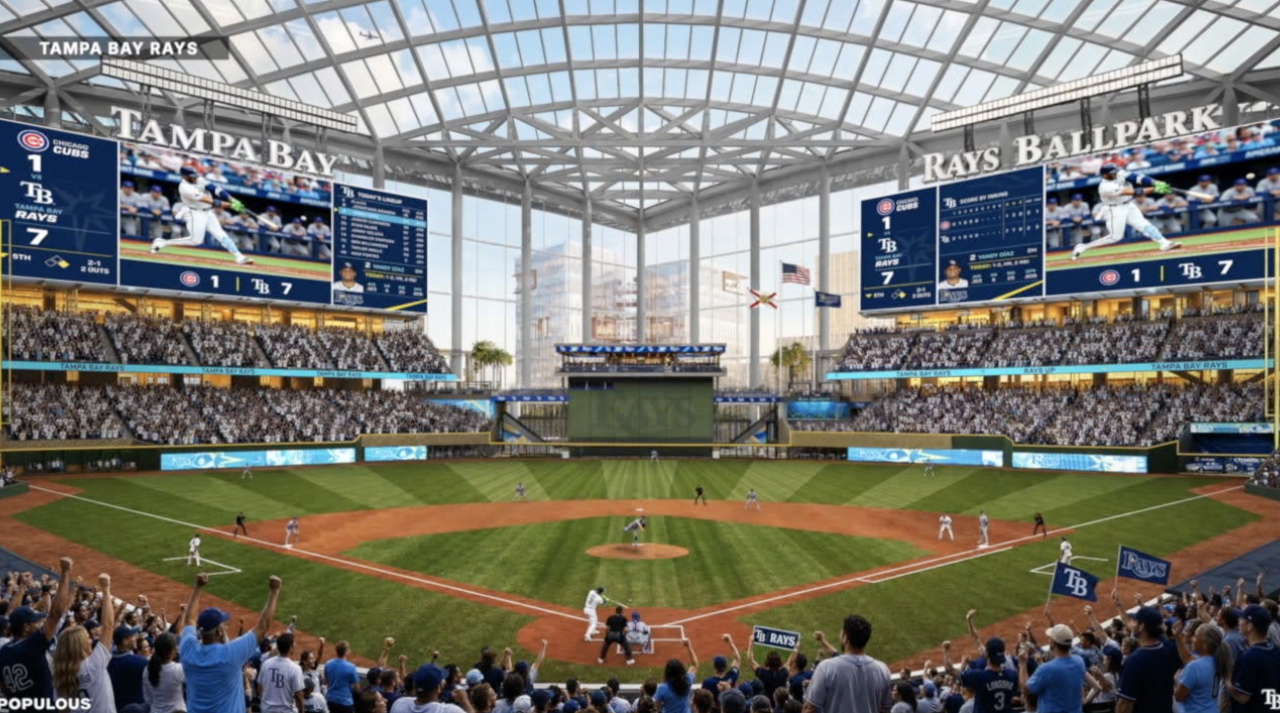
The proposed project would be built on the Hillsborough College Dale Mabry campus and span approximately 121 acres. At its center would be a new 31,000-seat enclosed ballpark. Surrounding it would be a privately financed, mixed-use neighborhood including hotels, apartments, restaurants, and commercial space, along with a newly constructed Hillsborough College campus.
Under the Memorandum of Understanding released in May 2026, the Tampa Bay Rays would contribute approximately $1.27 billion toward the project. That's the largest private investment by a sports team in Florida history, according to the team. The Rays would also be responsible for any cost overruns.
The public investment would include approximately $796 million from Hillsborough County, $80 million from the City of Tampa, and $100 million from the Drew Park Community Redevelopment Agency, for a combined public commitment of approximately $976 million.
The MOU is non-binding. Hillsborough County, the City of Tampa, and the CRA have yet to approve any official plans. The parties have stated a goal of opening the ballpark for the 2029 MLB season.
What elected officials are saying
Some public officials have been enthusiastic in their support of the proposal.
In May, Hillsborough County Deputy Administrator Greg Horwedel described the project's potential during a public meeting.
"The import of the proposed project is not only a major league ballpark, but also a large-scale mixed-use development that has the potential to generate substantial private investment, create jobs, expand the tax base, and drive long-term economic activity throughout the region," Horwedel said.
Commission Chair Ken Hagan urged fellow elected officials to keep an open mind.
"Take a holistic view and macro perspective of what a once-in-a-lifetime transformational project can and will do for our community," Hagan said.
However, not every elected official is on board with public dollars going toward this stadium.
The Rays say the project would generate $55.5 billion in economic impact over 30 years. A separate study commissioned by the Tampa Sports Authority put that figure even higher at $75.5 billion over the same period.
What independent economists are saying
Zimbalist said those projections should be viewed with deep skepticism. Not because the project lacks merit, but because the firms that produced those numbers were paid to reach favorable conclusions.
"Every time a stadium proposal is made by a team, they always go out, and they hire a company. They pay them big bucks, could be a million dollars, to do a study, and it's very clear what that study is supposed to show," Zimbalist said.
He said those studies typically rely on input-output analysis and unrealistic assumptions that independent economists do not use or endorse.
"If you do those two things, you can get any result you want. You get $55 billion, you get $110 billion," he said. "But when you look at this as an independent person who's trying to be dispassionate and objective about the situation, it's not generally something that you can count on."
The study by Bradbury, Coates, and Humphreys reached the same conclusion. The researchers found that commissioned economic impact studies "typically eschew established methods employed in academic studies" and instead "present speculative projections of future economic impacts, often employing commercial input-output computer models not used in academic research." The study found these reports regularly commit "basic errors such as incorrectly identifying costs as benefits, overestimating benefits and underestimating costs, confusing gross and net spending, using excessive multipliers that inflate growth expectations, and relying on unrealistic assumptions about future economic development."
The researchers noted that commissioned studies are produced for a lay audience as public relations documents, with executive summaries that highlight favorable forecasts and press releases designed for media coverage — and that policymakers and community members who are already predisposed to view stadium proposals positively are able to use these reports to dismiss the wealth of evidence regarding the dismal economic performance of past stadiums.
The substitution effect: Why stadium spending doesn't grow the economy
At the core of the economists' argument is a concept called the substitution effect: the idea that money spent at a ballpark is money not spent somewhere else in the same local economy.
"What happens is that when people spend money at a ballpark, it's money that they're not spending at some other entertainment venue in that metropolitan area," Zimbalist said.
"That doesn't create any change in the economic circumstance if that's all that's going on," he said.
The Bradbury, Coates, and Humphreys study explained the underlying economic theory in detail: "Most fan spending derives from existing area residents who reallocate their spending from other local leisure consumption options; therefore, spending at sports events largely crowds out other local spending and does not represent net new spending to the area."
The researchers described this as "the basic economic fallacy of the seen and the unseen". That's a concept first identified by 19th-century economist Frédéric Bastiat. Spending at a stadium is visible and concentrated, making it easy to point to as economic activity. The spending that disappears from restaurants, bowling alleys, movie theaters, and other local businesses is dispersed and invisible, but it is just as real.
Zimbalist illustrated the point with a concrete example.
"If you take your family to the ballpark and spend, let's say, $200, that's $200 you're not spending at a local bowling alley or restaurant. The owner of the restaurant or the bowling alley is likely a local with a more normal income, not a billionaire owner, and so that person doesn't have an extraordinarily high savings rate," he said.
When wealthy team owners and players receive the financial benefits of a new stadium, Zimbalist said, that money tends to leave the local economy entirely.
"The beneficiaries of the new stadium are the team owner and eventually the players. Where do the players live who play for the Tampa Bay Rays? The studies I've done for other leagues suggest that players usually don't live in the town where they play. It's true for the owners too," he said. "When they get the profits and when they get the highest salary, they don't spend a lot of that in Tampa. They spend it elsewhere."
The Bradbury, Coates, and Humphreys study confirmed this dynamic, noting that "a significant portion of team revenue covers labor costs for players who often do not live in host communities; therefore, revenue that flows to players does not contribute to the continued circulation of local spending like spending that supports workers in other occupations."
The researchers also put the scale of stadium economics in perspective: even the $5.5 billion SoFi Stadium complex in Los Angeles, the most expensive stadium ever built, represented just 0.49% of the Los Angeles GDP. The combined annual revenue of the Rams and Chargers represented just 0.1% of that GDP. As the researchers put it, quoting an earlier study: "The ripples of jobs and earnings creation from the sports environment are like those of a tiny pebble tossed into the ocean on the tides, inconsequential in any practical sense."
A wave of new stadiums and a history of broken promises
Tampa's proposed stadium deal is not happening in isolation. According to the study by Bradbury, Coates, and Humphreys, the United States is on the verge of a new wave of stadium construction.
The researchers documented that stadiums typically follow a 30-year replacement cycle, and the median age of existing major league sports facilities is currently 24 years. That means a large number of venues that opened during the construction boom of the 1990s and 2000s are approaching the age at which team owners typically seek replacements. That's even when the existing facilities remain structurally sound.
The study projected that by 2030, 32 major league venues will be at least 30 years old and will not have received a major renovation within the past 15 years. At the current median level of public funding for new venues, approximately $500 million, replacing those 32 facilities alone would result in $16 billion in public spending. An additional 34 venues opening in the 2000s will reach the 30-year mark by 2040, potentially adding another $17 billion in public subsidies.
The researchers say that these estimates likely understate future costs, given ongoing trends of escalating construction costs and growing public contributions. The Tennessee Titans recently received the largest stadium subsidy on record, $1.26 billion, to replace Nissan Stadium, which opened in 1999. The local government obligation of $760 million translated to approximately $2,600 per Metro Nashville household.
Since 2000, state and local governments have committed $19 billion to fund new major league professional sports venues in the United States and Canada. The numbers boil down to approximately $330 million per facility. That figure does not include considerable subsidies provided to minor league venues in smaller cities.
Despite this enormous public investment, the researchers found that "the failure of past stadium projects to spur economic growth" has been consistent and well-documented across decades of independent research.
The mixed-use argument: Does The Battery change the math?
Supporters of the Tampa project frequently point to The Battery Atlanta as a model for what Tampa could achieve. The Battery Atlanta is the mixed-use development surrounding the Atlanta Braves' Truist Park in Cobb County, Georgia.
Zimbalist said The Battery is a legitimate success story, but cautioned against assuming Tampa's project would replicate those results.
"I think it is a successful case study. It's not overwhelmingly successful, as might be claimed, but it is successful," he said. "If Tampa were able to do something like that, then let's look at it closely."
But he identified several critical differences between The Battery and the proposal in Tampa.
The Battery was built 10 miles north of downtown Atlanta in suburban Cobb County, where land was cheaper and more available. The Atlanta Braves had previously played at Turner Field, which was located near downtown. Moving to the suburbs allowed the team to develop a large footprint at a lower cost, without the displacement concerns associated with dense urban development.
"It's going to be more expensive because the land is more expensive," Zimbalist said of a Tampa development. "And you better watch out about whether there's going to be some displacement. Very often, you have to clear land away, which means you're kicking residents out of the area or businesses out of the area, and more often than not, the areas that are targeted are low-income areas."
He also raised concerns about economic displacement within the city itself. He says it's a dynamic that did not apply to The Battery because it was located in a different county.
"A restaurant that's over here in the city, 10 blocks away, decides, 'Oh, I'll have a better clientele, I get more business if I move to the new district,' so they close the restaurant over here, and they open one in the new district. Generally speaking, that's not a benefit to the city," Zimbalist said.
The Bradbury, Coates, and Humphreys study examined The Battery directly and reached a sobering conclusion. Despite the team executive who negotiated the deal boasting that the "novel integrated development project would differentiate it from past stadium boondoggles," the researchers found that the stadium-led project "has so far run an annual deficit of approximately $12 to $15 million for the funding County."
The study also examined other high-profile urban stadium redevelopment projects that were touted as catalysts for economic growth. Yet, their evidence consistently failed to support the claims made at the time.
Baltimore's Camden Yards, often cited as the gold standard of modern ballpark design and urban integration, "cannot be considered a successful urban redevelopment catalyst, because it experienced only modest and very localized success and did not catalyze a dramatic transformation of the area," according to research cited in the study.
Cleveland's Gateway Sports and Entertainment Complex "thrived at the expense of other areas in downtown Cleveland, reflecting the reallocation of urban activity rather than spurring new development."
San Diego's Petco Park "was a net drain on taxpayers, who were left to absorb the fiscal fallout during the financial crisis that followed; furthermore, the gains mostly accrued to the baseball team owner."
Denver's Coors Field is sometimes credited with revitalizing the city's lower downtown district, but the study noted that redevelopment there began in 1988. That was years before the ballpark opened. The research adds "much of the development of the area has occurred away from the ballpark rather than adjacent to it."
The researchers concluded: "The widespread belief that placing stadiums in urban environments can redevelop urban areas to promote new economic activity is mostly anecdotal and lacks strong empirical support."
On the broader question of mixed-use developments, the study was equally direct: "A greater development footprint surrounding the stadium does not change the basic economics of stadium-related consumption: spending in and around stadiums largely displaces existing local commerce rather than creating new economic activity, just like other stadium spending."
The college relocation cost
Under the current proposal, if approved, Hillsborough College would receive a brand new campus as part of the development. Zimbalist said that cost must be counted as part of the total public investment in the project.
"You've got to be very sensitive to that," he said. "The mixed-use development at The Battery was organized by and largely funded by the Braves, or the Braves got other private investors to fund it. So I look very closely at that. What is the funding plan for this? What kind of tax abatements, property tax benefits are being given to the investors? That's stuff that's money that the city loses."
The Bradbury, Coates, and Humphreys study documented this phenomenon extensively, finding that "less obvious public contributions from land, infrastructure improvements, maintenance and operations, and tax abatements are often not reported." Researchers found that unreported public contributions to sports venues can increase public obligations by 25% to 40% over reported costs. One study estimated that the cumulative cost in forgone property taxes for all major league sports facilities through the end of their current leases is $18 billion, an annual public cost of $5.7 million per venue.
How public funding is structured and why it matters
The MOU outlines a complex mix of funding sources for public contributions, including Tourist Development Tax bonds, Community Investment Tax contributions from both the county and the city, Drew Park CRA tax increment revenue, federal CDBG-DR disaster recovery reimbursement funds, and other county resources.
The Rays' MOU memo states that "no new taxes will be created to fund this project" and that the public investment will be made "through existing revenue sources."
But the study by Bradbury, Coates, and Humphreys warned that this type of framing, commonly seen in stadium subsidy campaigns, creates what economists call "fiscal illusion": the perception that a project does not impose a burden on taxpayers when it actually does.
"Every jurisdiction operates with a stock of wealth and flow of income from which taxes may be collected to fund public services. No matter what tax instruments a government employs to underwrite stadium expenses, the local nature of stadium commerce means that most of the revenue collected will come from local residents and businesses," the researchers wrote.
The study examined each type of funding mechanism commonly used in stadium deals and found that all ultimately draw on local residents — even those that appear to shift costs to tourists or visitors.
Regarding tourist development taxes, the researchers found that hotel taxes raise the effective price of room stays, deterring some guests and incentivizing hotel owners to lower pre-tax prices to retain customers. That could mean local hotel operators absorb a significant share of the burden. The study also noted that "most stadium spectators are residents who do not stay in hotels, and most hotel and car rental customers do not attend stadium events." Local businesses frequently rent rooms and cars for out-of-town employees and clients, and many low-income residents live in extended-stay hotels subject to those same taxes.
On tax increment financing and special district taxes, the mechanism used for the Drew Park CRA contribution in the Tampa proposal, the researchers found that "local residents make up the vast majority of surrounding developments' customers, which means that spending within the stadium district crowds out other existing local spending." Taxes collected on that spending generate revenue from reallocated consumption, thereby reducing tax collections from sales that previously occurred at local businesses elsewhere in the city. The municipality must then fund existing public services through additional taxes or by reducing services.
The researchers were blunt in their overall assessment: "When government funds are used to fund public projects, it represents an opportunity cost to taxpayers and is not windfall revenue."
Zimbalist echoed that concern, warning that the city's budget situation could deteriorate as a result of the deal.
"The budget situation might become, all of a sudden, a deficit situation, and the government has to issue bonds and borrow money. Then they have to do debt service on those bonds down the road," he said. "This stuff simply has to be looked at a lot, a lot more carefully, and in a lot of detail, before we know for sure."
Why elected officials keep approving deals economists say are bad
If the economic consensus is so clear, why do governments keep approving stadium subsidies? The study by Bradbury, Coates, and Humphreys devoted significant attention to answering that question. The answer has less to do with economics than with politics, power, and the structure of local decision-making.
The researchers identified several overlapping forces that drive stadium subsidies despite the evidence against them.
Local growth coalitions. The study found that the primary drivers of stadium subsidies are not team owners lobbying for public money, but rather what sociologists call "local growth coalitions". Those are the informal alliances of influential community insiders including local business leaders, politicians, community organizers, labor union officials, and media members who collectively shape the local policymaking environment.
"Local growth coalitions differ from traditional lobbying, where advocacy and opposition groups compete to influence policymakers, because the coalition exists as an informal community institution whose approval is prized by elected officials," the researchers wrote.
These coalitions tend to favor large, visible projects that signal a city's status and attract new corporations and residents. Their members often benefit personally from the presence of a professional sports team through networking opportunities, access to luxury suites and exclusive events, and the ability to recruit talented young professionals who value living in a city with major league sports.
The study found that "municipalities are not neutral referees in these stadium initiatives but are clearly predisposed toward building publicly financed stadiums. This has become the default policy."
Political bargaining asymmetry. Team owners and stadium supporters have a concentrated financial interest in securing subsidies, while the cost is dispersed across a broad tax base. A team owner receiving hundreds of millions in subsidies has far more incentive to spend resources lobbying for the deal than any individual taxpayer has to oppose it. The study found that stadium boosters routinely outspend opponents in advocacy campaigns.
Commissioned economic impact reports. The study described commissioned economic impact reports as "a key component in all stadium subsidy advocacy campaigns." Rather than providing objective evaluations, these reports are produced to justify using tax dollars to fund a new stadium. They are promoted to the community, local media, growth coalition members, and elected representatives as proof of a stadium's favorable economic prospects.
"Policymakers, local growth coalition, and community members who are predisposed to view stadium proposals positively are thus able to dismiss the wealth of evidence regarding the dismal economic performance of past stadiums," the researchers wrote.
The study also noted that commissioned studies benefit from short decision-making time frames, driven by arbitrary deadlines and vague speculation about relocation, allowing policymakers to accept favorable findings as expedient confirmation of their pro-stadium preference.
Media coverage. The researchers identified three types of biased media coverage that contribute to public misunderstanding of stadium economics: uncritical reporting that repeats booster talking points without scrutiny; false balance that presents commissioned advocacy studies and peer-reviewed academic research as equally credible competing viewpoints; and editorial sycophancy, in which local media outlets become active boosters for proposed stadium projects.
The study highlights that local reporters covering stadium proposals often lack familiarity with stadium economics because new stadium deals occur infrequently in any given city, and may seek guidance from local growth coalition members who have previously served as reputable sources on other matters.
Voter preferences are routinely overridden. Perhaps most striking is the gap between what voters say they want and what their elected representatives approve. A 2017 survey found that 75% of U.S. adults opposed publicly funding stadiums to attract professional sports teams. A 2022 poll found that 56% opposed raising taxes to subsidize professional sports facilities even while acknowledging that teams provide some cultural benefits.
When the Buffalo Bills stadium deal was approved, 63% of New York voters opposed public funding for it. When the Tennessee Titans stadium deal was approved, 62% of Tennessee voters opposed the state-level subsidy.
The researchers found that from 2005 to 2017, only 6 of 36 new stadium or renovation proposals were decided through direct public votes. When proposals are put before voters, they pass at about a 58% rate. When they are decided only by elected representative bodies, they pass at a rate of 96%.
"The willingness of elected officials to thwart the explicit preferences of voters further highlights the preferences of politicians to support stadium subsidy projects," the researchers wrote.
Is there any legitimate case for public investment?
Zimbalist and the academic researchers are not arguing that cities should never spend public money on sports venues. They are arguing that the justification for doing so should be honest.
"If you want to do it because you think it enriches the area culturally and socially to have a team, and it creates a sense of community, then that's fine. Just like you put money into a public park, you might put money into a stadium for a baseball team or football team or whatever," Zimbalist said. "But don't do it because you think it's going to generate employment and higher income."
The study by Bradbury, Coates, and Humphreys found that professional sports teams provide some measurable intangible social benefits. That includes a sense of civic pride, quality-of-life amenities, and community identity that residents genuinely value. Survey-based studies using the Contingent Valuation Method, which asks residents how much they would be willing to pay for the presence of a sports team, consistently found non-use values of approximately 13% of total capital construction costs and 16% of public contributions.
In practical terms, that means the social and cultural value that residents place on having a team in their city might justify a public contribution of tens of millions of dollars. Not hundreds of millions.
"The citizens who are going to either vote for you or not vote for you during the next election should understand that it's not something that promotes economic development, even though they argue it does," Zimbalist said. "If they're calling upon the city to put down $300 million or $500 million or a billion dollars in this thing, they like to be able to make the argument that this is going to be really good for the local economy. That argument is not to be believed."
He framed the honest version of the conversation this way: "If you want to do this for social and cultural reasons, you should know that it's going to cost you X amount of money. And how much it costs depends upon the details of the circumstance. But it might cost you $100 million, and that $100 million is basically a one-time,present-value figure, and you're going to enjoy the Tampa Bay Rays for the next 30 years."
The researchers found that 25 of the 98 current and future professional sports venues opened since 1990 were built with reported public funding accounting for 5% or less of total construction costs. That means that teams can and do build facilities with minimal public assistance when they choose to. "Teams can, and do, pay for their own facilities," the study concluded.
What comes next
Hillsborough County, the City of Tampa, and the CRA are currently working on the MOU. No officially votes promising money have taken place yet. The parties aim to open the ballpark for the 2029 MLB season.
The Bradbury, Coates, and Humphreys study offered a recommendation for communities facing exactly this kind of decision: put the question directly to voters.
"Determining stadium subsidies through plebiscites is both desirable, from a social welfare perspective, and practical. Stadium subsidy costs are borne by the entire polity. Seeking the consent of voters confirms their willingness to pay for subsidies," the researchers wrote.
They also cautioned against the urgency that stadium proponents typically inject into the process.
"Stadium subsidy supporters often insist on expedient consideration of their proposal, but such claims nearly always reflect false urgency from self-imposed deadlines. Few, if any, negative policy or welfare consequences would result from approving a stadium subsidy too slowly."
For Zimbalist, the message to Tampa residents is straightforward: understand what you are actually being asked to pay for and what you are, and are not, likely to get in return.
"It's more likely to be something that you're spending money on, and you're getting a benefit, and the benefit is social and cultural rather than economic," he said. "That's where the independent scholarship comes down on that question."
Share Your Story with Jada
Jada Williams is focused on the issues that matter most to people in who live in Tampa and West Hillsborough County. From downtown Tampa to Town ‘n’ Country and Westchase, Jada works to bring you updates and solutions on everything from crime to infrastructure. Reach out to Jada below with your concerns for your neighborhood.
.

'My heart breaks': Woman describes helping injured students after deadly school bus crash in Polk County
A woman on her way to work Monday morning found herself helping injured Winter Haven High School students after a school bus crash that killed two people.
