

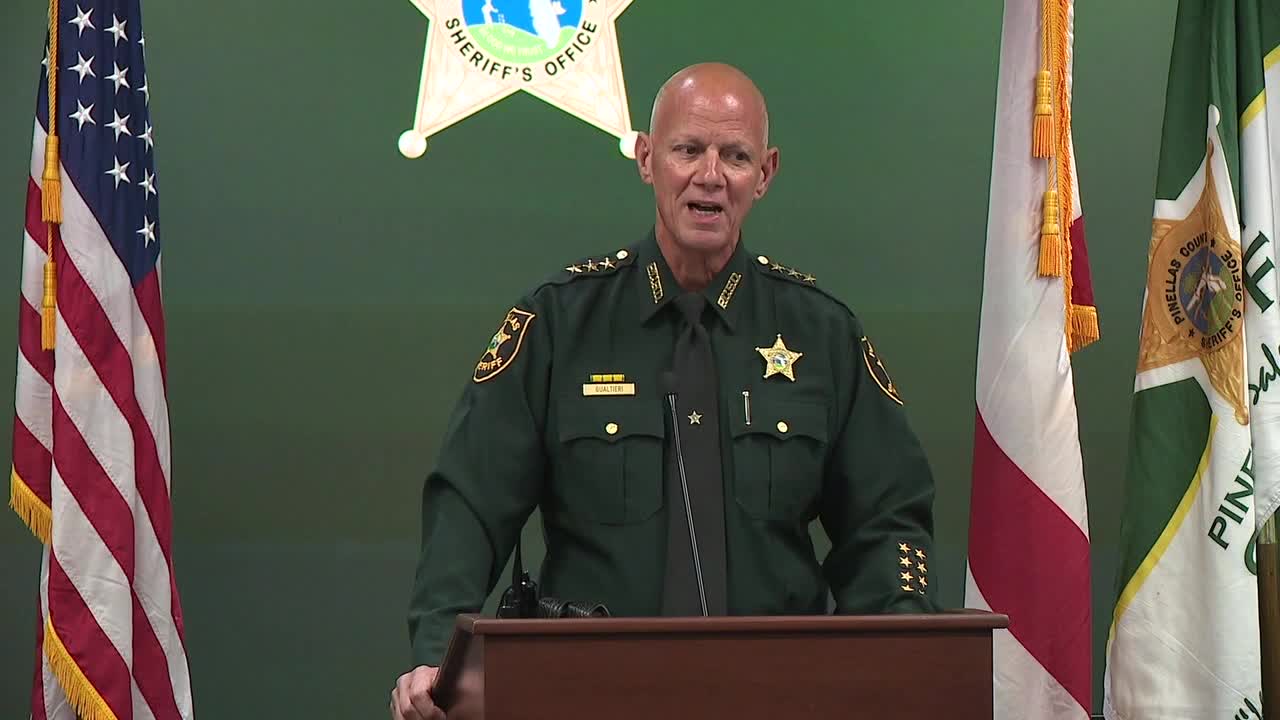


LARGO, Fla. — Pinellas County Sheriff Bob Gualtieri is defending Flock and other license plate cameras as important crime-fighting tools, even as a county commissioner pushes to remove them from county roads.
Gualtieri held a news conference on the topic Wednesday, one day after Pinellas County Commissioner Vince Nowicki proposed ending the county's contracts with Flock, Axon, and other companies that provide the automated license plate recognition (ALPR) cameras.
Nowicki's resolution would also require the county to remove existing license plate cameras from county roads and county-controlled rights-of-way.
The commissioner's proposal follows the Florida Department of Transportation (FDOT) order to remove license plate cameras from state highway rights-of-way within 30 days. That state directive does not apply to cameras on county and local roads.
Gualtieri made it clear Wednesday that the Pinellas County Sheriff’s Office (PCSO) intends to continue using the cameras on county roads and will not voluntarily remove them.
Gualtieri: "We cannot fight crime in the Stone Age"
The Sheriff's Office has used license plate cameras in various forms since 2006, Gualtieri said.
He said PCSO uses the technology to help recover stolen vehicles, identify vehicles connected to violent crimes, arrest criminals, and locate missing and endangered people.
“We cannot fight crime in the Stone Age,” Gualtieri said.
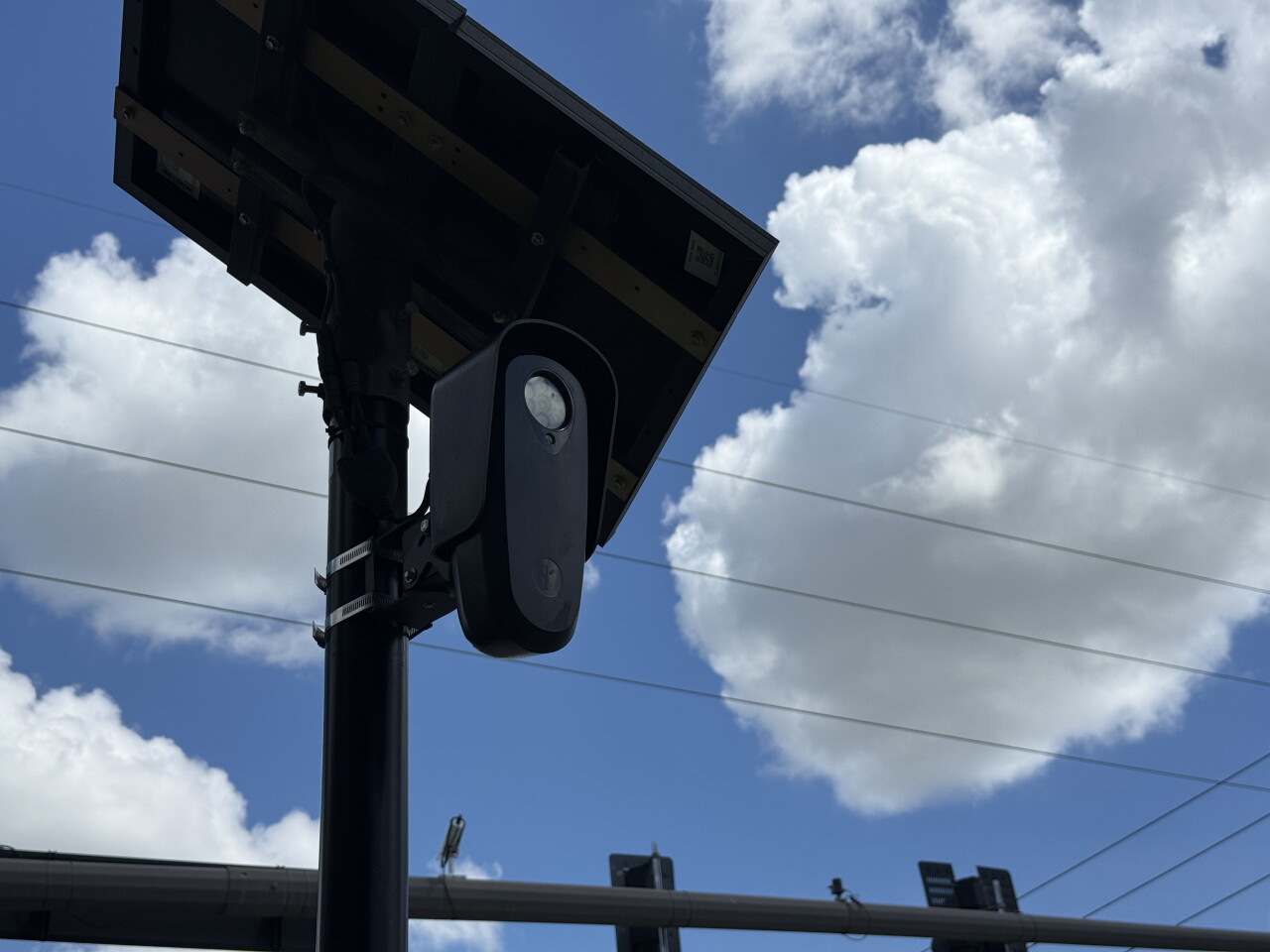
Gualtieri said the cameras automate something officers have historically done manually: checking license plates against law enforcement databases.
He argued that the technology can make investigations more precise and, in some cases, prevent unnecessary encounters with innocent drivers.
"ALPR actually, contrary to what some people are saying, protects individual right," he said.
For example, he said that if investigators know an armed robbery suspect fled in a green Toyota but have no license plate, officers could end up stopping multiple green Toyotas in the area.
A license plate camera, he said, can help investigators identify the specific vehicle instead.
Sheriff points to recent cases
Gualtieri cited several recent investigations to demonstrate what he says the cameras can do.
He pointed to an armed robbery Sunday night near U.S. 19 and Ulmerton Road.
Two masked men allegedly entered a business, held a gun to the owner's head, and stole money. Surveillance video from a neighboring business showed the suspects leaving in a black Kia but did not capture the license plate.
Gualtieri said investigators determined the same vehicle was connected to two robberies in Tampa.
Investigators then used license plate cameras to identify the Kia's tag. A lookout was placed in the system, and an officer in Daytona Beach later located and stopped the vehicle.
Gualtieri said the suspects had an AR-15, multiple other firearms, and property belonging to the robbery victim.
Gualtieri also pointed to a Jun. 5 homicide in Pinellas Park.
He said a man was shot and killed and the suspect fled on a motorcycle. Investigators searched license plate camera data around the time and location of the fatal shooting and identified a possible motorcycle tag.
Gualtieri said the registered owner was an associate of the victim, and the investigation led to probable cause for a first-degree murder arrest.
Gualtieri: Cameras don't continuously track people
A major part of Gualtieri's defense was his insistence that license plate cameras are not continuous surveillance systems.
He said the cameras take motion-activated still photographs of vehicles and their license plates. They do not record video, he said. He also said the cameras do not identify who is inside a vehicle.
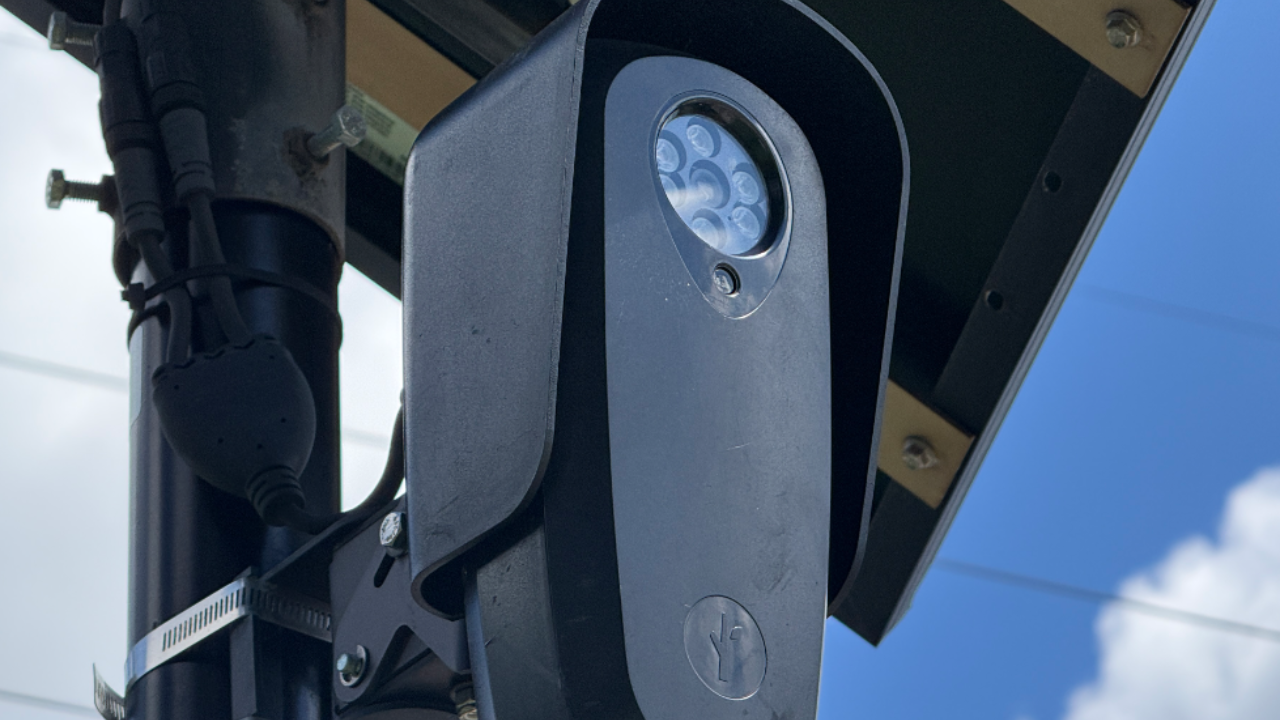
The distinction matters because critics, including Nowicki, argue that accumulating vehicle location data creates a form of government surveillance even when individual drivers have done nothing wrong.
Nowicki has said public safety and personal liberty do not have to be competing goals. He believes that government should track suspects based on evidence rather than collect everyone's movements “just in case.”
“I think we will look back and say, 'Was this too far?'" he said Tuesday. "And I think that time is here.”
Gualtieri, meanwhile, also defended the ability to search historical license plate information.
He said that capability is important because crimes are not always reported immediately.
A victim of a sexual assault, for example, may not report it for days or weeks. A homicide investigation may develop a suspect weeks or months after the killing.
He also said sharing information between law enforcement agencies can be important because suspects and missing people routinely cross jurisdictional boundaries.
But questions remain about safeguards
While Gualtieri strongly defended the technology, he acknowledged there are legitimate concerns about misuse.
He said responsible use requires written policies, training, access controls, auditing, data security, and meaningful consequences when officers misuse the systems.
Though he said it has not occurred at his department, Gualtieri acknowledged that officers in some jurisdictions have improperly accessed license plate systems for personal reasons, including searching for former girlfriends or spouses.
He said those abuses are serious and should result in discipline. But, he argued those incidents are relatively rare.
"We don't need to throw the baby out with the bathwater because a few people did something stupid," the sheriff said.
However, questions remain about how PCSO monitors its ALPR systems.
Gualtieri said PCSO requires deputies to enter an official case number when conducting a license plate camera search.
But, he acknowledged the software does not actually require the case number.
Gualtieri said he believes Flock, Axon, Motorola, and other manufacturers should change their software so a search cannot be conducted without a case number and a documented law enforcement reason.
He also acknowledged that PCSO does not currently have the automated auditing capability he would like.
Instead, he said the department can manually monitor searches and look for activity that raises questions.
He said manufacturers are working on algorithms that could identify unusual search patterns and flag them for review.
Gualtieri also acknowledged inconsistencies among agencies in how license plate camera systems are governed.
He said some agencies have policies while others do not, and he argued that there should be consistent standards from department to department. He suggested that the Florida Legislature could establish statewide standards.
Gualtieri acknowledged the system still relies largely on trust.
“We have to trust our people, we have to trust but verify,” Gualtieri said.
How many cameras does PCSO have?
Gualtieri said PCSO has 73 fixed license plate cameras, plus additional mobile units.
He said 23 of the 73 fixed cameras are on FDOT rights-of-way. The state's order requires those cameras to be removed or relocated.
The remaining PCSO cameras on county roads are not affected by the FDOT order.
Gualtieri said the Sheriff's Office will not publicly release the specific locations of its cameras. He argued that doing so could help criminals evade them.
What's next for Nowicki's proposal?
Reached by phone Wednesday, Nowicki said he plans to move forward with the resolution despite Gualtieri’s comments.
The Pinellas County Commission has a regular meeting scheduled for Sept. 10, when it could discuss the proposal and potentially vote on it.
Share Your Story with Chad

Chad Mills calls Polk County home and has witnessed the area’s growth firsthand. He is focused on sharing stories from his neighbors in Lakeland. You can use the form below to connect with Chad.
.

Pasco County mom of 5 takes in 3 children left without food or power whose mother faces neglect charges
Jasmine Young, a mother of 5, opened her home to three neglected girls as their mother faces child neglect charges for leaving them without food, power or water.
