



NEW PORT RICHEY, Fla. — Hidden among trees, bushes and overgrown lots throughout New Port Richey are makeshift shelters where people experiencing homelessness are living outdoors, often out of sight of the surrounding community.
A specialized unit with the New Port Richey Police Department is working to find those individuals and connect them with services that could help them get back on their feet.
Watch report from Erik Waxler:
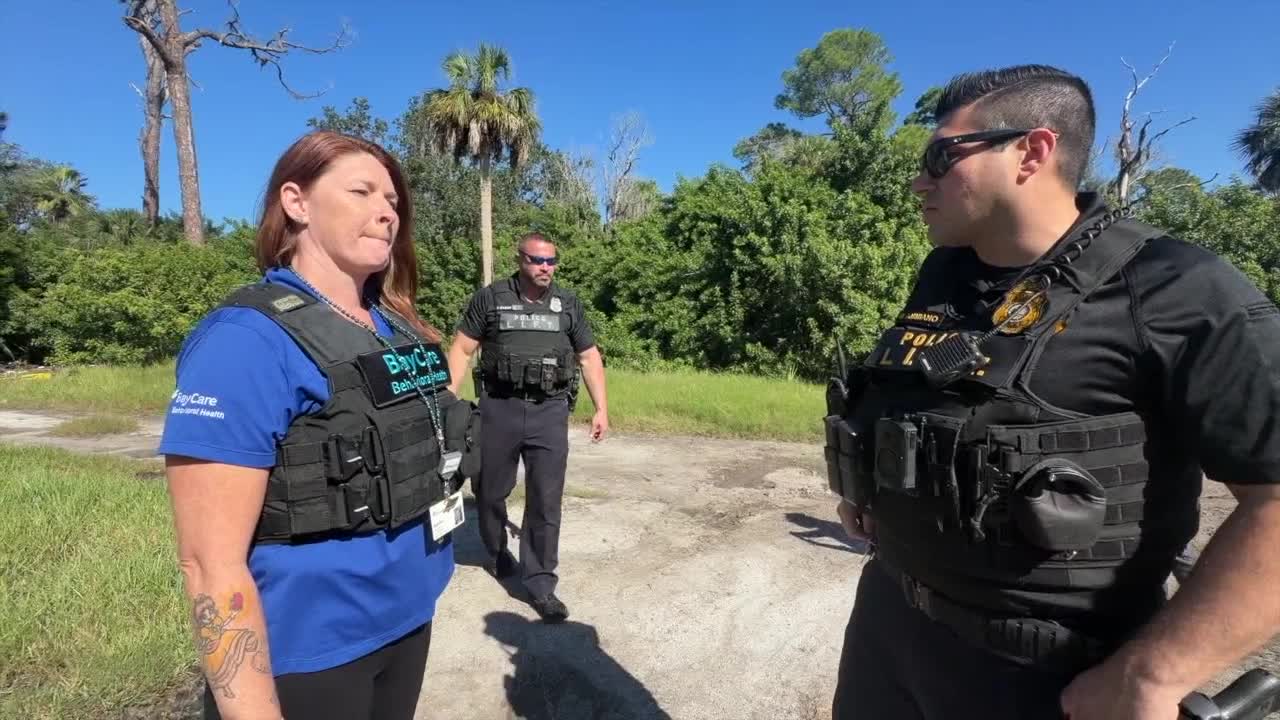
Tampa Bay 28 went along with the department's Life Improvement Facilitation Team, known as the LIFT Unit, as members visited several locations where people have been living.
At one vacant lot next to a home, a code-enforcement call led police to sheets hanging from a tree that appeared to be part of a makeshift shelter.
The LIFT Unit takes an outreach approach to homelessness. Rather than focusing on arrests, officers work to build relationships with people living on the streets, learn about their circumstances and connect them with organizations and programs that can provide assistance.
But Cpl. Mark Ammiano says finding people who need help isn't always easy because many try to remain hidden.
“They don’t want people to know they are out here living behind trees and bushes and things like that. We try and go out and say hey, it’s ok to let people know the situation you are in so we can try and help you.”
The team also includes a caseworker from BayCare Behavioral Health who helps connect people with available resources.
Sandy Smith Serrano says rising housing costs are pushing more people onto the streets, including those who have some income but can't afford a place to live.
“The people that are out here that do have income are on fixed income. And it’s just not enough to pay the bills with how rent skyrocketed.”
One wooded area off US 19 was once a mobile home park. Since the hurricanes, the property has become overgrown, with piles of trash scattered throughout.
But there are also signs that people have made the property their home.
Under one canopy is a makeshift living room, complete with furniture. Nearby, a container of colored pencils sits among other belongings.
Plans exist to develop the property, but for now, it remains one of several homeless camps the LIFT Unit regularly visits.
Officers say the goal is to understand each person's circumstances rather than assume everyone experiencing homelessness needs the same kind of assistance.
“I try to take an individual approach. Talk to people here about what their story is. What they’ve been through. And what they need to pick themselves back up," Smith Serrano said.
Finding solutions isn't always easy.
Shelter space is limited, and while rising housing costs are one challenge, some people also need assistance with mental health or substance use.
The LIFT Unit connects those individuals with programs that can address their needs. But officers and caseworkers cannot always persuade someone to take advantage of the help being offered.
During Tampa Bay 28's visit, the campsites were empty. Those staying there may return later or may have already moved to another location.
But the signs that people have been living there remain.
Officers say they'll keep visiting these areas, hoping to connect with people who need assistance.
And even when they find someone who could benefit from available services, getting that person to accept help can be another challenge.
“It’s mixed there. Usually open to the idea. However, getting them to commit is a bit harder,:" said Officer Ryan Warner.
For the LIFT Unit, the work continues, one campsite and one conversation at a time.
Share Your Story with Erik

For more than 15 years, Erik Waxler has called Pasco County home. He’s dedicated to helping his neighbors from New Port Richey to Dade City solve problems and celebrating those who help others. Share your ideas and tips with Erik below.
.

Pasco County mom of 5 takes in 3 children left without food or power whose mother faces neglect charges
Jasmine Young, a mother of 5, opened her home to three neglected girls as their mother faces child neglect charges for leaving them without food, power or water.
