

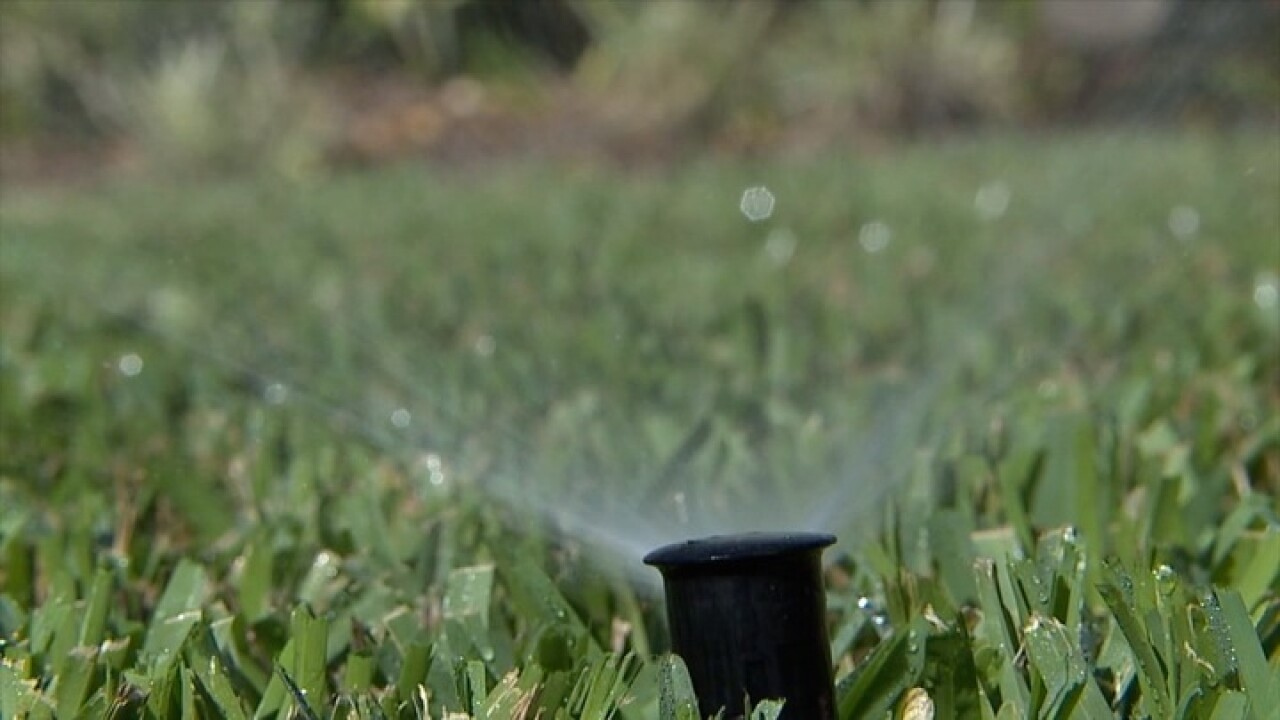


TAMPA, Fla. — New watering restrictions will be in place across much of the region from Feb. 8 through July 1 as drought conditions continue to strain much of the state’s water supply.
While the limits may make lawn and landscape care more challenging, experts with the University of Florida’s IFAS Extension say homeowners can still maintain healthy yards by adjusting expectations and changing a few habits.
WATCH: IFAS shares tips for lawns during current drought and upcoming watering restrictions
The restrictions are designed to protect Florida’s underground aquifer.
“That water is not just there for us to water landscapes, but that’s how we get by day to day, so our water for our living, businesses, tourism, that sort of thing," said Susie Haddock with the IFAS Extension in Hillsborough County.
One day a week or less
Under the new rules, many people will only be allowed to irrigate once a week. UF/IFAS experts say that is often enough, and in some cases, lawns may need water even less frequently.
Rather than sticking to a fixed schedule, homeowners are encouraged to watch for signs of stress, including:
- Grass blades folding lengthwise
- A blue-gray tint to the lawn
- Footprints that remain visible after walking across the grass
If those signs are not present, irrigation can often be postponed.
Lawn care tips during drought
IFAS recommends several steps to help lawns survive with less water:
- Mow higher than usual to encourage deeper roots and shade the soil
- Keep mower blades sharp to reduce stress on grass
- Water early in the morning to limit evaporation
- Avoid runoff by watering slowly and only as long as needed
- Postpone herbicides and fertilizer, which encourage new growth that requires more water
Experts say fertilizer applied during drought can actually weaken grass rather than help it.
“In Central Florida, in general, we recommend not fertilizing lawns or ornamental plants until about mid-March to the beginning of April," added Haddock.
Don’t forget your sprinklers
Homeowners should also check their irrigation systems to make sure sprinkler heads are working properly and not wasting water on sidewalks or streets. UF/IFAS Extension offices may be able to help with sprinkler evaluations in some areas.
Help for plants and flower beds
Landscaping beyond the lawn also needs special attention during dry conditions. IFAS suggests:
- Moving potted plants into shady areas
- Refreshing mulch in flower beds to help retain moisture
- Prioritizing trees and shrubs over turf when watering by hand
- Choosing native or drought-tolerant plants when updating landscaping
Looking ahead
As spring temperatures rise, experts say irrigation needs may increase slightly, but not to pre-drought levels. In many cases, watering once every two weeks early in the season, then once a week as it gets warmer, may be sufficient.
The bottom line, according to UF/IFAS, is that Florida lawns are resilient. With mindful watering and proper care, they can survive and recover even during extended dry spells.
Find more information from UF/IFAS here and here.
Share Your Story with Chad

Chad Mills calls Polk County home and has witnessed the area’s growth firsthand. He is focused on sharing stories from his neighbors in Lakeland. You can use the form below to connect with Chad.
.

Bradenton community responds after 20-year-old volleyball star dies from disease that affects 2 in a million
The 20-year-old IMG Academy volleyball star and Under Armour All-American died Sept. 16 after a three-month battle with the rare blood disorder — even though doctors had found her a 100% bone marrow match, her mother, Tanya Mack tells Tampa Bay 28 reporter Haley Zarcone.
