

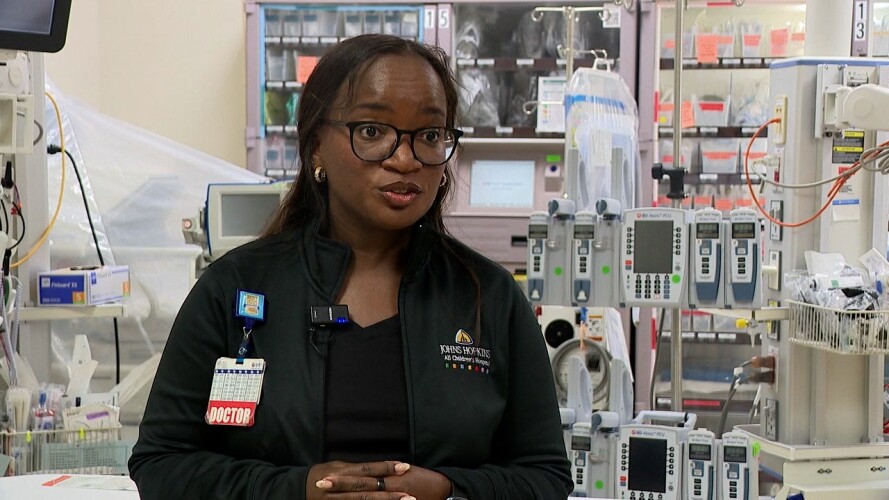


ST. PETERSBURG, Fla. — A pediatric emergency medicine physician is urging parents to keep fireworks and sparklers away from children.
According to the U.S. Consumer Product Safety Commission (CPSC), there were 15 reported fireworks-related deaths in 2025. An estimated 13,000 people were injured by fireworks last year.
WATCH: Pediatric emergency medicine doctor explains how to stay safe during 4th of July celebrations
In 2025, an estimated 1,300 injuries involving sparklers were treated in emergency rooms, according to the CPSC.
"Normally, we see a lot of firework injuries, and those injuries usually will happen to the eyes, the hands, the feet, the fingers, so we see a lot of burns," said Dr. Ebony Hunter with Johns Hopkins All Children's Hospital.
Dr. Ebony Hunter said she expects more people to celebrate this year, since America is celebrating its 250th birthday.
She urges parents not to give children sparklers or fireworks.
"A sparkler gets up to 2,000°; that's hot enough to burn any metal, and it burns in an instant, and so we actually do not recommend children hold sparklers and that the adults who hold sparklers wear appropriate protective gear," said Dr. Hunter.
Dr. Hunter said if you do suffer a burn, seek medical attention. She also said not to apply ointments or creams, not to use ice, and not to pop burn blisters. Instead, use cool running water.
"Run the burn underwater for 15 to 20 minutes just cool tepid water, nothing too cold and we also would like for you to place a clean cloth over the burn and seek medical care," said Dr. Hunter.
Dr. Hunter says never point fireworks at people, pets, or structures.
"Don’t let any child hold fireworks, and I don’t care how much they want to; it’s just not safe for them to hold," she said.
For more safety tips, click here.
Share Your Story with Julie

Julie Salomone works to share the issues that matter to you. And navigating the job market is critical to affording the price of paradise. Julie also focuses on the day-to-day issues in Sarasota County, so be sure to reach out to Julie to start a conversation.
.

Bradenton community responds after 20-year-old volleyball star dies from disease that affects 2 in a million
The 20-year-old IMG Academy volleyball star and Under Armour All-American died Sept. 16 after a three-month battle with the rare blood disorder — even though doctors had found her a 100% bone marrow match, her mother, Tanya Mack tells Tampa Bay 28 reporter Haley Zarcone.
