

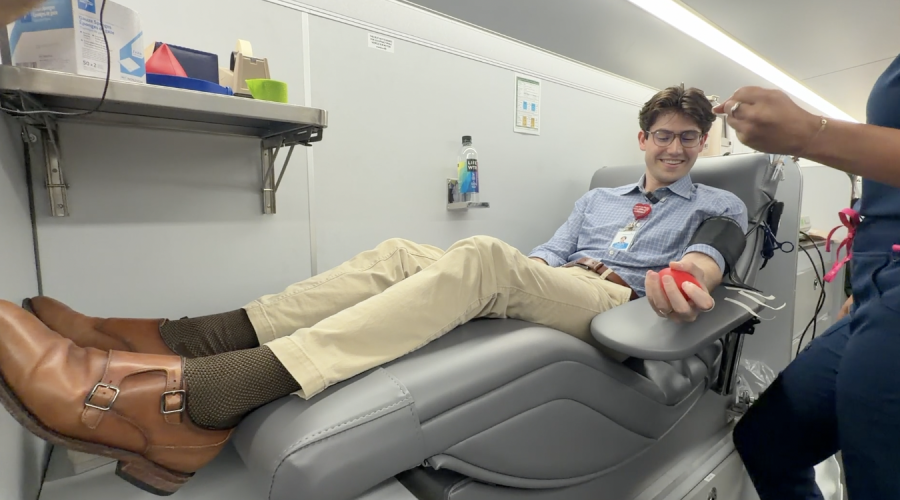


TAMPA, Fla. — The American Red Cross reports that blood donations dropped 25% in June, and the trend continues.
Here in Florida, the American Red Cross doesn't collect blood. However, OneBlood does. In Tampa, the shortage does exist.
WATCH: Advent Health Tampa blood drive aims to combat shortage affecting Tampa Bay patients
Advent Health Tampa's blood bank transfuses approximately 1,000 to 1,200 units of blood every month, meaning the hospital needs roughly 30 units delivered every single day just to keep pace with demand.
Jaime Gonzalez, the Blood Bank Supervisor at Advent Health Tampa, said the hospital's inventory has not yet reached a critical level, but is approaching it.
"We're not there yet. We've had situations in the past. We came very close to having to cancel surgeries, elective surgeries, due to blood inventory."
Gonzalez said the summer months historically bring a drop in donations because high school students, who make up a large portion of regular donors, are on vacation.
"Every three seconds, someone in the United States needs a blood product, and so we depend on the generosity of voluntary blood donors to basically support the entire population. The entire nation's health depends on volunteer blood donors."
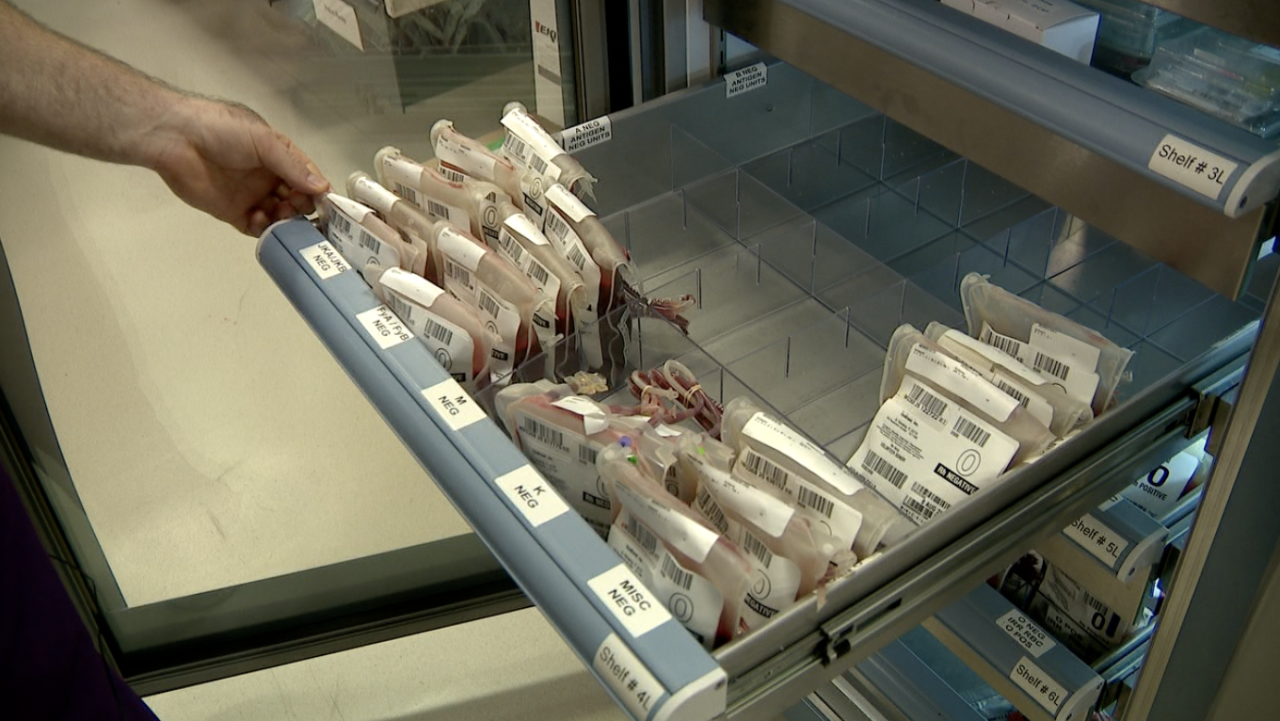
When inventory runs low, staff must call other facilities to find what they need.
"We have to call around and beg, borrow, or steal products from other sister sites or even other facilities within the Tampa Bay area," Gonzalez said.
Gonzalez said the hospital's blood bank receives blood from OneBlood, tests it, stores it, and then cross-matches units to individual patients before dispensing them throughout the hospital. Advent Health Tampa also serves as a reference lab, supporting sister sites including Zephyrhills, Carrollwood, and North Pinellas.
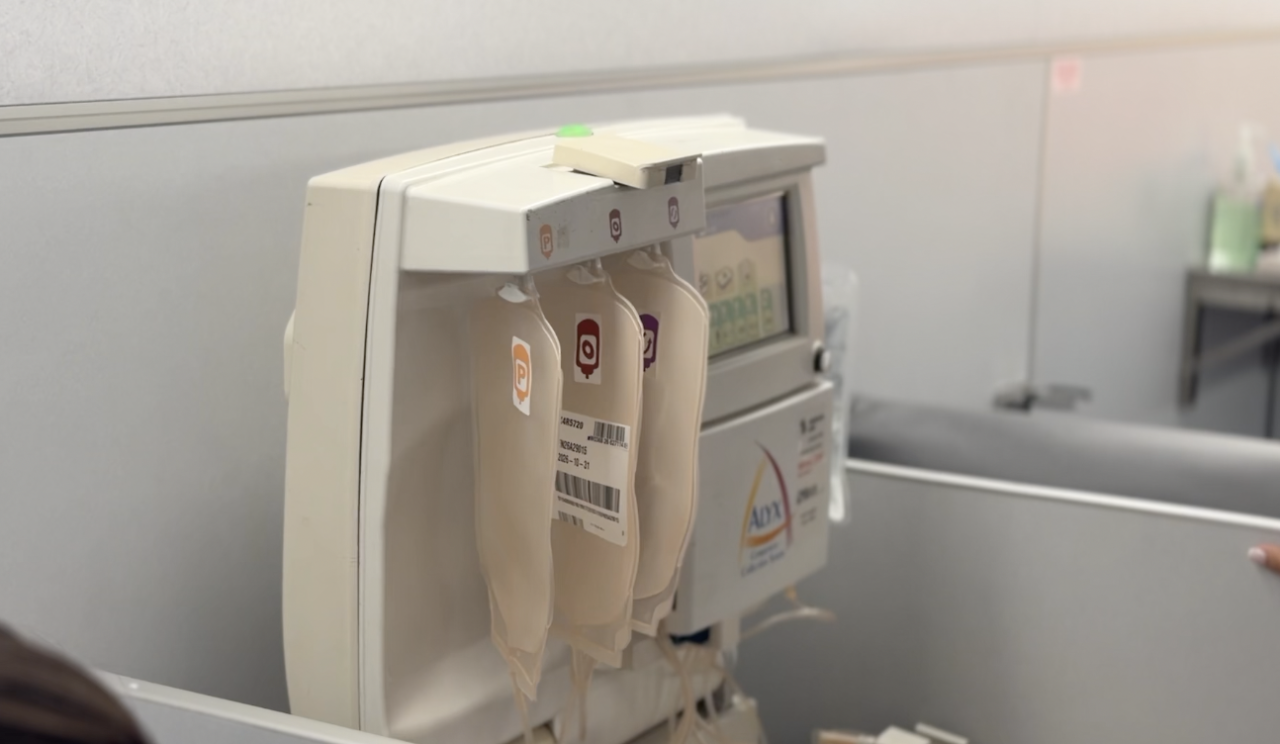
The blood bank stocks several types of blood products, each with a different shelf life. Red blood cells last 42 days from the date of donation. Plasma, once frozen, lasts one year. Platelets, the most difficult product to keep stocked, last only five to seven days.
"Without platelets... a cancer patient that's undergoing chemo or radiation, their bone marrow gets just zapped, and so they depend on this product to restore that platelet function," Gonzalez said.
Gonzalez said the hospital tries to keep at least 10 platelet units on the shelf at all times, but the short shelf life makes that a constant challenge.

A single whole-blood donation is separated into three components: red blood cells, plasma, and platelets, meaning one donation can help three different patients.
Despite the shortage, Gonzalez said the hospital's operation remains well-organized.
"All it takes is one massive trauma. Say there's a pile-up on the highway, and there's a massive need for blood instantly. That blood literally flies off the shelf."
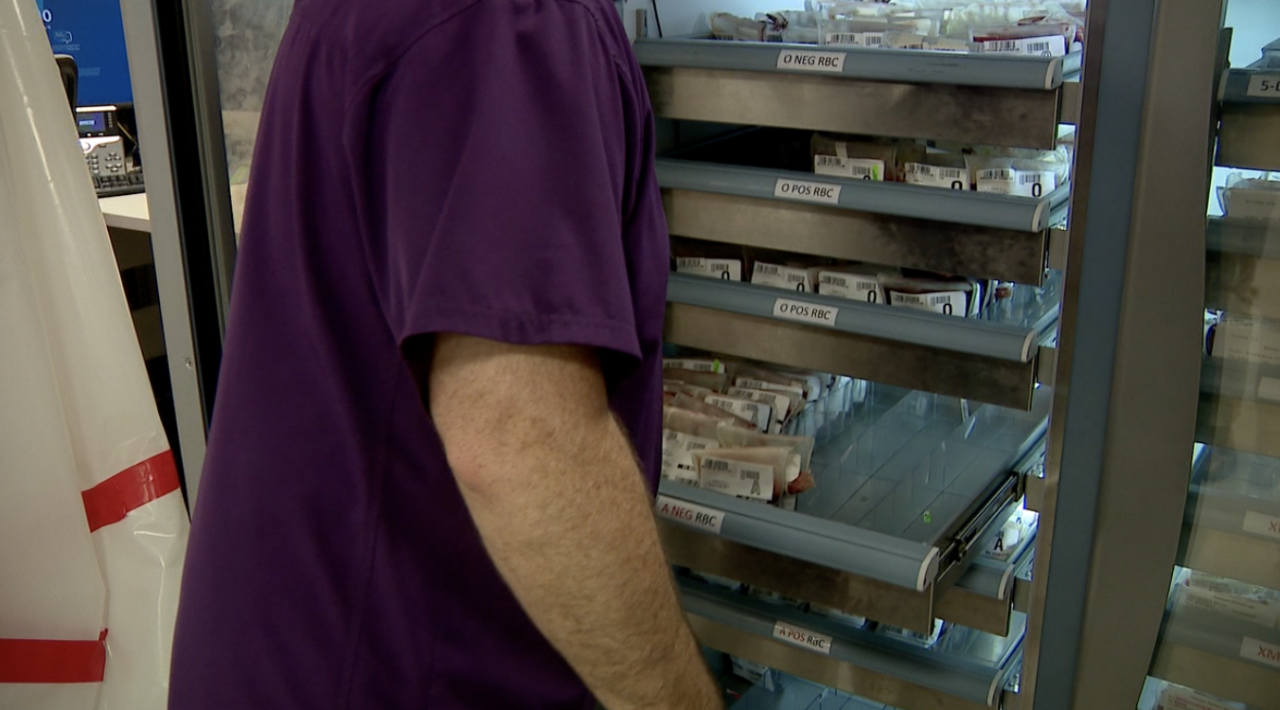
He added that there is no substitute for donated blood.
"There's no pharmaceutical product. Blood only exists because people care enough to actually donate blood, and without donors, we don't have a blood bank. Without a blood bank, we don't have a hospital."
Gonzalez said only 3% of the 64% of the population eligible to donate actually do.
"That 3% of the population, they're supporting everybody. So as you age, as you get older, as you encounter life, accidents happen, and so at one point in time, you may potentially need blood. If the blood is not there, that's a situation that no one wants to get in," Gonzalez said.
That reality hit close to home for Marisa Castillo, an internal communications employee at Advent Health who has spent part of her career encouraging others to donate blood. She recently found herself on the other side as a patient in need of a transfusion.
"You don't expect it. You don't expect to be on that side," Castillo said. "We promote it, and we try to bring the donors, and we understand the importance of it for our patients, for our community. And then the tables turn, and you're the one receiving."
Castillo said her care team was able to find what she needed, even amid the shortage.
"It was very seamless, even though there was a shortage. There was a little bit of a time lapse in between, but my team was able to come together and find what I needed."

The experience changed her perspective on donating.
"I don't do it as often as I need to. So recognizing how quickly things change and how suddenly I was somebody that needed that donation, yeah, I'm going to be donating every three months," Castillo said.
Aaron Patterson, Director of Operations at Advent Health Tampa, also donated blood during the drive. He said the experience felt like more than a personal choice.
"It almost feels like a sacred civic responsibility," Patterson said.

Patterson said he learned during the drive that a single whole blood donation can yield three separate components.
"I had no idea that out of a single unit of whole blood donation, they get three components: the red blood cells, plasma, and platelets, which is the potential to save three different people."
Gonzalez encouraged younger generations in particular to start donating regularly.
"I want to encourage the next generation, millennials, to step into the shoes of the greatest generation and start donating blood."

Share Your Story with Jada
Jada Williams is focused on the issues that matter most to people in who live in Tampa and West Hillsborough County. From downtown Tampa to Town ‘n’ Country and Westchase, Jada works to bring you updates and solutions on everything from crime to infrastructure. Reach out to Jada below with your concerns for your neighborhood.
.

Pasco County mom of 5 takes in 3 children left without food or power whose mother faces neglect charges
Jasmine Young, a mother of 5, opened her home to three neglected girls as their mother faces child neglect charges for leaving them without food, power or water.
