



TAMPA, FL (WFTS) — As Hillsborough County continues battling a dengue fever outbreak, officials say controlling the mosquito population requires far more than helicopters spraying from above. It also takes inspectors on the ground, cooperation from businesses and assistance from neighboring counties.
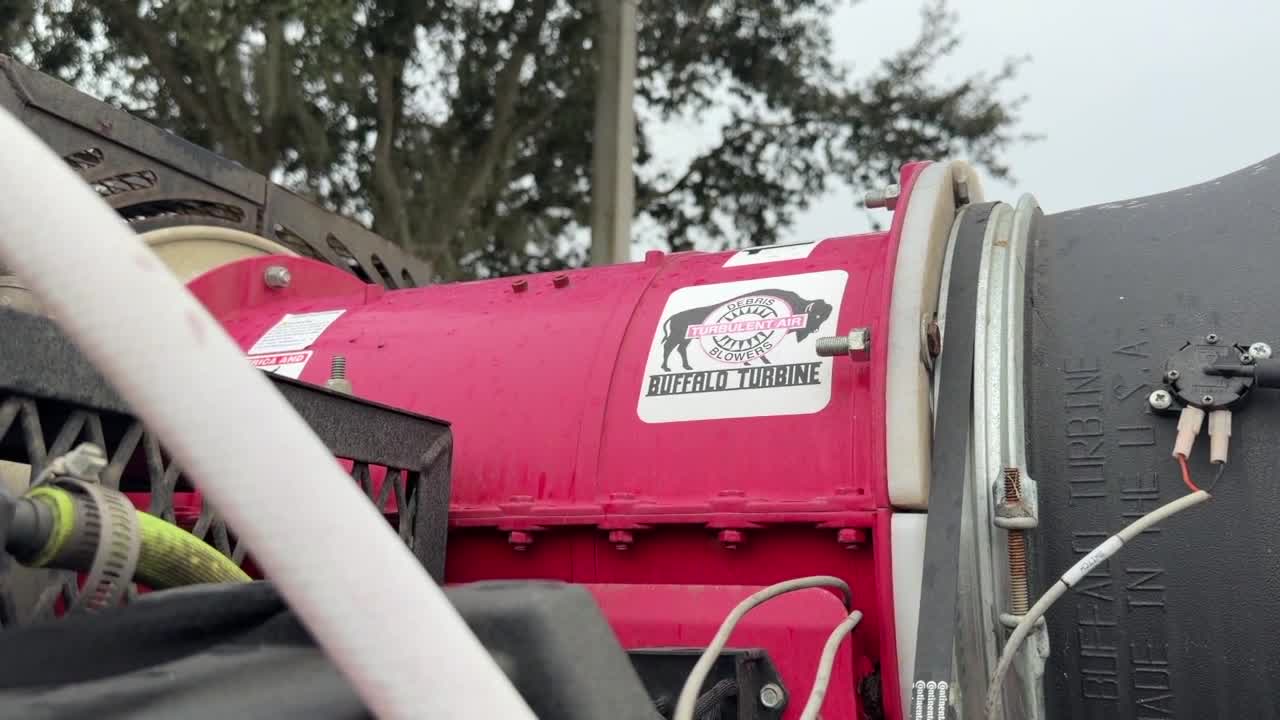
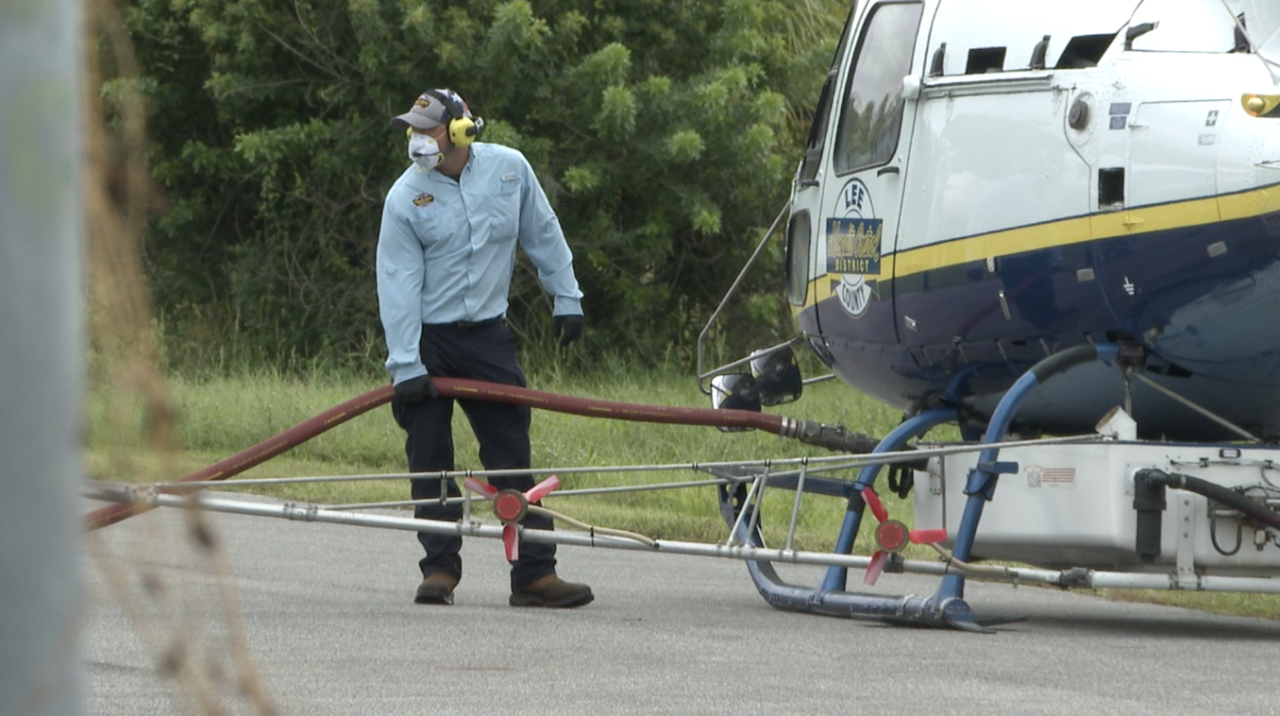
At Hillsborough County's Mosquito Management Center, four helicopters provided by Lee County Mosquito Control have been flying repeated missions over affected areas, applying larvicide designed to stop mosquito larvae from maturing into adults capable of spreading dengue.
But officials stress that aerial treatments are only part of the solution.
"We're throwing everything we have at this virus," said mosquito control inspector Christine McGill. "We have boots on the ground that can educate citizens and get into areas that helicopters may not be able to reach."
Ground crews use specialized trucks and backpack sprayers to target areas hidden by tree canopies and residential structures. Officials say these treatments allow inspectors to reach containers where the Aedes aegypti mosquito, the species responsible for spreading dengue, commonly breeds.
Tire shops present unique challenges
While residents have been urged to remove standing water around their homes, mosquito control officials say some businesses also require special attention.
According to McGill, tire shops remain one of the biggest concerns because tires can easily collect water and create ideal mosquito breeding conditions.
"The tires hold the water, and this mosquito loves to breed in tires," McGill said.
Inspectors frequently visit businesses, particularly tire shops, to identify potential breeding sites and explain ongoing treatment efforts. In many cases, crews perform targeted ground treatments rather than broader neighborhood spraying.
Officials note that businesses often face challenges different from homeowners because of the sheer size of their properties and the types of equipment stored outdoors.
Those breeding sites can include industrial-sized tires, boats, tractors and other large containers capable of holding rainwater.
Addressing concerns about spraying
Mosquito control teams have also been responding to questions from businesses about the products being used.
Officials say some business owners have expressed concerns that residue from aerial treatments was staining vehicles. Inspectors have reassured owners that the product can be washed away with water and is not harmful to vehicle paint, humans or animals.
The larvicide being used is a Bacillus thuringiensis israelensis, or BTI, product, which officials describe as a naturally occurring bacterium found in soil.
According to mosquito control staff, the product specifically targets mosquito larvae and does not harm fish, dragonflies or other wildlife.
Lee County steps in to help
The response effort has also drawn support from Lee County, which has deployed resources and personnel to assist Hillsborough County's mosquito control operations.
"We're coming together as a community to help fight dengue," said Jennifer McBride, communications director for the Lee County Mosquito Control District.
Lee County brought four helicopters to Hillsborough County, three of which have been actively treating mosquito breeding areas.
The county maintains a fleet of seven helicopters due to its own unique mosquito challenges. Roughly one-tenth of Lee County is salt marsh habitat, creating conditions for mosquito populations that can travel up to 20 miles.
McBride said residents in Lee County are accustomed to seeing aerial mosquito treatments, which have been part of life there for decades.
Community Cooperation Remains Critical
Despite the large-scale response, officials emphasize that residents and businesses still play a critical role in slowing the outbreak.
Because the Aedes aegypti mosquito can breed in even the smallest amounts of standing water, officials say virtually any container left outdoors can become a problem.
"Just a small bottle cap can absolutely breed mosquitoes in everyone's backyard," McBride said.
Officials continue urging residents and business owners to regularly inspect their properties, remove standing water and cooperate with mosquito control efforts as Hillsborough County works to contain the outbreak.
"We're in this together," McBride said. "It's mosquito controls helping mosquito controls, but also people helping people."
Share Your Story with Jada

Jada Williams is focused on the issues that matter most to people in who live in Tampa and West Hillsborough County. From downtown Tampa to Town ‘n’ Country and Westchase, Jada works to bring you updates and solutions on everything from crime to infrastructure. Reach out to Jada below with your concerns for your neighborhood.
.

'My heart breaks': Woman describes helping injured students after deadly school bus crash in Polk County
A woman on her way to work Monday morning found herself helping injured Winter Haven High School students after a school bus crash that killed two people.
