

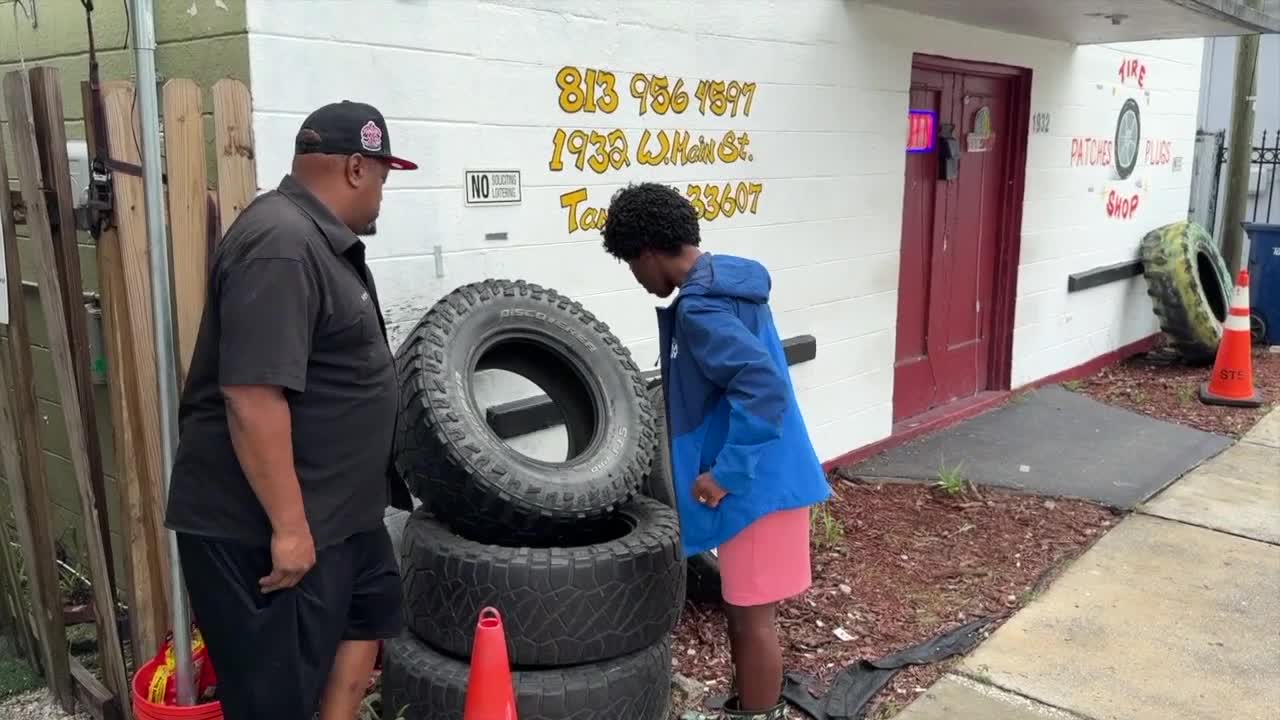


TAMPA, FL (WFTS) — After months of covering Hillsborough County's dengue outbreak, Tampa Bay 28's Jada Williams followed city leaders from the podium to the places they say are helping drive mosquito control efforts on the ground.
The Florida Department of Health says the outbreak has now reached 223 locally-acquired cases in Hillsborough County. It also confirmed one dengue-related death in Tampa.
Tampa Bay 28's Williams has covered what Hillsborough County is doing, but Tampa leaders say fighting the mosquito-borne illness requires more than county spraying operations and code enforcement. They say residents, businesses and government agencies all share responsibility for eliminating mosquito breeding grounds.
Tampa Bay 28 has been covering the dengue outbreak since the beginning, tracking the response from Hillsborough County, the Florida Department of Health and local governments.
At a Wednesday City of Tampa news conference, Mayor Jane Castor and Neighborhood Enhancement Director Susan Wenrick detailed what the city is doing to reduce mosquito breeding sites and prevent additional infections. Castor noted that Wenrick has served the city for more than four decades.
"We wanted to bring everybody up to date on the dengue fever here in the Hillsborough County area," Castor said. "I know that the statistics bear out that we are one of the areas with the most cases."
Officials say one of their biggest concerns continues to be standing water, especially after repeated rounds of rainfall across the Tampa Bay area.
"I would like to ask the community, the residents, and businesses to understand their level of responsibility as well," Castor said.
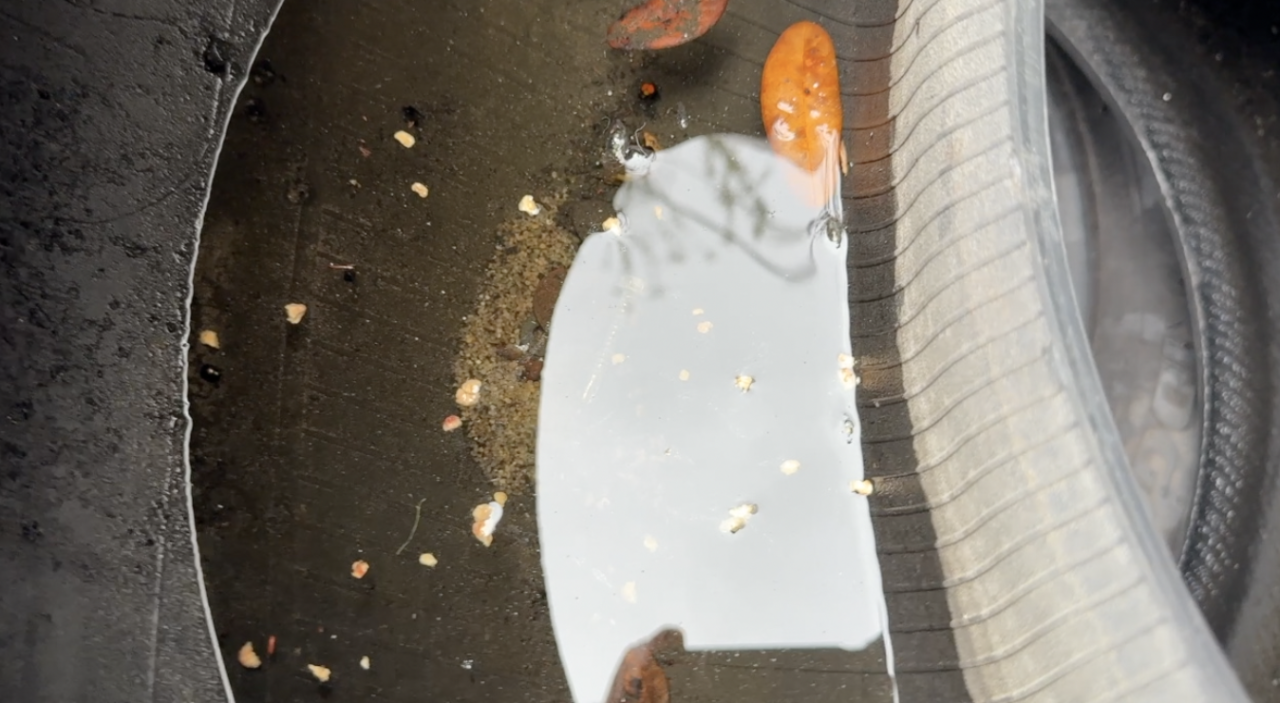
Castor said mosquitoes need surprisingly little water to reproduce.
"The larvae can grow in as little as a bottle cap worth of water," Castor said.
The mayor said the consequences of the outbreak are serious.
"It's a horrific process to go through, and can be, in rare instances, deadly," Castor said.
Officials say preventing breeding sites is one of the most effective ways to stop cases from rising.
"If everybody does their part and ensures that they don't have standing water either on their lot at home or at their business, then we can actually start to see these cases come down, decrease instead of increasing," Castor said.
Why tire shops are getting extra attention
Tampa Bay 28 has heard repeatedly from local officials about tire shops.
"One of the most obvious places are tire shops where rainwater can collect," Castor said.
Tires can trap water after even a brief rainstorm, creating ideal conditions for mosquito larvae.
To better understand what city leaders were describing, Tampa Bay 28's Williams left the press conference and headed to Yo Tires in West Tampa.
There, owner Mario Vernon walked Williams through the changes he has made and the mosquito-control products city and county agencies have provided.
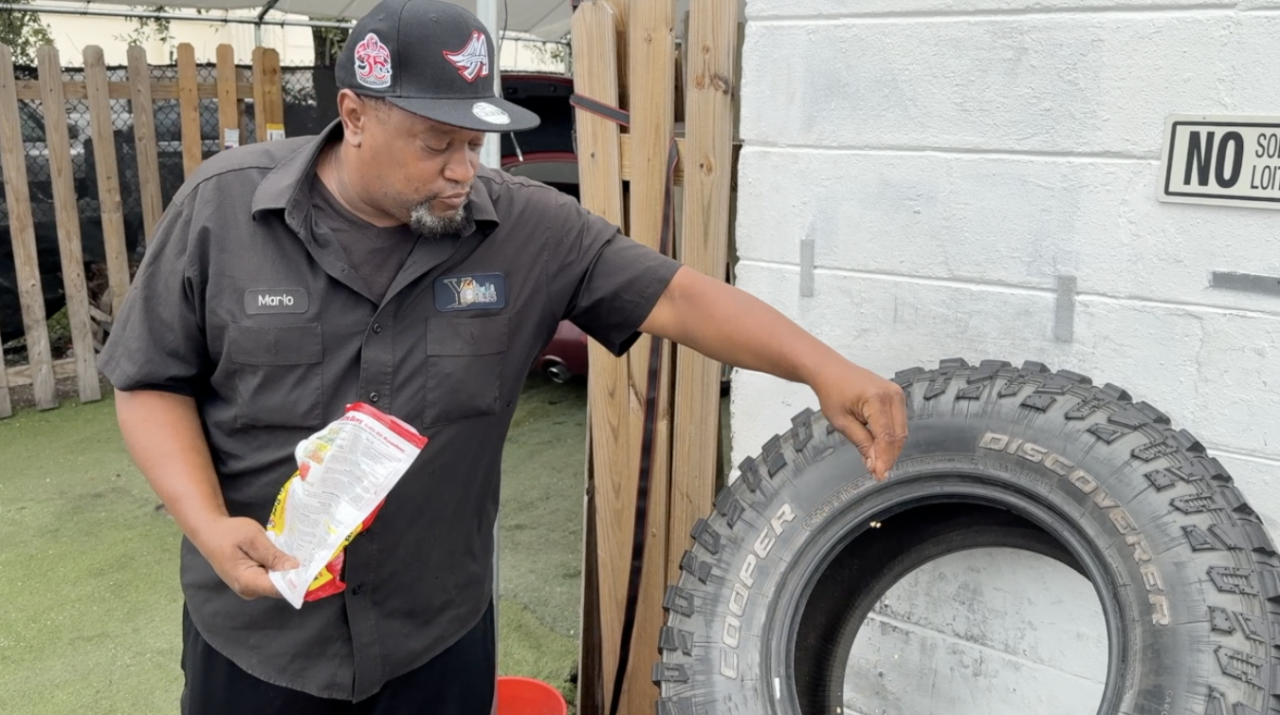
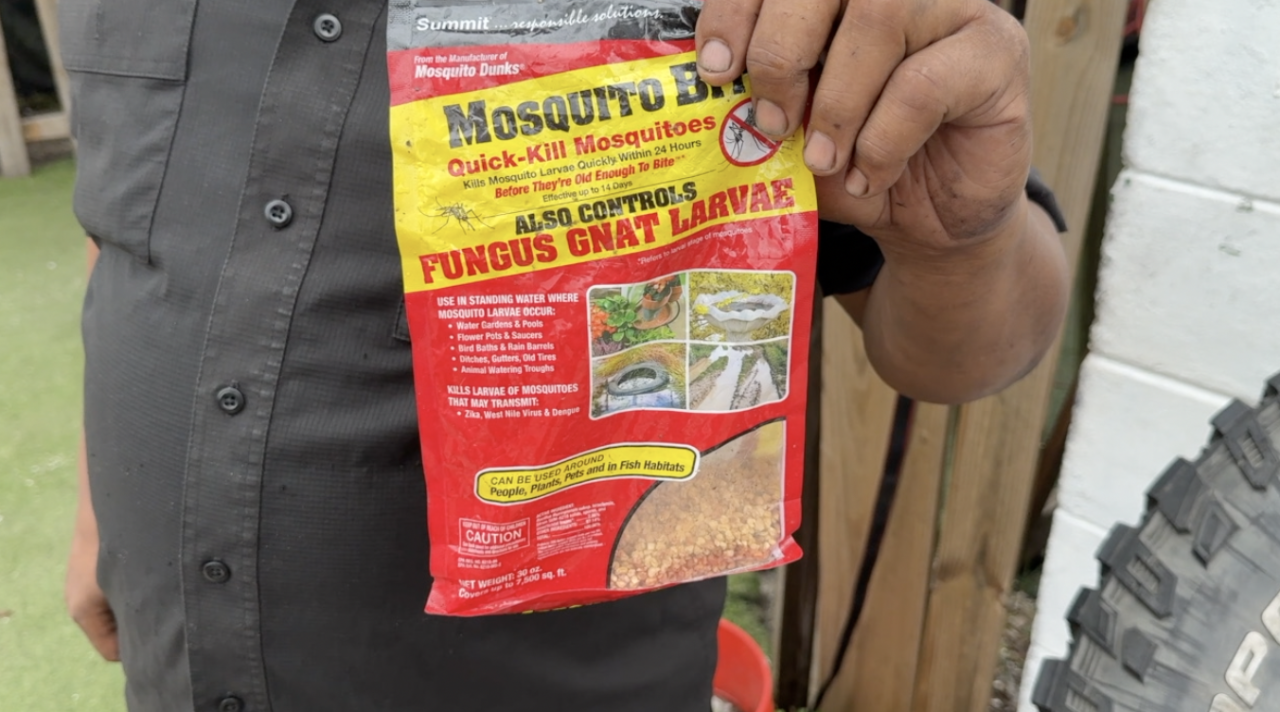
Standing among stacks of tires, Vernon showed larvicide treatments designed to be dropped into water-filled tires.
"And a couple of drops, they last 14 days, and they kill off the babies," Vernon said.
Vernon demonstrated how the products are applied and explained that local officials have spent time educating business owners about the dangers of standing water.
"They've been coming out. They've been bringing me some supplies, you know, to help me out to keep it down," Vernon said.
Before officials began outreach efforts, Vernon said he did not fully understand how serious dengue fever could become.
"They taught me a lot about it too, because I didn't know it was that serious," he said. "They had a guy with the county, he explained it to me, and I was like, 'Wow.'"
As Vernon moved through rows of tires, he pointed to additional mosquito-control materials distributed by local agencies.
"Well, you got the granules. They blow the granules with the machine, and then they got some stuff they spray where you can't come here for about four to five minutes, and it killed the adults," Vernon said.
He laughed while discussing how much he has learned.
"So you know, I'm almost there. I'm almost certified."
City says tire shops are on a 'repeat list'
Back at Wednesday's briefing, Wenrick described the effort her department has undertaken to identify and monitor potential mosquito breeding sites.
"Our code officers, as they're going through every neighborhood every day, we're going street by street, property by property, looking for any open containers, anything that could be holding water," Wenrick said. "If it's along the right of way in the alley, we go through there looking for any open containers. We've emptied five-gallon buckets in alleys."
Wenrick said coordination with health and county officials happens daily.
"We all work together to make sure that if they have a notice of tires that have been dumped in the city, our team gets out there immediately," she said.
She said tire-related businesses have become part of a recurring inspection effort.
"We have a repeat list. We see the list of where the tires, tire shops, and they've been very cooperative," Wenrick said.
Wenrick said about 85 businesses are currently being monitored and two have received citations. She outlined the fine schedule for businesses that refuse to comply.
"We've issued two. They start as a $75 fine. Two businesses: $75 fine for the first offense. Second offense is $150. Third is $300 mandatory court appearance. Fourth and subsequent, $450," Wenrick said.
She said the goal is always compliance over punishment, and that her team takes individual circumstances into account.
"The goal is to help individuals come into compliance, and I know that there's a lot of work that's done if individuals are disabled, they're elderly, where we do what we can to bring them in compliance," Wenrick said.
Not every business came into compliance quickly. Wenrick described one owner who required four rounds of escalating citations before taking action; eventually putting up tarps and emptying the water from tires. She said the goal was never to punish, but to protect.
"It's all about being a responsible business owner," Wenrick said. "We're not trying to put tire companies out of business. We want them to thrive and do well in our city. We want them to provide a safe environment for our community, also."
She said most owners act immediately once city staff explain the concern.
"Other than that, the businesses that we stop, knock on the door, go into their business and say, 'Hey, your tires are holding water,' they go out right then and empty the water out of it, or they get a citation," she said.
More than 23 tons of tires removed
The city says tire shops are not the only focus.
Over the past three months, Neighborhood Enhancement crews have removed more than 23 tons of illegally dumped tires from across Tampa.
"Think about that amount: 23 tons of discarded tires, and that is just incredible," Castor said.
To put the department's year-round workload in perspective, Castor said the team removed 13,000 tons of litter and debris across the city last year, a figure that includes material cleared from homeless encampments.
Wenrick said crews move quickly when illegal dumping is reported.
"If they have a notice of tires that have been dumped in the city, our team gets out there immediately," she said. "That is handled same day, usually within the hour."
The effort is part of a broader mosquito mitigation campaign taking place alongside Hillsborough County mosquito spraying and Florida Department of Health outreach.
What Tampa Bay 28 observed at Yo Tires
At Yo Tires, one thing stood out: Vernon was not dismissing the issue.
Instead, he was showing off the mosquito-control products that government agencies had supplied, explaining how they are used and describing the changes he has made at his business.
He said tire shops now face additional expectations when it comes to preventing standing water.
"We got new mandates. We have to cover our tires now, keep the rain water out, suck all the water out," Vernon said.
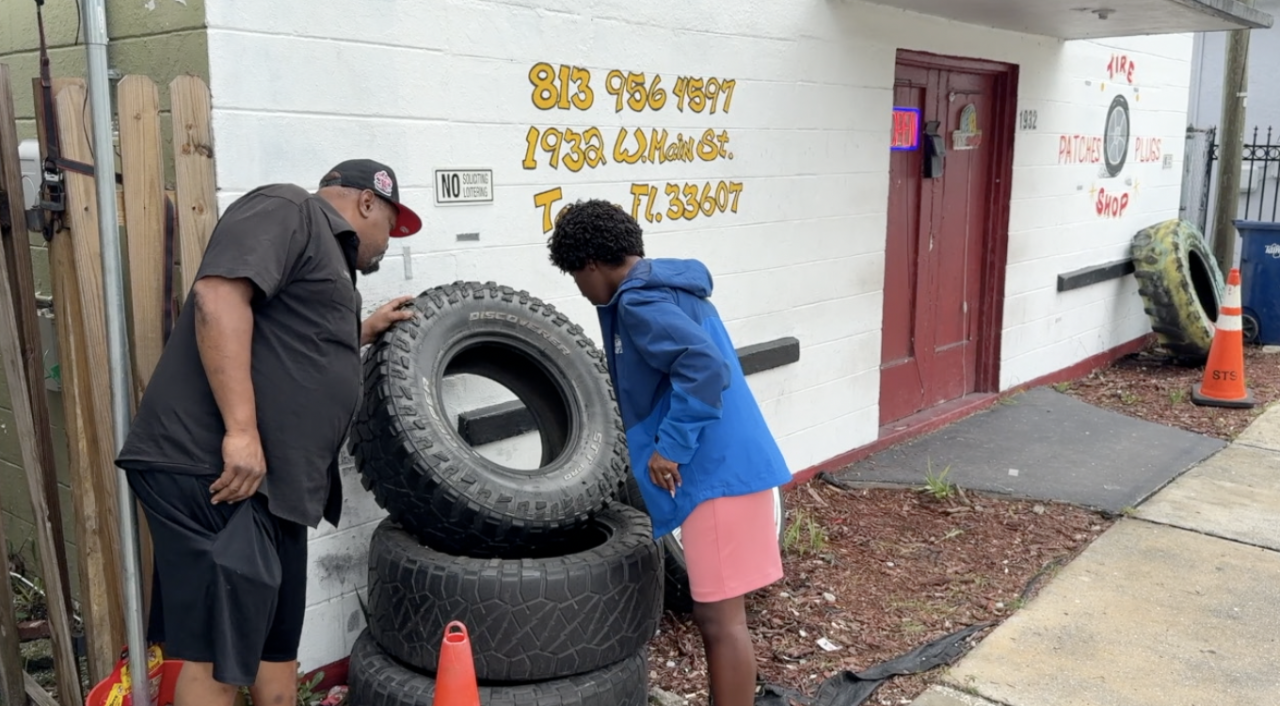
Vernon pointed to a result he says he has noticed. When asked if he has seen a difference since the outreach began, he did not hesitate.
"Definitely. We see a change," Vernon said.
He said customers previously encountered far more mosquitoes around the property.
"You couldn't stand out here without slapping or whatever," he said. "But as you see, you've been standing here. You ain't moved not one bit."
Vernon also said local agencies have continued returning to monitor conditions.
"Yeah, definitely, cause it kind of scared me," Vernon said, recalling the initial visit. "Because when they pulled up — like four mosquito trucks, the police, everybody."
Since then, he says the visits have continued on multiple fronts, including aerial spraying.
"The health department came and dropped off some more granules," Vernon said. "They had the orange helicopter. It seemed like it flew over my shop a couple of times, just like directly over my shop, making sure it got over here."
He also described continued check-ins from city personnel.
"And then the city, they send this lady through, and she always coming through, and she like, hey, she popping in, so you know that's a good thing."
The city's broader prevention push
Beyond enforcement, city leaders described several steps aimed at reducing residents' direct exposure to mosquitoes.
Castor said the city has shifted some parks and recreation activities indoors and is advising residents not to go outside after dark.
The city is also distributing mosquito repellent at recreation centers and directly to people experiencing homelessness.
"With the mosquito repellent, we are providing that at our recreation centers. We're providing that to the homeless, we're providing that as far and wide as we can," Castor said.
The mayor praised Hillsborough County's ongoing spray operations.
"I also want to give a shout out to Hillsborough County. They are doing an excellent job with the spraying throughout the county," Castor said.
She described the overall response as a three-way partnership.
"It really is a collaborative effort to make sure that we are stopping the breeding of the dengue fever mosquitoes, and that we're doing all that we can to prevent by getting the standing water out, keeping people away from areas where they could be exposed and providing repellent as well," Castor said.
'Unsung heroes' behind the response
While dengue mitigation was the focus of Wednesday's briefing, Castor and Wenrick also used the event to highlight the full scope of work Neighborhood Enhancement performs year-round.
Wenrick said many residents do not realize the department operates as four distinct sections: business tax collection, which manages more than 35,000 businesses; urban forestry; code enforcement; and maintenance crews.
She said her department has 124 employees in total, including 36 code officers working in the field every day and roughly 43 maintenance workers equipped with heavy trucks capable of removing large-scale illegal dumping.
Wenrick spoke directly about the people doing the work.
"These are the hardest-working men and women that I've had the privilege of working with," Wenrick said.
The department handles code enforcement, illegal dumping, abandoned vehicles, litter cleanup, zoning issues, property maintenance concerns, tree work and homeless encampment cleanups.
"These guys get out there every day to make our city clean, safe, and beautiful."
The department's dedication extends beyond normal working hours. During Hurricanes Helene and Milton two years ago, Castor said Wenrick's team worked around the clock.
"Her whole team worked seven days a week ... many of them worked longer than 12 hours a day, and they really were the heroes," Castor said.
"Our police and fire are superheroes," Wenrick said. "My team, they're the unsung heroes. Most people don't even know we're there, but everyone would know if we weren't."
As the confirmed death and rising case count underscore the urgency of the outbreak, officials say success will depend on residents checking their own properties, businesses staying vigilant and local governments continuing their enforcement and education efforts.
For Vernon, who spent part of his afternoon showing me mosquito-control products and explaining their use, the message is simple.
"So I do my thing to make sure I keep it down," he said.
Share Your Story with Jada

Jada Williams is focused on the issues that matter most to people in who live in Tampa and West Hillsborough County. From downtown Tampa to Town ‘n’ Country and Westchase, Jada works to bring you updates and solutions on everything from crime to infrastructure. Reach out to Jada below with your concerns for your neighborhood.
.

'My heart breaks': Woman describes helping injured students after deadly school bus crash in Polk County
A woman on her way to work Monday morning found herself helping injured Winter Haven High School students after a school bus crash that killed two people.
