


TAMPA, Fla. (WFTS) — Considered one of the most unique and delicate land swap negotiations in Tampa's history, the city council approved an agreement to expand and preserve Zion Cemetery, reclaiming property containing unmarked graves of African American people dating back to the early 1900s.
The agreement transfers ownership of a Florida Avenue property from Tampa businessman Richard Gonzmart to the Zion Cemetery Maintenance and Preservation Society. In exchange, Gonzmart will receive a city-owned property on North Highland Avenue and West 7th Avenue in Tampa Heights.
For Jeraldine Williams, a member of the Zion Cemetery Maintenance and Preservation Board, the preservation efforts are deeply personal, though the six-year journey to reach this point took a toll.
"I'm exhausted. Let me say that bureaucracy is a long word, and it has taken a long time for us to get here," Williams said.
Williams initially got involved when local historian Fred Hearns asked her to help locate old Black families in Tampa who might have a connection to the cemetery. She had no idea she would find her own family tied to the sacred ground.
"I had no idea that I would be calling him to tell him that I have a great, great grandmother whose remains were interred there in 1912," Williams said.
Williams discovered her ancestor's resting place while conducting genealogical research, finding her great-great-grandmother's name on a 1912 Tampa Tribune sheet listing deaths, backgrounds, and burial locations. Her great-great-grandmother was a former slave who worked as a cook.
Williams recalled seeing Robles Park Village, Tampa's first public housing development, being built over a portion of the burial grounds in the 1950s when she was a young child.
"I asked him what was going on, because I saw all of the earth-moving equipment and all, and he didn't know, but they were actually constructing the projects for white people over the black grave," Williams said.
Williams said she shares the history with her family so they can understand where they came from, noting that Black history was often ignored or suppressed during her childhood.
"I came through segregated times. And what I do know is that there was not a teaching of our history in any way," Williams said.
She and other board members are advocating for a state-of-the-art genealogy research center to be built at the site alongside a memorial. Williams said she is currently searching for her "original African mother" and hopes a center could help others do the same.
"I would like to have a beautiful center for people to go in and find out about themselves," Williams said.
Reva Iman, vice chair of the board, said $8 million is needed to complete the memorial and genealogy center.
"It's just not a memorial. It's educational, and it's good for everyone that wants to know their background, their family history," Iman said.
During the announcement, Gonzmart pledged $100,000 from his family toward the memorial and promised continued support for the project.
"Our family will be proud to pledge $100,000 for the memorial," Gonzmart said. "Our family is committed to developing it more so whatever it takes, step by step."
While the land swap marks a significant milestone, Yvette Lewis, president of the NAACP Hillsborough County branch, said she is proud of Gonzmart's patience but criticized the city for the delays.
"African American people have played a pivotal role in building this city, crafting the city, developing this city, and being a part of history in this city, but the city of Tampa falls very short on telling our history," Lewis said.
Lewis emphasized that the site is more than just a piece of land.
"It's someone's life. It's someone's loved one," Lewis said.
Founded in 1901 by Richard Doby, a Black entrepreneur and philanthropist, Zion Cemetery was Tampa's first all-African American burial site. However, ownership was wrongfully removed from the cemetery owners and issued to a white landowner who claimed the land for back taxes during the real estate boom of the 1920s. Subsequent owners eventually turned the property into farmland, neighborhoods, and storefronts.
Lewis emphasized the importance of acknowledging this true history and holding the city and the Tampa Housing Authority accountable as development moves forward.
"But it's even more important that the truth that the board tells, the truth holds the city accountable for telling the truth that the land wasn't taken. The land was stolen," Lewis said.
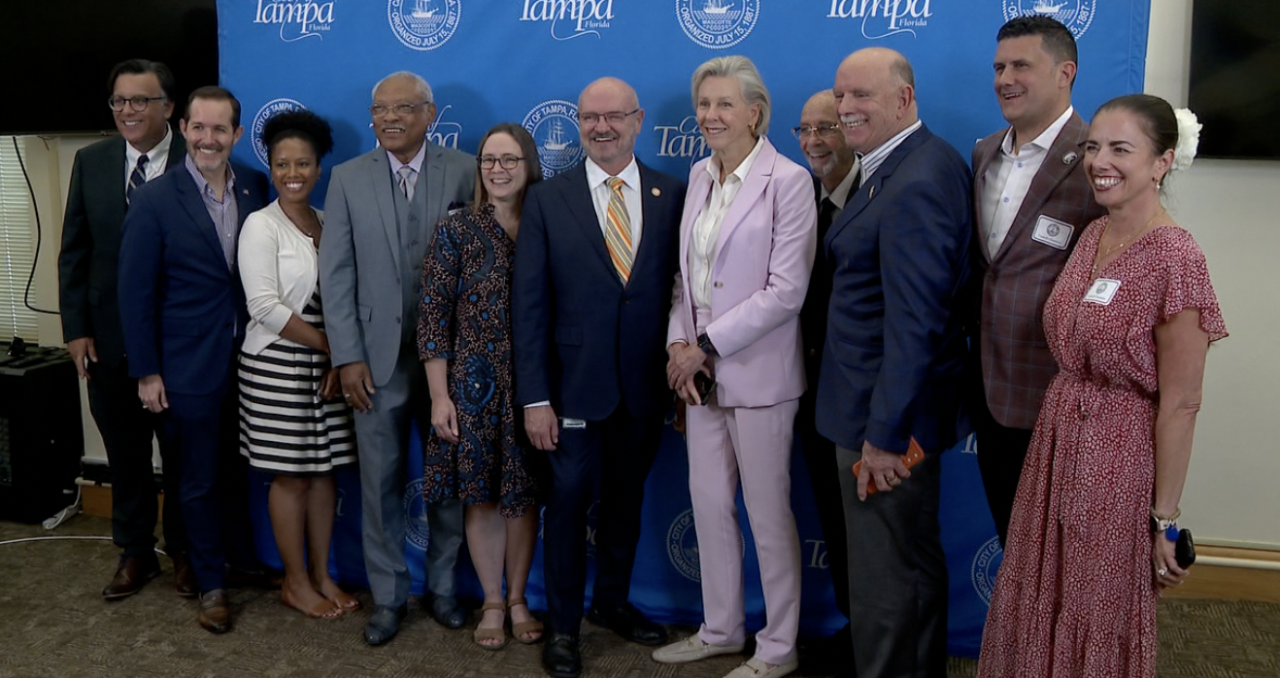
Lewis also called out city leaders for a lack of meaningful action regarding diversity and historical preservation.
"They talk about it, talk, talk, talk. But what are they doing to put behind it, to help people understand that if you say Tampa is a diverse city, then why aren't we treated right?" Lewis said.
Lewis highlighted the efforts of Ray Reed, who she said originally discovered the cemetery and brought it to the community's attention before it gained widespread media coverage. She said Reed knocked on doors, including the NAACP office, but was initially discredited.
"It was Ray Reed who discovered this cemetery and beat the streets of Tampa to tell what actually really happened," Lewis said.
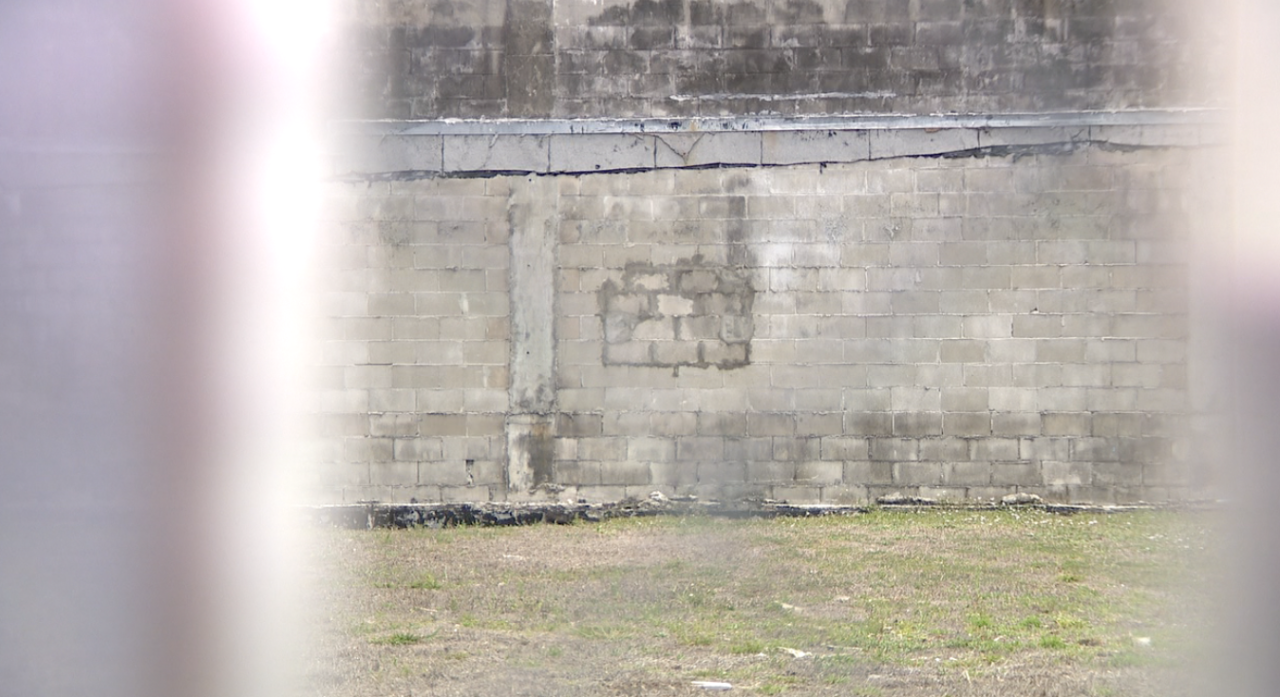
In 2019, the Tampa Housing Authority funded a third-party investigation to determine the cemetery's boundaries, reporting more than 100 graves at the site at the time of their study.
To support the restoration, the city of Tampa funded the installation of a historical marker last year, and the Arts and Cultural Affairs Department is currently working on adding an archway at the entrance. Additionally, the land use for city-owned cemeteries has been changed to "recreation and open space" to restrict development, and Mayor Jane Castor directed staff to create a new land-use category for cemeteries for added protection.
"When we discovered Zion Cemetery in 2020, largely in part to incredible local journalists and researchers who brought it to our attention, we knew the path to restoring this sacred ground and honoring the people who lived during one of the harshest times in our country's history, would take time and a tremendous amount of collaboration from all sides," Castor said.
The city is still negotiating with a company that privately owns the property on the other side of the cemetery to see if a land-swap deal can be reached there as well.
Share Your Story with Jada
Jada Williams is focused on the issues that matter most to people in who live in Tampa and West Hillsborough County. From downtown Tampa to Town ‘n’ Country and Westcase, Jada works to bring you updates and solutions on everything from crime to infrastructure. Reach out to Jada below with your concerns for your neighborhood.
.
Suspect arrested for murder of Bartow man found in 'pool of blood': PCSO
Polk County Sheriff's Office (PCSO) announced it arrested the suspect involved in the murder of a 56-year-old Bartow man found in a "pool of blood."
