

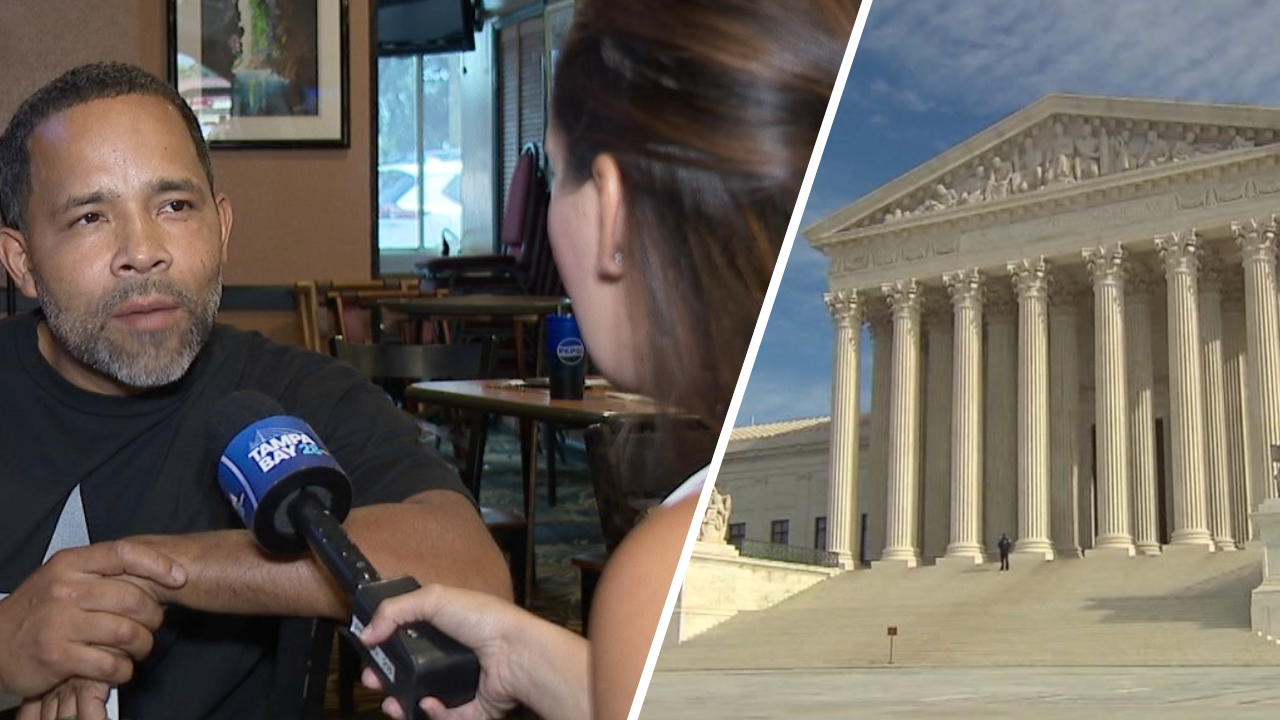


TAMPA, Fla. — The U.S. Supreme Court ruled Tuesday that President Trump's executive order seeking to end birthright citizenship for some children born in the U.S. violates the Constitution — keeping in place the longstanding practice that most people born on American soil are U.S. citizens.
The decision upholds more than a century of legal precedent and is sparking strong reactions across the country, including here in Tampa Bay.
WATCH: Supreme Court upholds birthright citizenship, sparking mixed reactions in Tampa Bay
Tampa Bay 28 reporter Annette Gutierrez, who has previously covered immigration and citizenship stories, went to La Teresita restaurant in Tampa to hear what people have to say about the decision. Some said they are disappointed, while others said they are happy about it.
Anthony Burgos and his wife, Iris Sepulveda, along with Efrain Geigel and his family, were keeping tabs on the ruling while enjoying lunch at the restaurant.
Geigel said the ruling shows America is staying true to the principles it was founded on.
"The Supreme Court upheld it because it's constitutionally correct," Geigel said. "There absolutely needs to be checks and balances. You can't have one individual making every decision for an entire nation, so the system is working."
Burgos said he feels the decision is a step backward for America, arguing too many people take advantage of the American system.
"I'm very disappointed that that was the decision by the Supreme Court," Burgos said. "They come here on purpose just to get the citizenship, and this is just like a back door into becoming a citizen. I think being a citizen of this nation, it takes more than just being just born here by accident."
Sepulveda said the ruling undermines those who are immigrating legally.
"It's not fair for the ones that have to pay and do things, you know, correctly or properly," Sepulveda said.
Danielle Hernandez, an immigration attorney and founder of DVH Law Group, previously served as assistant chief counsel for the Department of Homeland Security, where she tried many cases for the federal government. She said concerns like those expressed by Burgos and Sepulveda stem from a common misconception about how birthright citizenship works.
"Yes, the child is a U.S. citizen, but it doesn't give the parents any rights or status in the United States," Hernandez said. "Actually, the child would have to turn 21 years old before they could petition for their parent."
Hernandez said there are proper ways to amend the Constitution — and an executive order is not one of them.
"I think it was a sound decision. The proper way to amend the Constitution, to change the Constitution, is by a vote," Hernandez said.
She said the ruling reaffirms the Constitution and the process for making constitutional changes.
"To have the 125 years of birthright citizenship being upheld, and just a nod to the separation of powers, right? That's something that makes our democracy unique," Hernandez said.
Share Your Story with Annette

If you live in Wesley Chapel or the surrounding area, Annette Gutierrez is here for you. She’s focused on finding solutions and getting results for our neighbors, so send Annette tips on how she can help.
.

Bradenton community responds after 20-year-old volleyball star dies from disease that affects 2 in a million
The 20-year-old IMG Academy volleyball star and Under Armour All-American died Sept. 16 after a three-month battle with the rare blood disorder — even though doctors had found her a 100% bone marrow match, her mother, Tanya Mack tells Tampa Bay 28 reporter Haley Zarcone.
