

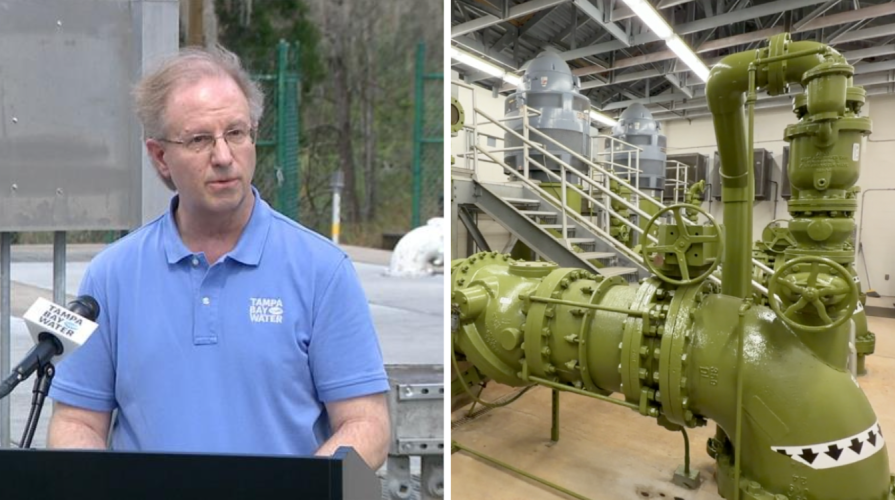


RIVERVIEW, Fla. (WFTS) — Tampa Bay Water officials declared a phase 3 extreme water shortage Thursday as the region faces one of the worst water supply crises in 50 years, urging residents to cut back on irrigation and follow one-day-per-week watering restrictions.
Tampa Bay Water announced the escalation from a severe to an extreme stage 3 water supply shortage, citing significant low rainfall, low river flows and projected low levels in the regional reservoir. The Alafia River, one of the region's primary water supply sources, is currently unavailable due to insufficient flow.
"The Tampa Bay region is facing one of the worst water supply shortages that we've had in the last 50 years," Warren Hogg, Chief Science Officer for Tampa Bay Water, said at a news conference. "We're out here today because the Alafia River is one of our supply sources, and right now it's not available because of low rainfall."
Officials said the region has been roughly 12 inches below its normal rainfall total over the past year — the driest conditions in approximately 50 years.
Drinking water supply remains stable, but conservation is critical
Tampa Bay Water officials were careful to reassure residents that drinking water is not at risk of running out.
"To be clear, we are not running out of drinking water," Hogg said. "Tampa Bay Water will continue to deliver clean, high-quality water to all the residents through our member governments each day, but to meet those demands, we will be relying very heavily on groundwater and our desalinated seawater."
The regional reservoir holds 15.5 billion gallons of water. Officials said it will take a sustained rainy season over the summer to refill it to levels needed to carry the region through next year's dry season.
What phase 3 means for residents
The stage 3 trigger is based on both river flow deficits and projected reservoir levels three months out. Tampa Bay Water said water-saving efforts now will help extend supplies into spring and early summer and preserve water for the environment.
Residents across Hillsborough, Pasco and Pinellas counties, as well as the cities of Tampa, St. Petersburg and New Port Richey, are currently limited to one day per week of outdoor irrigation. Residents who do not know their assigned watering day can find it at mywaterday.org.
Officials warned that if conditions worsen, restrictions could tighten further. That includes potentially moving to hand-watering only, with irrigation systems prohibited. Golf courses and fountains could also face additional restrictions.
"Hand watering means from a hose with a shut-off nozzle," Hogg said. "Most people find that it's impossible to really water a yard with a hose with a nozzle in their hand, you'll be outside all day."
Code enforcement is actively educating residents about the one-day-per-week restriction, which was enacted in February. Repeated violations can result in fines.
Irrigation is the biggest driver of residential water use
Anthony Halcyon, a senior environmental scientist with Hillsborough County, said outdoor irrigation accounts for roughly half of a typical residential water bill.
"Studies vary a bit, but usually it's around 50% is the number most studies come to, sometimes you get 60, or more, but usually about half your bill, if you water your lawn, is going to come from that more often than not," Halcyon said.

Halcyon said residents using 15,000 gallons or more per month are considered high water users by industry standards. He encouraged those residents to request an irrigation evaluation through the Hillsborough County Extension Office, where professionals can identify leaks or inefficiencies in irrigation systems.
"It's kind of the silent offender," Halcyon said. "A lot of people, they just kind of view it as everyday activity. It's not really this big thing."
Drought monitor shows no improvement
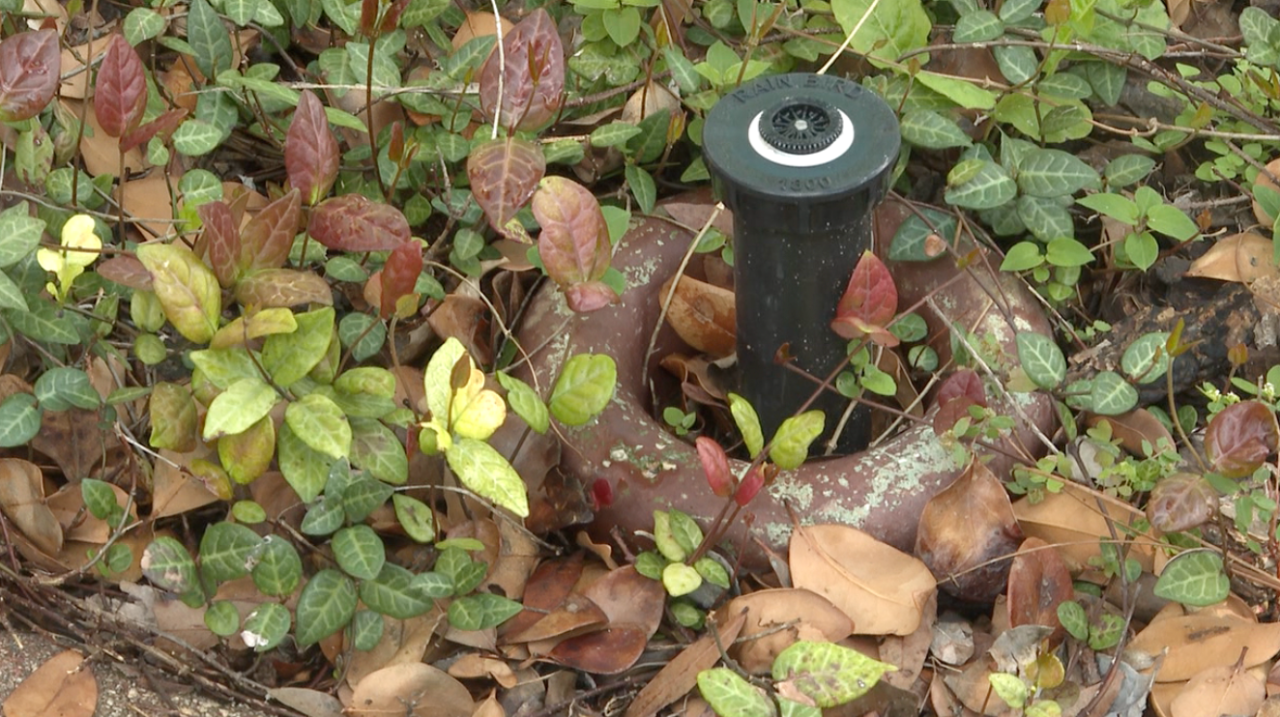
The National Weather Service confirmed Thursday that the entire state of Florida is under drought conditions, with 70% of the state classified as in extreme drought. The latest drought monitor, released Thursday morning, showed no improvement from the previous week.
Tampa Bay 28 Meteorologist Ally Blake said it could take 10 or more inches of rain in some areas to meaningfully reduce the deficit. Widespread rain is not expected until at least next week, with the arrival of the next cold front. The peak of the drought season is typically in April.
"We didn't improve, but we didn't get any worse," Blake said. "In a nutshell, it's still not good, but at least we didn't get worse."
Residents are also being urged to avoid outdoor burning and to refrain from discarding cigarettes outdoors, as dry conditions significantly increase fire risk.
New program offers residents up to $3,000 cash back for water-saving upgrades
Hillsborough County has launched a new program aimed at helping residents reduce their water use through smarter landscaping. Residents can also receive up to $3,000 in reimbursements for qualifying expenses.
The Florida Friendly Landscaping Incentive Program, known as FLIP, is open to residents of Hillsborough County and the city of Tampa. The program combines education with financial incentives.
"Not only is it a great program, but residents can get up to $3,000 in cash by attending this program," Halcyon said.
Participants attend three Saturday workshops over three months, where they learn Florida-friendly landscaping principles designed to reduce water use. Residents who then choose to convert up to 500 square feet of their landscape to Florida-friendly plants can submit qualifying expenses for reimbursement through the Water Conservation Fund.
Lynn Barber, a University of Florida Extension agent for Florida-friendly landscaping in Hillsborough County, said the workshops cover three core topics: micro irrigation, composting and rainwater harvesting.

"It's really important that people select native and non-native adaptive plants, because that is what is going to make up most of your landscape," Barber said. "And if they're native and adaptive, then they're going to use less water, and that's what we're looking for."
Workshops are held on the first Saturday of every month, February through November, and cost $10 per session. For $30, covering three sessions, participants go home with approximately $180 worth of materials, including a micro irrigation kit, composting supplies and a 50-gallon rain barrel.
"You need to have the right plant in the right place, or it's not going to work," Barber said. "Plants that really like dry conditions should be in an area that may not be irrigated, and plants that like to have a little more water should be where there is a little more water."
The University of Florida also offers a Florida Friendly Landscaping Guide to Plant Selection and Landscape Design, which includes plant height, spread, flower color and other details to help residents make informed choices. Residents who attend FLIP events receive the guide along with other resources.
For more information on upcoming workshops for residents, click here.
Additional rebates available through Tampa Bay Water
Residents looking to replace water-intensive appliances may also be eligible for rebates through Tampa Bay Water's conservation program. Rebates are available for items such as high-efficiency toilets, outdoor irrigation system upgrades and shallow well conversions.
Toilet rebates can be as much as $200, with a cap of two toilets per household. Additional customizable rebates are available, primarily geared toward commercial properties. Full rebate details can be found at tampabaywaterwise.org.
Simple steps that can make a difference
Tampa Bay Water officials outlined several actions residents can take immediately to reduce water use:
- Stick to the one-day-per-week watering restriction. Skipping a single irrigation cycle can save up to 2,500 gallons of water, depending on yard size.
- Turn off the tap while brushing teeth. This can save up to 8 gallons per person per day.
- Fix household leaks, including pipes, irrigation systems, dripping faucets and leaking toilet flapper valves. Together, these fixes can save up to 180 gallons per day per household.
- Take shorter showers. A five-minute shower can save up to 25 gallons per day.
- Wait until summer to replace sod or install new landscaping. Rain in June and July can naturally water new plantings.
- If your yard received rain recently, skip your next irrigation cycle. Mother Nature may have already done the watering for you.
"Saving water now preserves water for later," Hogg said. "Saving water now cuts down on your utility bill — save water, save money and save the environment."
Share Your Story with Jada

Jada Williams is focused on the issues that matter most to people in who live in Tampa and West Hillsborough County. From downtown Tampa to Town ‘n’ Country and Westchase, Jada works to bring you updates and solutions on everything from crime to infrastructure. Reach out to Jada below with your concerns for your neighborhood.
.

Saudi flight from Tampa, secret FBI probe reveal possible Saudi support network for 9/11 hijackers
Twenty years after the Sept. 11 attacks, more than 80,000 records compiled by the Tampa FBI Field Office remain classified. Newly declassified documents are pointing to a possible secret Saudi support network for the hijackers. Soon after the attacks, the FBI uncovered that 15 of the 19 hijackers were from Saudi Arabia.
