



ST. PETERSBURG, Fla. — An independent investigation is underway after a welfare check in St. Petersburg turned deadly, leaving a 48-year-old man dead and raising questions about how law enforcement responds to mental health crises.
Brian Michael Pepal died Saturday after a confrontation with St. Petersburg Police officers who were called to help during a mental health episode, according to the Pinellas County Sheriff's Office (PCSO).
WATCH: Pinellas detectives investigating St. Pete police use-of-force death during welfare check: PCSO
What Happened
According to PCSO, a St. Petersburg police officer was flagged down around 10:52 a.m. Saturday by a woman requesting help for her adult stepson, who was experiencing a mental health crisis at a nearby home.
Officers went to the residence at 7296 5th Street North and attempted to conduct a welfare check on Pepal.
PCSO said Pepal exited the home and immediately attacked the officers. During the struggle, officers took Pepal to the ground while defending themselves from the assault.
Once he was in custody, officers discovered he was not breathing and immediately began CPR until paramedics arrived, according to the news release.
Pepal was transported to a hospital, where he was pronounced dead.
One officer was taken to the hospital with non-life-threatening injuries suffered during the altercation, PCSO said.
Use of Force Expert Weighs In
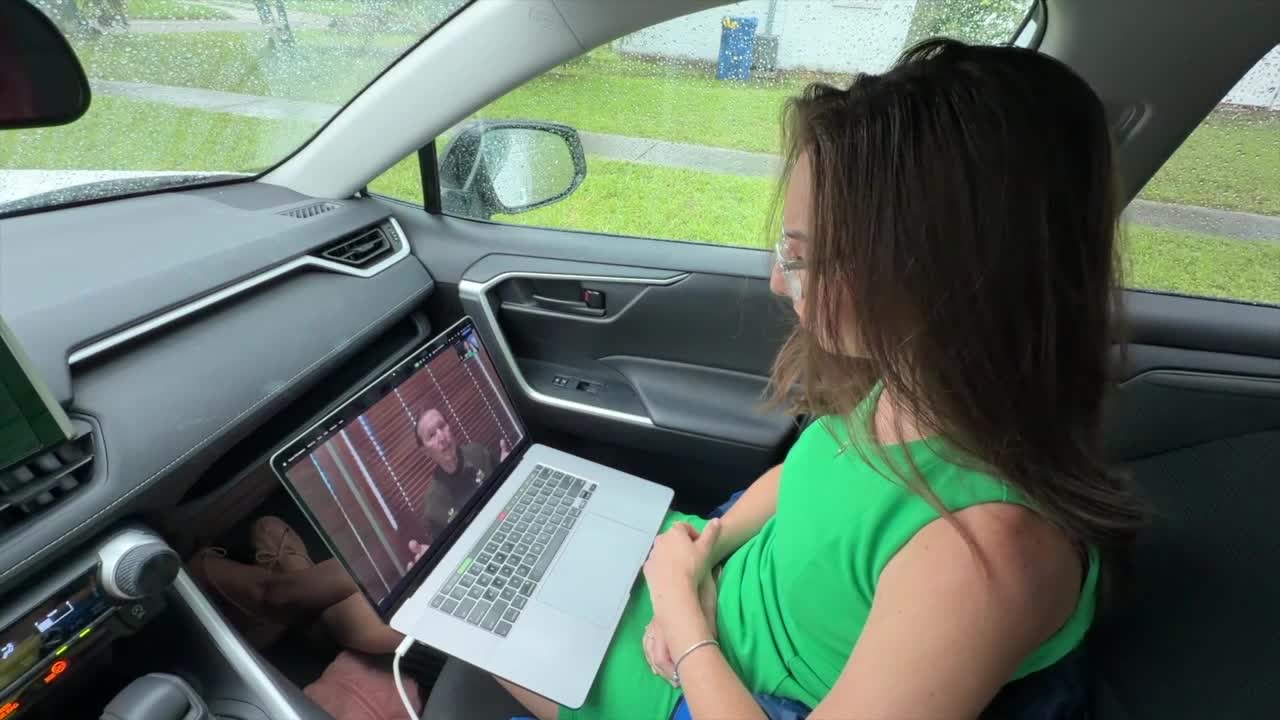
Ed Obayashi, a use of force expert, deputy sheriff, and policy advisor in California, reviewed the details of the case at Tampa Bay 28's request.
"Current de-escalation techniques do not work," Obayashi said. "The individual simply does not comprehend what we're trying to accomplish here."
PCSO emphasized in its release that none of the force used by officers was considered intentional deadly force. No weapons—including tasers or batons—were used. Officers relied solely on physical restraint.
But Obayashi says that doesn't mean the force wasn't deadly.
"Unfortunately, that type of force has resulted in more deaths than all the other force options I just mentioned combined," he said. "When's the last time you heard anybody being killed by batons? By tasers, by a dog?"
California's Controversial Solution
Obayashi revealed that California law enforcement agencies have taken a dramatic step: they no longer respond to mental health calls like the one that led to Pepal's death.
"We've begun to realize that our traditional responses really create more problems than they solve," Obayashi explained. "We do more harm than we do good in these situations, and too often tragedies result purely as a result of us trying to help individuals in these situations."
In California, if a family member flags down an officer reporting a mental health episode, officers now refer them to mental health authorities instead of responding themselves.
Obayashi acknowledged the investigation into Pepal's death is still in its early stages.
"We just don't have enough information at this point," he said. "This is not an uncommon situation."
But his biggest concern extends beyond this individual case.
"My biggest concern is criminal prosecution for cops," Obayashi said.
Local Resources for Mental Health Crises
In Florida, residents experiencing a mental health crisis—or their family members—can dial 988 to reach mental health experts through the Department of Health's crisis hotline.
Locally, St. Petersburg has developed its own response model designed to reduce police involvement in mental health crises.
In January 2021, City Council approved a contract to launch the Community Assistance and Life Liaison (CALL) program pilot. The program aims to improve the response to mental illness, poverty, and addiction while providing assistance and reducing criminalization and stigma.
City officials recognized that many calls for service the Police Department responds to during a normal day are better addressed by human services professionals.
Through CALL, emergency dispatchers can send social workers to certain calls for service including mental health crises, suicide intervention, truancy, homeless complaints, and neighborhood disputes.
The program has four main goals:
- Reduce police involvement in non-criminal and non-violent calls for service
- Reduce repeat calls for service to police from the same person by providing support and longer-term service connections
- Provide a more compassionate approach to quality of life issues
- Increase the amount of time sworn officers can focus on keeping the city safe
Gulf Coast Jewish Family and Community Services (JFCS), in partnership with the St. Petersburg Police Department, leads a team of clinical staff and community navigators who are dispatched to non-violent, non-criminal calls to provide a therapeutic, wrap-around response.
The program was nominated for an award last year.
It's unclear whether the CALL program was utilized or available during Saturday's incident.
The Investigation
The Pinellas County Use of Deadly Force Investigative Task Force is conducting the investigation, which remains ongoing pending autopsy results, according to PCSO.
Created in 2020, the task force ensures that investigations into law enforcement use of deadly force are thorough, complete, and objective. The purpose is to guarantee officer-involved incidents in Pinellas County are investigated by an independent agency—not the agency involved in the use of force.
PCSO noted that Pepal had pre-existing medical conditions. His official cause of death is pending an autopsy by the medical examiner.
Under Florida's Marsy's Law, the names of the officers involved will not be released until 72 hours after the incident—Wednesday morning—PCSO said.

Pasco County mom of 5 takes in 3 children left without food or power whose mother faces neglect charges
Jasmine Young, a mother of 5, opened her home to three neglected girls as their mother faces child neglect charges for leaving them without food, power or water.
