

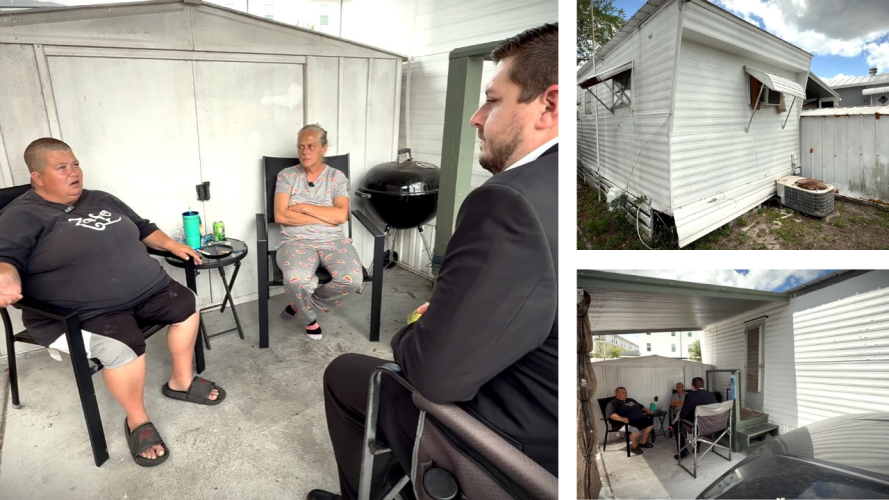


LAKELAND, Fla. — For years, viewers across the Tampa Bay area have been sounding the alarm about rising lot rents in mobile home communities. They told us the increases are pushing some of them to the brink of homelessness.
This legislative session, Florida lawmakers took some steps to address the issue. But for many residents, key protections are still missing.
Watch report from Chad Mills
“I don’t want to be homeless.”
Sitting outside her mobile home in Lakeland, Brandi Norsworthy says she’s doing everything she can to hold things together.
“Very, very struggling,” she said.
Norsworthy owns her home, but like many mobile home residents, she still pays monthly “lot rent” to a park owner for the land it sits on.
That cost has already gone up in recent years, and now she worries it could rise again, especially after her park was recently purchased by a corporation.
“I don’t want to be homeless,” she said.
Just outside her home sits her truck. It’s her backup plan if she can no longer afford to stay.
“It’s hard. Very hard. The daily struggles — mentally and physical,” she said.
Her neighbor, Crystal Murphey, says she’s already falling behind.
“Hard. Tough. I mean, most times some things don’t get done in the month,” Murphey said. “I just get behind more and more.”
Murphey cares for her dying mother and her autistic son and says the pressure is constant.
“When you can’t make your bills, that’s the first thing you start thinking about is homelessness,” she said.
What passed this session
Stories like theirs are why lawmakers say they’re paying more attention.
Rep. Paula Stark (R-St. Cloud), who has championed mobile home issues in Tallahassee, says momentum is building.
“It is a big deal. It is getting a lot of traction,” Stark said.
This session, lawmakers passed a bill Stark sponsored that allows local governments to use housing assistance funds to help mobile home owners pay lot rent up to six months to prevent eviction.
“That’s a big win for them,” Stark said.
Another measure will cap property tax increases tied to mobile home communities at three percent, which Stark says is another key protection.
Both bills now await action by Gov. Ron DeSantis.
What didn’t pass
But a broader bill Stark filed, aimed at directly regulating lot rent increases, did not get traction and died as the session ended.
That proposal would have required park owners to justify rent hikes, reduce rent if amenities are cut, and strengthen oversight of the industry.
“Tallahassee is now really paying more attention, but it is a tough nut to crack,” Stark said.
She says she plans to bring the bill, or a very similar version, back next session.
“When we get into it, there may be some push and pull...but the things that are in this bill are fair," Stark said. “I believe in capitalism. I want people to make money. But, at the same time, to what extent? Because the other side of the coin is if we put these people out on the street, the state’s going to end up paying for them in some other form.”
“Don’t give up on the little people.”
For residents like Norsworthy, the changes that passed are a step in the right direction but not enough to ease the anxiety many feel every month.
“Don’t give up on the little people,” she said.
For now, many mobile home owners remain in limbo, hoping the next rent increase doesn’t push them out of their homes.
Share Your Story with Chad
Chad Mills calls Polk County home and has witnessed the area’s growth firsthand. He is focused on sharing stories from his neighbors in Lakeland. You can use the form below to connect with Chad.
.

'My heart breaks': Woman describes helping injured students after deadly school bus crash in Polk County
A woman on her way to work Monday morning found herself helping injured Winter Haven High School students after a school bus crash that killed two people.

