

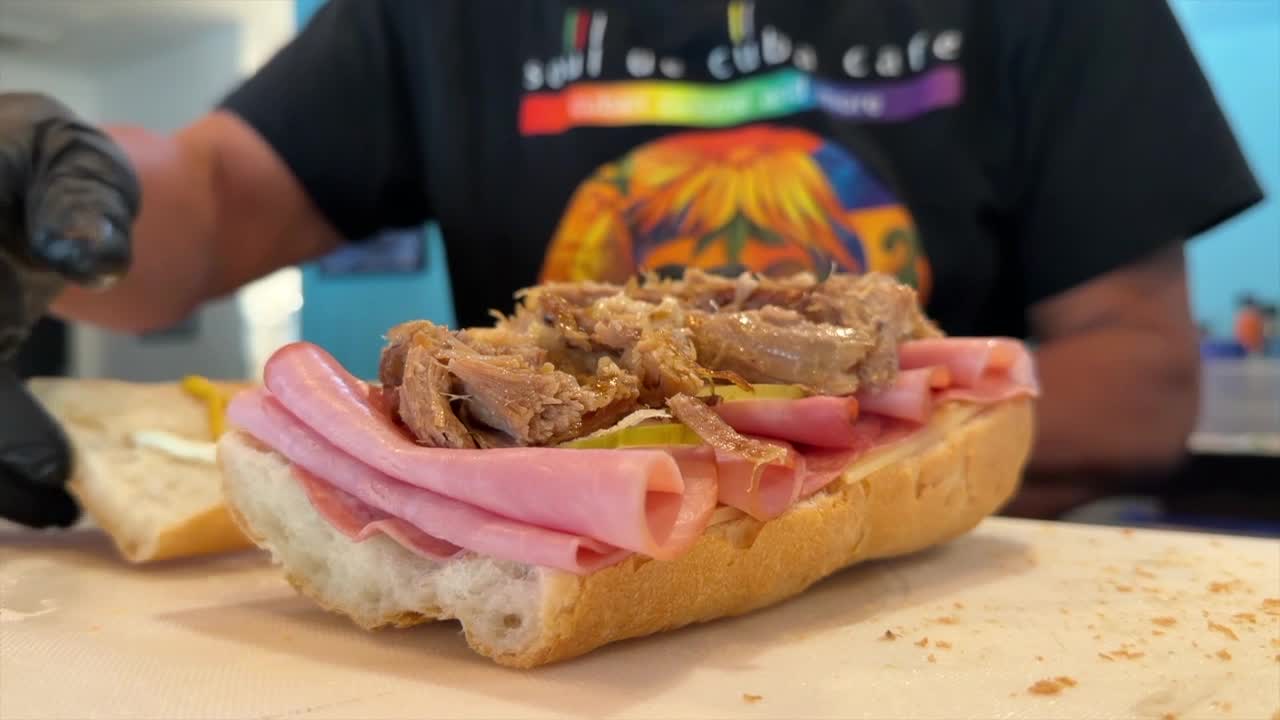


TAMPA, Fla. — I went to Soul de Cuba Cafe to talk with Jesus Puerto about an award.
I left thinking differently about a Cuban sandwich.
Puerto, founder and CEO of the restaurant in Tampa's Seminole Heights neighborhood, recently received the Defender of Race and Ethnicity in America Award from the Association for Ethnic Studies.
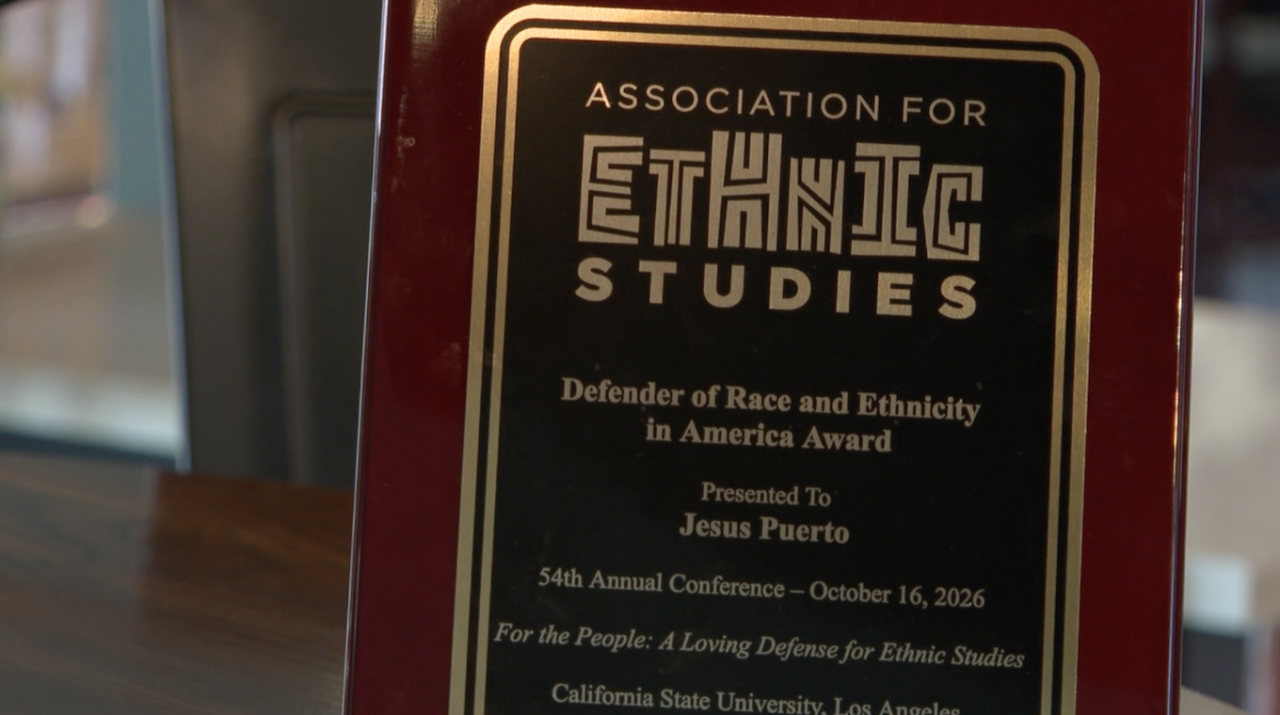
The organization recognized Puerto for his lifetime of achievement and leadership connecting food, cultural heritage, storytelling and collective memory.
For Puerto, the recognition came as a surprise.
"I was very surprised. I was shocked, literally," Puerto said. "They had noticed the work that I had been doing in talking stories about the Cuban sandwich and the stories that we know from here in Tampa."
The award was presented Oct. 16 during the Association for Ethnic Studies' 54th Annual Conference, held Oct. 15-17 at California State University, Los Angeles. The theme of this year's conference was "For the People: A Loving Defense for Ethnic Studies."
Puerto said the recognition means even more because it calls attention to histories that have shaped Tampa but can easily be overlooked.
And sitting across from him inside Soul de Cuba, I got to see how he tries to keep those stories alive.
History between two pieces of bread
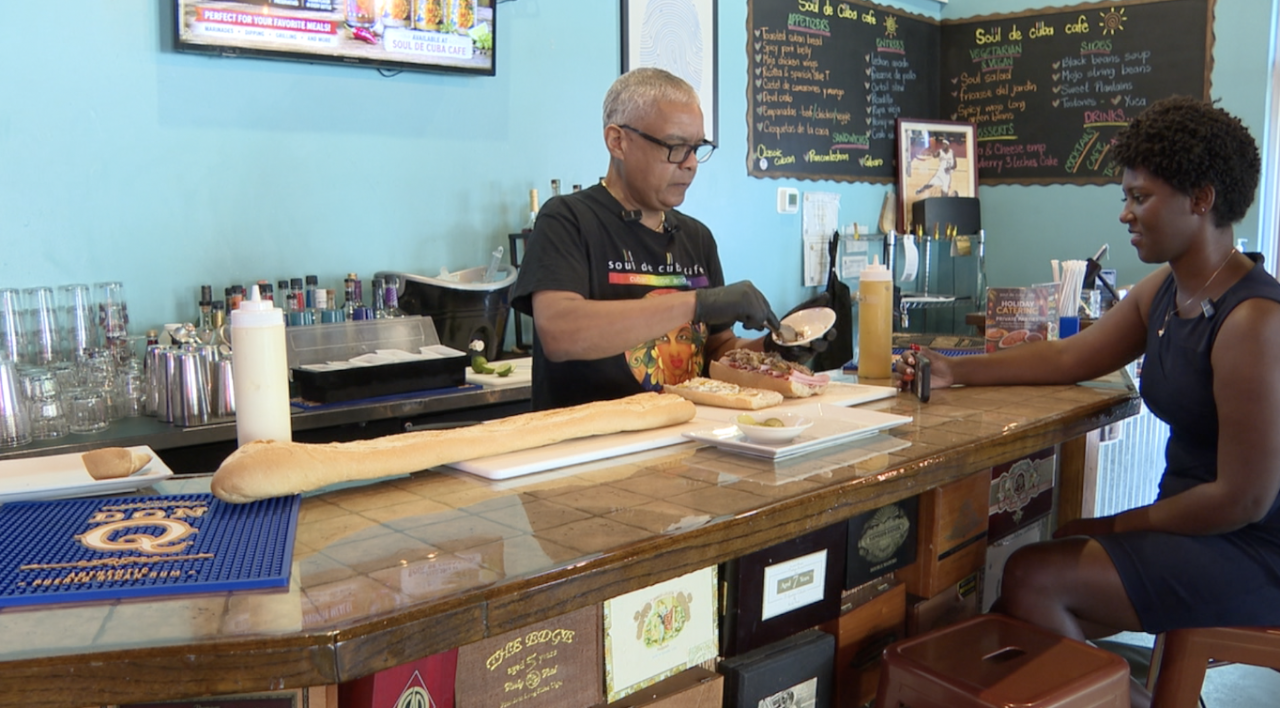
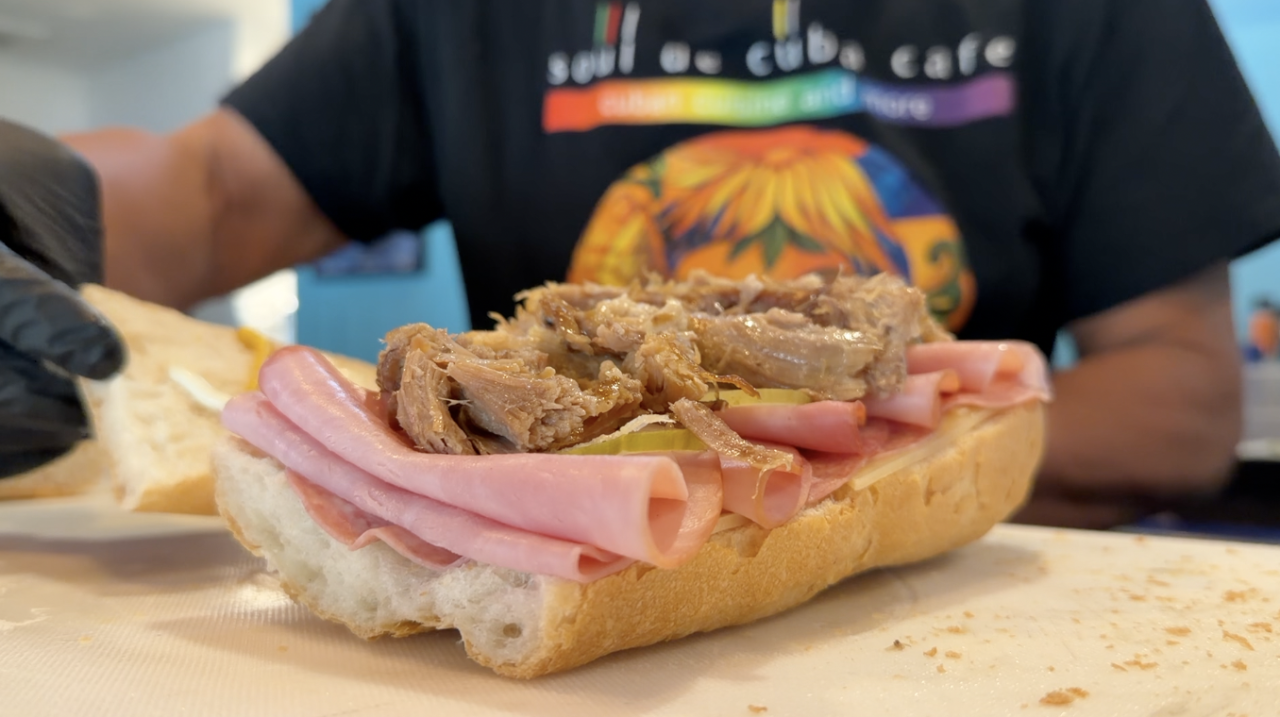
Puerto sat down with me and began making a Cuban sandwich, explaining each ingredient as he went.
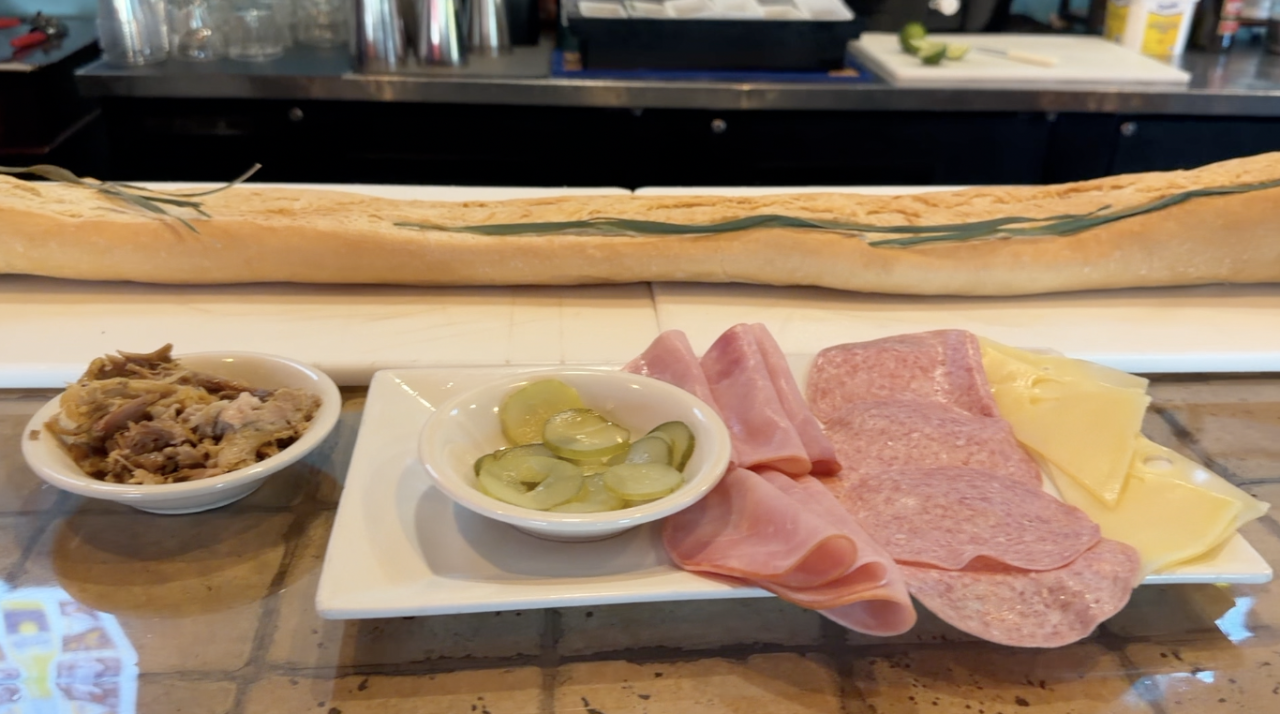
We started with Cuban bread from La Segunda Bakery, a Tampa staple.
Even that bread has a connection to Puerto's family stretching back more than a century.
Puerto said his great-grandfather officially arrived in Tampa in October 1899. The arrival manifest listed his occupation as a baker.
"He's one of the first [to bake] Cuban bread in Ybor City," Puerto said.
Puerto said his great-grandfather worked with the Moré family, which founded La Segunda Central Bakery.
La Segunda is the bread Puerto grew up with, and generations later, it is still part of the story he tells through food.
Puerto was born in Ybor City at the old St. Joseph Hospital in the 1960s. His family later moved to the River Grove neighborhood of East Tampa in the 1970s.
He remembers Charlie's Market making Cuban sandwiches for the community, along with trips to places including La Segunda Central, Silver Ring and La Tropicana.
Those experiences are part of why Puerto doesn't see the Cuban sandwich as merely something on his menu.
As he began assembling one for me, he explained that its ingredients can tell the story of the communities that lived and worked alongside each other in Tampa.
"So each ingredient is a different culture," Puerto explained.
He pointed to the Swiss cheese, mustard and pickles and discussed the influence of German immigrants.
"A lot of people don't realize that the contribution of the German community to Tampa in the 1880s, when German immigrants arrived, they brought their printing presses with them and their design skills," Puerto said. "So they printed the cigar box labels and the rings that go around the cigars."
Then there is the salami and Tampa's Italian influence, alongside the roast pork for Cuba and ham for Spain.
His conference presentation expanded on the cultural exchange among Cuban, Spanish, Italian and other immigrant communities who lived and worked around Ybor City's cigar-making district.
Puerto sees the sandwich as a reflection of what happened when those communities came together.
Why Swiss cheese instead of another cheese? Why those particular meats? Why mustard and pickles?
For Puerto, those choices tell a larger story.
"The brilliance of putting these different types of meats and cheese together with such intentionality, you got to think, man, what a great vision," Puerto said.
He estimates most people who eat the sandwich have no idea how much history could be represented in it.
"I would say 90% of the people have no idea," Puerto said. "They've loved it. I mean, Cuban sandwich has become a global phenomena."
Puerto presented that history at the conference in a presentation called "More Than a Sandwich: How Ybor City's Cuban Sandwich Preserves a Multicultural Working-Class History."
Through the sandwich, he explored immigration, cultural exchange and the stories of working families who helped shape Ybor City.
Puerto even has his own way of describing what the sandwich represents.
"I tell people also, you know, as a former Peace Corps volunteer and peace worker around the world, it's a sandwich of peace."
He goes even further.
"It is more American than the apple pie," Puerto said.
The smell of food brings back Ybor City
For Puerto, this isn't only an academic examination of Tampa history.
He has memories attached to the same ingredients he now explains to customers.
He remembers walking with his grandmother to Dimmy's Market on Seventh Avenue to pick up dried black beans and rice so she could prepare black bean soup at home.
And certain smells can take him back.
"Every time I even get the aroma of the smoked ham and the pickle and the Swiss cheese and the salami, all of this coming together, in the same way when I get the aroma of a cigar, it just reminds me of that time," Puerto said, "being in Ybor City with my ancestors."That's part of what makes food so powerful to him.
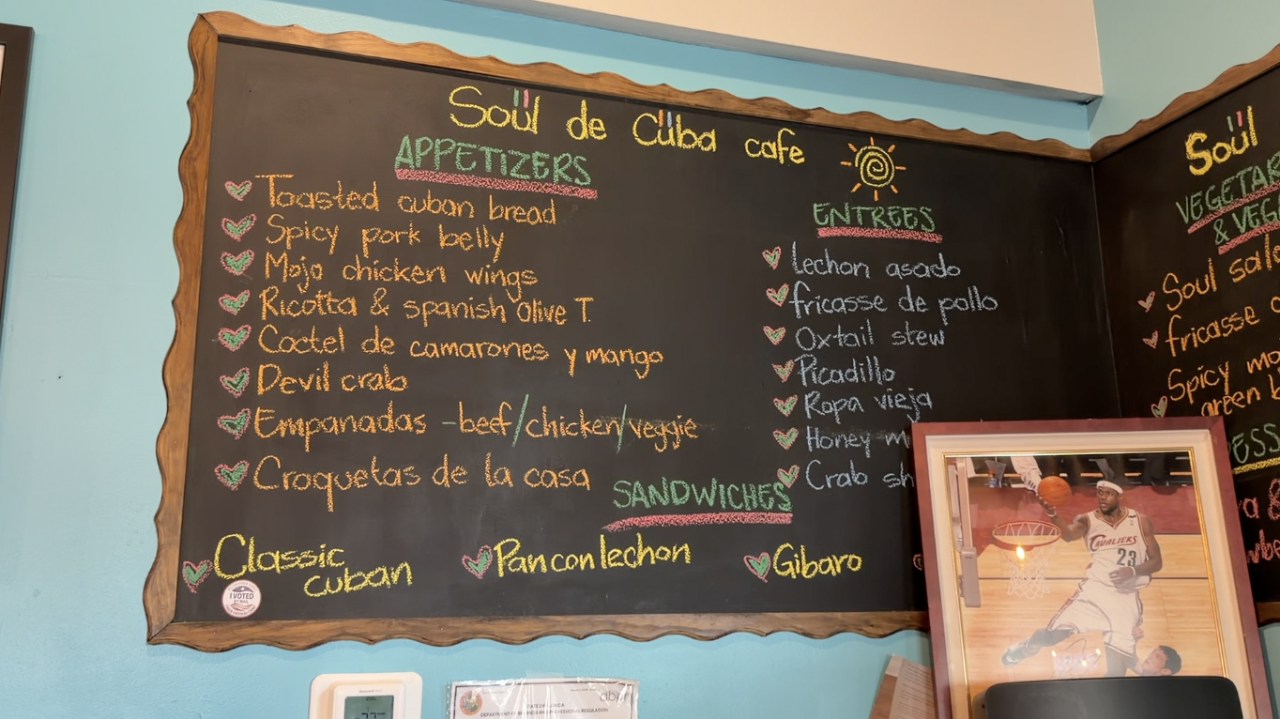
Soul de Cuba serves dishes including ropa vieja, lechón asado and traditional Cuban black beans and rice. But Puerto wants customers to encounter more than familiar flavors.
He wants them to understand the people who carried those recipes forward.
His family's story is on the walls
Look beyond the food and the same mission is visible throughout the restaurant.
On one wall are photographs of Puerto's family.
On another is a massive historic image that immediately caught my attention.
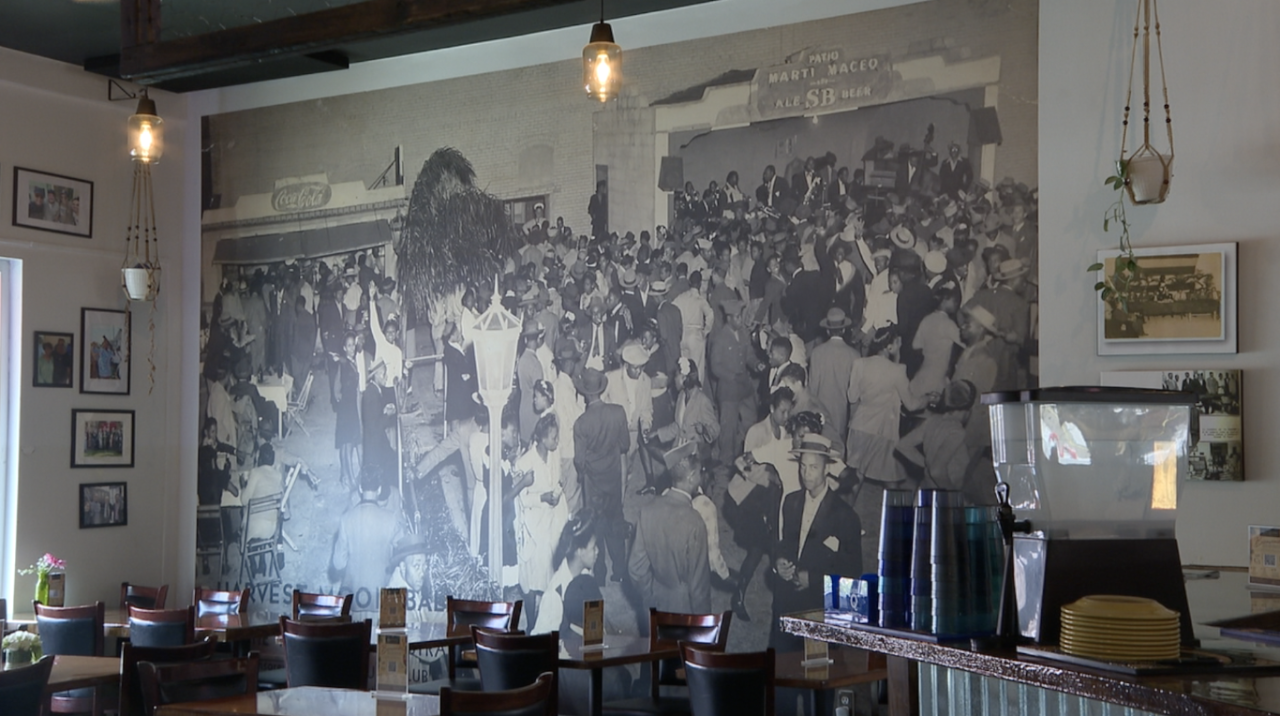
He said the image captures an event held Nov. 2, 1944, for Black military officers at Tampa's Martí-Maceo Society.
Puerto said his great-uncle, Vincent Alvarez, organized the gathering in partnership with Fort Hesterly Armory.
According to Puerto, those Black officers were not allowed inside the officers' club at another base because of segregation.
The Martí-Maceo Society gave them a place to gather.
The organization, founded in Ybor City in 1900, historically served Tampa's Afro-Cuban community as a mutual aid organization and social institution at a time when segregation restricted where Black Cubans could gather.
For Puerto, however, the photograph is also deeply personal.
It survived because of his grandmother.
"What an honor it is to be able to have had that heirloom shared, kept by my grandmother, who passed it down to us, you know, years and years and years ago, in a brown paper bag," Puerto said.
Eventually, he had an idea.
"When I saw this wall, I was like, 'Oh my gosh, can I do this? Can I find a way to share that image in a quality manner?'"
Now, instead of sitting inside a brown paper bag, the photograph takes up a prominent wall inside a restaurant welcoming a new generation of customers.
Keeping Ybor's history alive in Seminole Heights
That location matters.
Soul de Cuba isn't in Ybor City. It's in Seminole Heights.
But Puerto said many customers who knew an earlier Ybor City and West Tampa find something familiar when they walk into his restaurant.
Some are in their 80s and 90s. Puerto said he even has a 102-year-old customer who comes in for the crab enchilada.
"I have others of different races and ethnicities of Ybor City who come to be reminded of long lost tastes, long lost flavors, and flavors and recipes that might have gone, unfortunately, to grave, you know, in some of their families," Puerto said.
Puerto said the photographs and memorabilia surrounding them act as reminders of the people and communities that came before.
It's something he has been thinking about for decades.
Puerto said he opened his first Soul de Cuba Cafe in New Haven, Connecticut, more than 20 years ago, even though he was born in Ybor City.
From the beginning, he said, there was a vision behind the business.
"I did have a vision to protect the heritage through this business platform," Puerto said.He is also quick to acknowledge it remains a business.
"We need to have revenue to keep people employed, and to grow our company and to provide a return to our investors," he said. "So we are a business, but more really importantly for me, and always been at the core is ... we're also preserving and protecting this incredible heritage of Ybor City."
Watching the mission happen
While I was at Soul de Cuba, I watched that philosophy move beyond something Puerto was simply telling me in an interview.
Two young customers came into the restaurant for the first time. They told Puerto they attended school in Tallahassee and were home for Thanksgiving.
They had woken up wanting Cuban food.
Soon, Puerto was doing exactly what he'd spent our interview describing.
He asked about their studies. He told them about his family. He pointed out photographs and explained that his great-grandparents were among Tampa's early Black Cuban families.
He told them about his great-grandfather baking Cuban bread in Ybor City.
Then he explained why all of that history was being displayed around them.
"That's why we carry on this knowledge and tradition in preserving and protecting our heritage," Puerto told them.
The interaction offered a glimpse of how Puerto views the restaurant: people may walk through the door because they're hungry.
He hopes they leave knowing something they didn't know before.
Why an ethnic studies organization recognized a restaurateur
The Association for Ethnic Studies says education about culture and history doesn't have to happen in a traditional classroom.
Ravi Perry, past president, co-director and director of operations of the Association for Ethnic Studies, made that point in a statement recognizing Puerto.
"The work of ethnic studies occurs in classrooms, boardrooms, kitchens, community centers, non profits, in media, libraries, museums and in our homes," Perry said.
Perry recognized Puerto's "visionary proprietor leadership that connects food, culture, storytelling, and collective memory on every plate and each bottle of his authentic mojo."
That helps explain why a restaurant owner became the recipient of a lifetime-achievement honor from an ethnic studies organization.
Puerto has effectively turned a restaurant into another kind of classroom.
'I never looked at Soul de Cuba as just a restaurant'
The restaurant's focus on cultural preservation extends throughout its menu and design.
Puerto pointed out artwork representing Oshun near the front and another work on a side wall that he said was created by a different artist, both connected in different ways to representations of Mother Nature.
Alongside those pieces are the photographs, artifacts and family histories Puerto uses to help customers connect what they are eating with the people who came before them.
In a statement about the award, Puerto said that was his intention from the beginning.
"I never looked at Soul de Cuba as just a restaurant. I wanted to create a place where people could enjoy good food, connect with one another, and learn something about the culture and history behind every dish," Puerto said. "To have that work recognized nationally is a tremendous honor."
For Puerto, the award is also an opportunity to bring more attention to a larger Tampa history.
"Tampa has such a rich multicultural history, and so much of it lives in the food we share," he said. "This recognition is an opportunity to shine a light on the generations of Cuban and Afro-Cuban families who helped shape our community and whose stories deserve to be remembered."
An ancestral responsibility
When I asked Puerto whether receiving the award feels like carrying the weight of his ancestors, his answer was immediate.
"Yeah. I mean, I can feel it," he said. "I'm so honored."
To explain that feeling, Puerto reached for a word he learned thousands of miles from Tampa.
Before opening Soul de Cuba, Puerto was a Peace Corps volunteer in Samoa. He later lived for years in Honolulu, Hawaii.
There, younger people in his community introduced him to the Hawaiian word kuleana.
Puerto describes it as "ancestral responsibility."
It's a lesson he says he brought back with him and now shares with younger people in Tampa.
"We have responsibility for carrying forward all the work and sacrifices, incredible sacrifices of the journey that took place that brought you here to this day," Puerto said. "And you've got to carry it forward for your future generations."
I came to Soul de Cuba because Jesus Puerto received an award.
But by the time I left, the award almost felt like the beginning of the story rather than the end of it.
Because inside the restaurant, Puerto's effort to preserve Afro-Cuban history isn't contained in one plaque or one ceremony.
It's in a photograph his grandmother kept safe in a brown paper bag.
It's in the faces of his family covering another wall.
It's in the stories he stops to tell two college students who walked in looking for something to eat.
It's in the smell of smoked ham, pickles, Swiss cheese and salami that can take him back to Ybor City.
And it's in the Cuban sandwich he made in front of me, an everyday Tampa food that Puerto believes carries generations of immigration, work, family and cultural exchange between two pieces of bread.
The national honor recognizes what Puerto has spent decades doing.
But the word he brought back from Hawaii may explain it better.
Kuleana.
A responsibility not just to remember where you came from, but to make sure the people who come after you know it, too.
About Soul de Cuba Cafe
Soul de Cuba Cafe is located at 6428 N. Florida Ave. in Tampa's Seminole Heights neighborhood. The restaurant celebrates traditional Cuban cuisine while Puerto uses family recipes, historical images, cultural artifacts and storytelling to preserve and share Cuban and Afro-Cuban history.
About the Association for Ethnic Studies
The Association for Ethnic Studies brings together scholars, educators, students, community activists and cultural leaders focused on ethnic studies, multicultural education and cultural understanding. Its 54th Annual Conference was held Oct. 15-17, 2026, at California State University, Los Angeles.
Share Your Story with Jada

Jada Williams is focused on the issues that matter most to people in who live in Tampa and West Hillsborough County. From downtown Tampa to Town ‘n’ Country and Westchase, Jada works to bring you updates and solutions on everything from crime to infrastructure. Reach out to Jada below with your concerns for your neighborhood.
.

MacDill Air Force Base housing lawsuit grows to 105 military families alleging unsafe conditions, mold
A lawsuit against the company managing privatized housing at MacDill Air Force Base has more than doubled in size, with 105 military families now alleging they lived in unsafe and unhealthy conditions. The amended complaint represents more than 450 people and spans 924 pages.
