

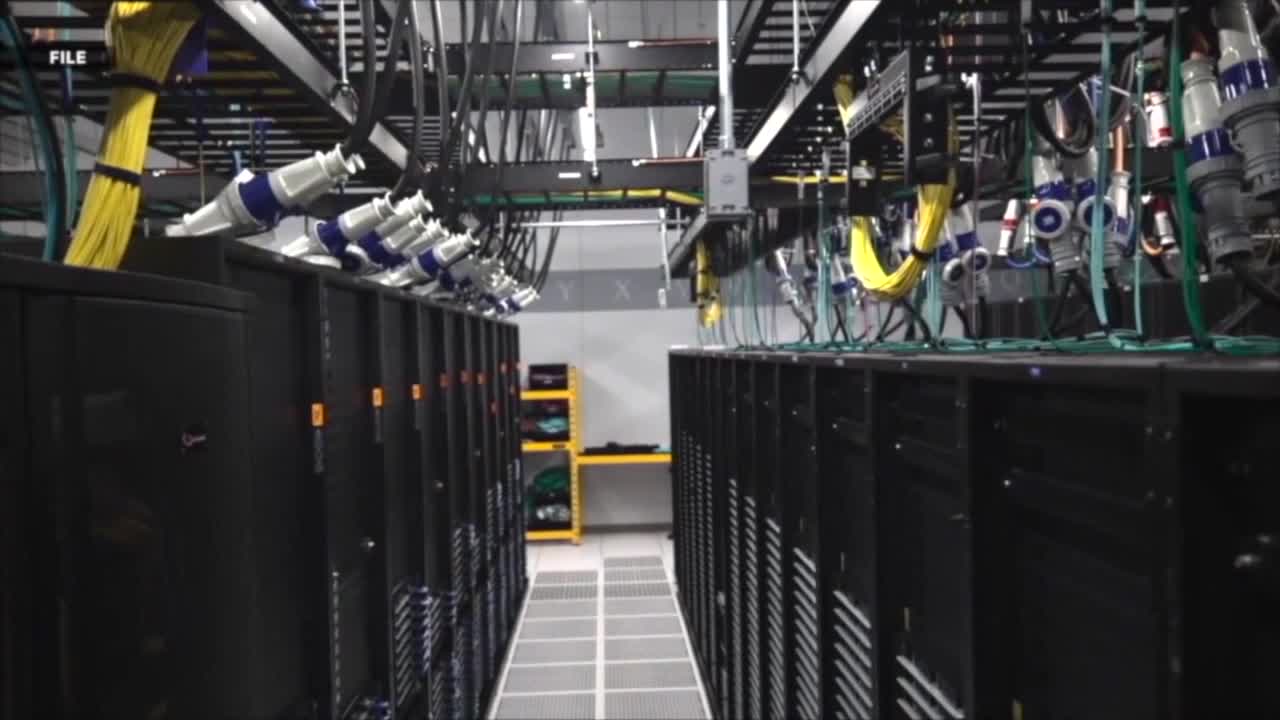


TAMPA, Fla. — The debate over how to regulate data centers is moving from unincorporated Hillsborough County to Tampa City Hall.
Tampa City Council approved a resolution advancing a proposed temporary moratorium on data center development, giving city staff time to review Tampa's Comprehensive Plan, Land Development Code and City Code and recommend potential regulations.
WATCH REPORT FROM JADA WILLIAMS:
The council's action does not enact the moratorium itself. Instead, it moves the proposed ordinance toward the public hearing process.
Susan Johnson-Velez with Tampa's Legal Department told council members that the proposal stems from a motion made in late October.
"Council asked staff to bring back a resolution doing a number of things related to data centers, among them preparing an interim development control or moratorium ordinance to allow staff time to review the Comprehensive Plan, the Land Development Code, and the City Code so that we could come back to council with recommendations on regulations for data centers," Johnson-Velez said.
Hillsborough County has been considering the same questions for months
Tampa's action comes as Hillsborough County has spent months examining how it could regulate data centers before significant development occurs.
On Aug. 5, county commissioners directed staff to evaluate a potential framework for future data center regulations, including whether to limit or prohibit the use of county drinking water for cooling. The county's subsequent November report says modern data centers associated with artificial intelligence can involve very large buildings with significant demands on power and water. Cooling and backup power equipment can also produce persistent noise, according to the report.
Commissioner Harry Cohen told Tampa Bay 28 in August that the county wanted to proceed cautiously.
"We're going to do some study. We are going to assess what the impacts of these centers could be, and we're going to proceed very, very cautiously before we even entertain the idea of allowing anything like this to be built," Cohen said.
During that August meeting, members of the public also urged commissioners to act before projects begin moving forward.
"It's clear that we need to hit the brakes on explosive growth and data center projects," one speaker told commissioners.
Another urged the board to "protect our communities until thorough research and safeguards are in place."
What could Hillsborough County's rules look like?
By November, the county's Development Services staff had outlined several potential approaches.
The framework includes requiring planned-development zoning or allowing data centers as conditional uses only in certain zoning districts. It also considers separation requirements designed to address potential noise impacts on residents, livestock and sensitive wildlife.
Other possibilities include:
- Enhanced screening around data center sites
- Architectural requirements intended to break up large, monolithic building faces
- Limits on the use of potable, or drinking, water for cooling
- Requiring the use of reclaimed water
Data centers are not currently listed as permitted uses within Hillsborough County's standard zoning districts, according to the county report. That means a data center development would currently need to be specifically approved through planned-development zoning.
The county also identified electricity demand as a significant consideration, including possible cost impacts on other customers. However, its report does not propose regulations addressing electricity rates because those are regulated by the Florida Public Service Commission.
County moratorium proposal deferred
Hillsborough County has also considered a temporary moratorium of its own.
On Nov. 10, commissioners had an item before them that would have declared "zoning in progress" and scheduled public hearings for consideration of an ordinance establishing a one-year temporary moratorium on AI data centers in unincorporated Hillsborough County.
However, commissioners deferred that item to a date to be determined.

MacDill Air Force Base housing lawsuit grows to 105 military families alleging unsafe conditions, mold
A lawsuit against the company managing privatized housing at MacDill Air Force Base has more than doubled in size, with 105 military families now alleging they lived in unsafe and unhealthy conditions. The amended complaint represents more than 450 people and spans 924 pages.
