

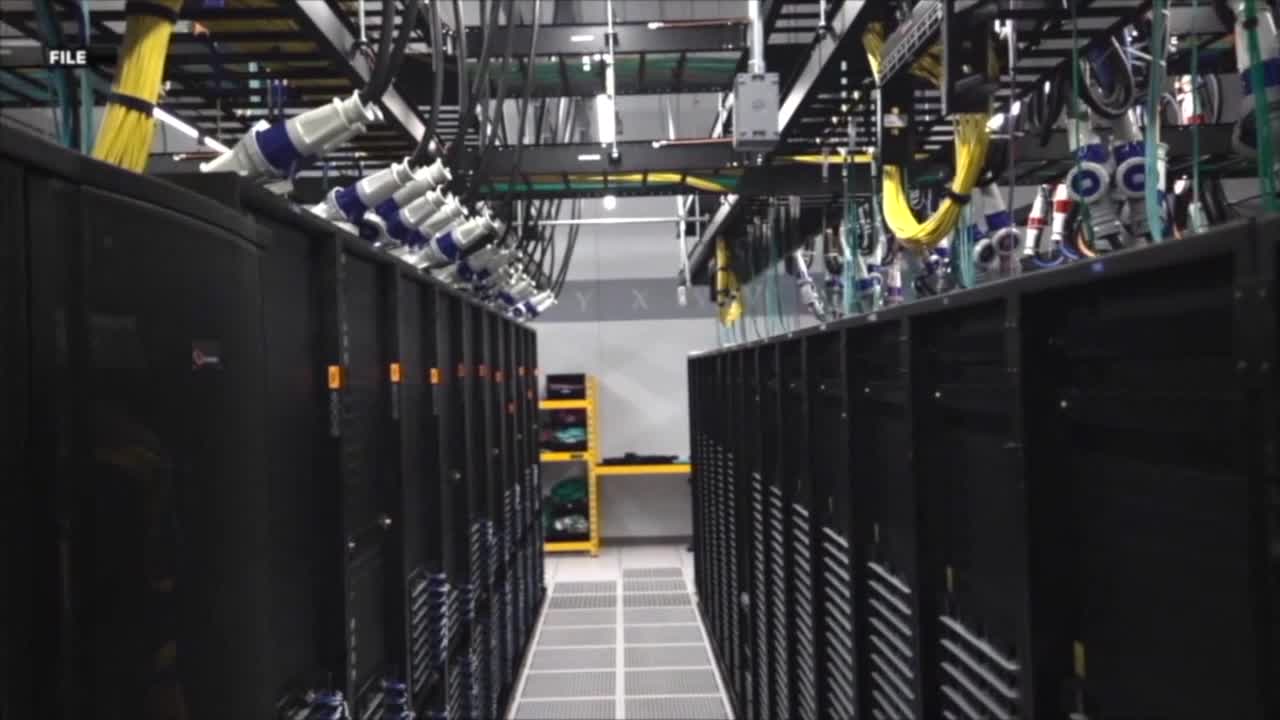


TAMPA, Fla. (WFTS) — Tampa Electric is moving to build a financial firewall between future data centers and existing customers, filing a proposal with state regulators that would require large energy users to cover the full cost of the power infrastructure needed to serve them.
The proposal, submitted this week to the Florida Public Service Commission, comes as utilities across the country race to prepare for explosive growth in data centers, the facilities that power artificial intelligence, cloud computing and other digital services.
Watch full report from Jada Williams
Under the plan, any new customer with an expected peak demand of 50 megawatts or more, enough electricity to power tens of thousands of homes, would be classified as a "large load customer" and face a new set of rules designed to prevent costs from being shifted onto existing ratepayers.
"Tampa Electric's responsibility is very clear. We must protect our existing customers while we're planning responsibly for the future," Tampa Electric spokesperson Cherie Jacobs said.
What TECO is proposing
The utility's filing stems from a new Florida law that requires electric companies to establish tariffs for large-load customers, including large-scale data centers.
According to the filing, customers meeting the 50-megawatt threshold would be required to pay for:
- New power generation needed to serve their facilities
- Transmission upgrades
- Energy storage projects
- Distribution and infrastructure improvements
- Certain fuel transportation costs
- Additional grid-related expenses associated with their operations
The filing specifically states the tariffs are designed to "reasonably ensure that each large load customer bears its own full cost of service and that such cost is not shifted to the company's general body of ratepayers."
That language directly addresses one of the biggest concerns surrounding data centers nationwide: whether residential customers could eventually pay for utility upgrades needed to support massive power-demand projects.
Long-term commitments required
The proposal also requires companies to make long-term commitments before connecting to TECO's system.
Under the filing, large-load customers would be required to sign contracts lasting at least 20 years. Customers that terminate service early could face financial penalties tied to remaining infrastructure costs.
The filing also requires three years' notice before ending service and includes additional fees if companies fail to provide sufficient notice.
"Incoming large load customers have to foot the bill for that," Jacobs said. "Our existing customers come first."
Companies may have to provide millions in financial security
One lesser-known element of the filing involves financial guarantees.
For some large-load customers, TECO could require security deposits, letters of credit or other financial assurances valued at up to $2 million per megawatt of contracted demand, depending on the customer's financial profile.
The requirement is intended to protect existing customers if a project is canceled or fails to meet contractual obligations.
Initial capacity capped at 1 gigawatt
The filing also limits the first customer class, known as LLCS-1, to a combined total of 1 gigawatt of large-load demand. After that threshold is reached, future projects would move into a second customer class with project-specific cost calculations.
For perspective, one gigawatt of power demand is roughly equivalent to the electricity consumption of hundreds of thousands of homes, according to the proposal.
To prepare for that possibility, TECO's filing anticipates investments including:
- 600 megawatts of energy storage
- 600 megawatts of new generating capacity tied to modernization plans at Big Bend Power Station
- New transmission facilities needed to support future large-load growth
New restrictions on foreign-owned entities
The proposal includes another provision likely to draw attention.
Under requirements included in the filing and tied to state law, TECO would be prohibited from providing service under the new tariffs to certain "foreign entities." The filing references entities controlled by governments identified in Florida law as foreign countries of concern and requires customers to submit ownership affidavits verifying compliance.
No large-scale data center currently proposed in Hillsborough
Despite growing concern among residents and local elected officials, there is currently no major data center proposal under review in Hillsborough County.
Still, county commissioners have begun discussing potential regulations for future projects, including restrictions on using county drinking water supplies for cooling and a possible moratorium on AI-focused data centers in unincorporated areas while land-use policies are developed.
County leaders say those conversations are aimed at preparing now rather than reacting later.
What's next?
TECO filed the proposal with the Florida Public Service Commission on Sept. 30. The commission must approve the plan before it can take effect.
The utility says the review process could take several months and potentially stretch into early next year.
For now, the proposal offers a glimpse of how Florida utilities are preparing for a future in which energy-hungry data centers may become increasingly common and where regulators, utilities and local governments are trying to answer the same question: who should pay for the infrastructure needed to support them?
Share Your Story with Jada
Jada Williams is focused on the issues that matter most to people in who live in Tampa and West Hillsborough County. From downtown Tampa to Town ‘n’ Country and Westchase, Jada works to bring you updates and solutions on everything from crime to infrastructure. Reach out to Jada below with your concerns for your neighborhood.
.
Bradenton community responds after 20-year-old volleyball star dies from disease that affects 2 in a million
The 20-year-old IMG Academy volleyball star and Under Armour All-American died Sept. 16 after a three-month battle with the rare blood disorder — even though doctors had found her a 100% bone marrow match, her mother, Tanya Mack tells Tampa Bay 28 reporter Haley Zarcone.
