

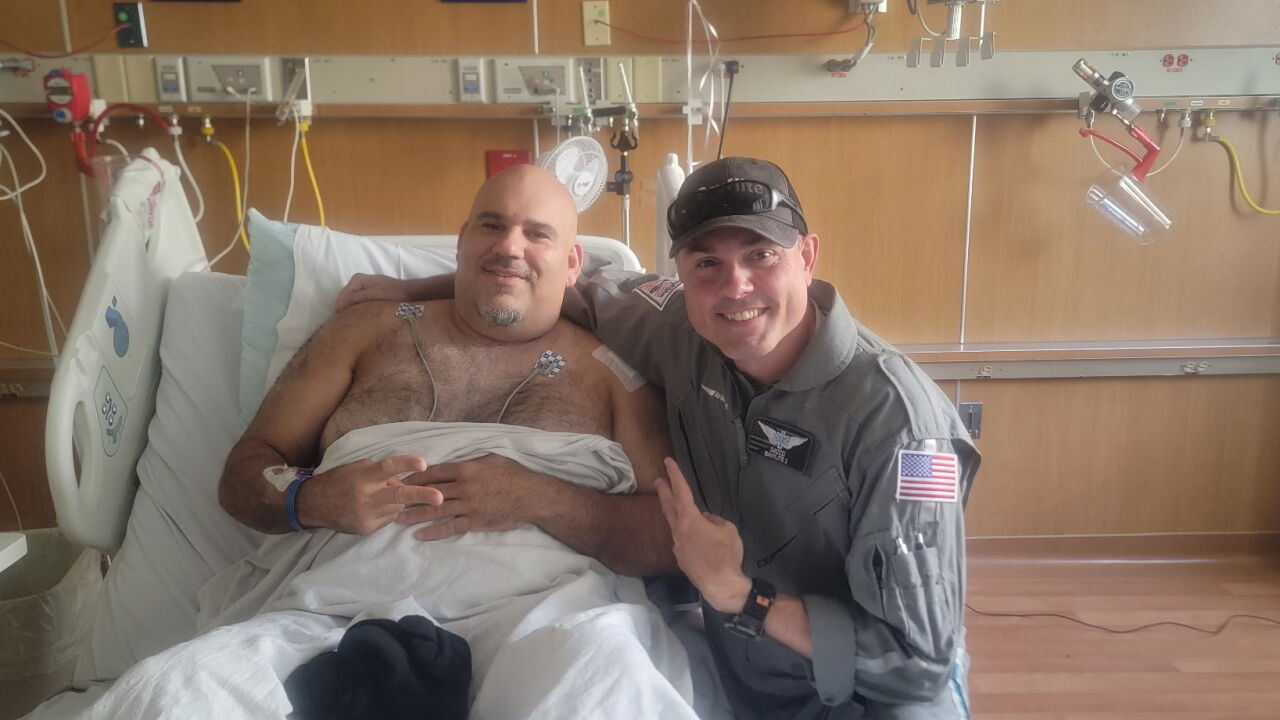


WESLEY CHAPEL, Fla. — Nearly a week after a shooting at an Enclave at Wesley Chapel apartment left a bail bondsman critically injured and two Pasco County deputies with minor injuries, the man who was shot is sharing what he remembers about the moments leading up to the gunfire.
Richard Halleck says he feels lucky to be alive.
WATCH: Bail bondsman shot six times in Wesley Chapel speaks out
"I think there's a bullet in my back. There's one in my neck, but I get to see my daughter. I'm alive," Halleck said.
Halleck, a bail bondsman and skip tracer, was shot six times with an AR-15 last Thursday while attempting to arrest 29-year-old Henry Josena, who had missed a court date.
Josena later died by suicide, according to authorities.
How Halleck found Josena
Halleck said an insurance company sent him the case after another bail agent had stopped operating.
He specializes in skip tracing — locating people who have failed to appear in court — and said he found Josena within three days.
Halleck said he and two other bail agents then conducted surveillance before deciding to make the arrest.
He said their background investigation did not give them reason to believe Josena would be violent.
"There was no indicators at all that this guy was a violent guy," Halleck said. "As a matter of fact, he was a gamer."
Halleck described Josena as a "happy go lucky guy" who, in his view, had gotten himself into a bad situation.
The arrest attempt
Halleck said the group decided to go into the apartment after Josena's brother returned.
According to Halleck, the brother let them inside and told them Josena was in a room toward the back of the apartment. Halleck said he prefers to handle arrests diplomatically and said the group did not force its way through the door.
As they approached the room, Halleck said he identified himself as the bail bondsman and told Josena he needed to talk to him. Then, Halleck said, Josena opened fire.
"As soon as I opened up that door, he opened up fire on me like I was an animal," Halleck said.
Halleck said he immediately realized he had been hit and walked out of the apartment bleeding.
"I said, 'I'm hit,'" Halleck said. "And I turned around, I walked out. And I have blood pouring out of me."
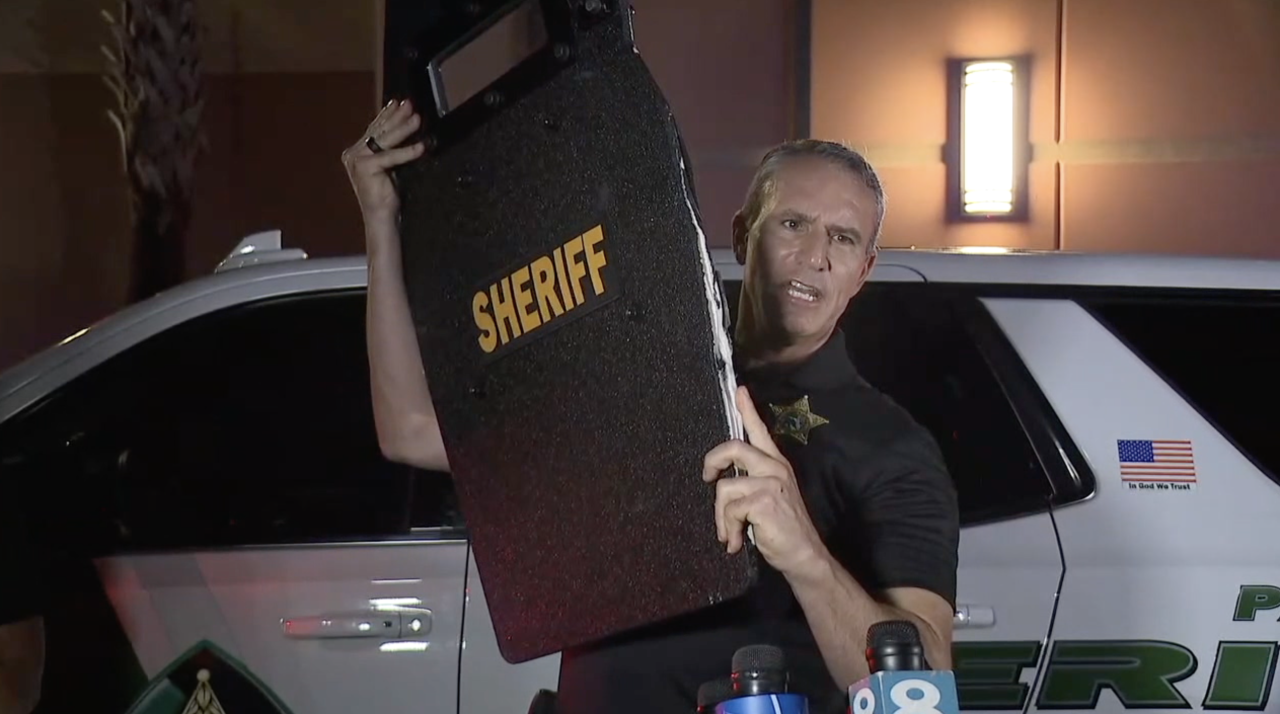
Halleck said his body armor stopped two rounds, but he suffered additional injuries to his back, neck and elsewhere.
He said a bullet remains lodged in his neck.
Deputies also injured
Halleck said another bail agent remained inside while deputies began arriving.
He recalled seeing Pasco deputies prepare to enter the apartment with shields. Halleck said he then heard deputies identify themselves and order Josena to drop his gun.
Moments later, he heard a deputy say he had been hit.
"And then I hear on the radio, 'I'm hit.' Oh my God, it hurts so bad," Halleck said.
Two Pasco County deputies were injured by projectiles during the response, according to the sheriff's office.
'I knew in my head I was dead'
Halleck said he remembers believing he would not survive.
"I knew in my head I was dead," Halleck said. "And I think the worst part is knowing that I was never going to see my wife or my kid again."
He said he began praying and eventually felt a sense of peace as he prepared for what he thought would be his final moments. But he survived.
Halleck said he suffered multiple entry and exit wounds, broken ribs and a lung contusion. He said one bullet remains in his neck and doctors have decided not to remove it immediately.
He said doctors told him his body needs time to heal before they consider removing the bullet, which could be months away.
Halleck says he could have handled the arrest differently
Looking back, Halleck said there is one thing he believes his team could have done differently: continue surveillance and wait for Josena to leave the apartment.
"That's the only thing," Halleck said. "Because even if we were to call him out, he was going to shoot and open up fire."
Halleck said Josena told one of the agents he felt he had been "set up" and did not want to go to prison.
'He had a bright future'
Despite being shot, Halleck said he forgives Josena.
"I 100% forgive him," Halleck said. "I just wish that he would have just done it a little differently because he had a bright future."
Halleck said he believes Josena could have faced the legal process rather than taking his own life and trying to kill others.
"He didn't have to waste his life like that," Halleck said. "He didn't have to try to kill out other people, and I understand how he felt."
A dangerous job
Halleck has worked in the bail bond industry since 2007 and said he plans to continue working. His job includes locating people who fail to appear in court and taking them into custody.
Gina Powell, owner of AA American Bail Bonds in Ohio, has hired Halleck for jobs in Florida. She said she has noticed the work becoming more dangerous over the years.
"Every year seems like things are just getting crazier and crazier," Powell said. "People are just... it's not like it used to be at all."
Powell said bail bond agents can arrest clients who fail to appear in court and that the bond agreement can give agents permission to search for them.
"We get them out of jail, we make sure they show up for court. If they fail to appear, it is our job to hunt them down, make the arrest, and bring them back to court," Powell said.
Halleck said he believes bail bond agents need to change how they approach arrests because of the prevalence of firearms.
"It's a very dangerous job," Halleck said.
Still, the shooting has not convinced him to leave the profession.
"This is what I do," Halleck said. "I'm gonna be back out in the field."
For now, Halleck is focused on recovering. He has an upcoming appointment that will address the bullet still lodged in his neck.
"I get to see my daughter. I'm alive," Halleck said. "You know, I get to see my wife's face every day."

Saudi flight from Tampa, secret FBI probe reveal possible Saudi support network for 9/11 hijackers
Twenty years after the Sept. 11 attacks, more than 80,000 records compiled by the Tampa FBI Field Office remain classified. Newly declassified documents are pointing to a possible secret Saudi support network for the hijackers. Soon after the attacks, the FBI uncovered that 15 of the 19 hijackers were from Saudi Arabia.
