

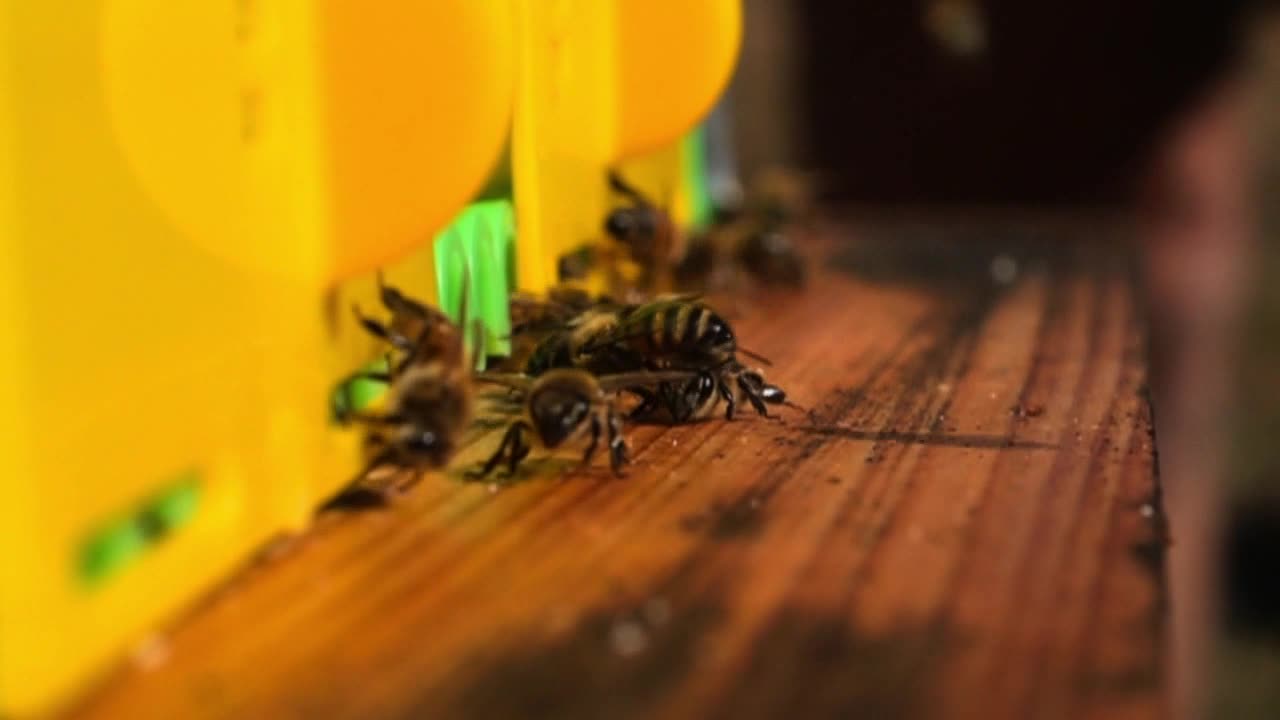


CITRUS COUNTY, Fla. — Florida's booming development is shrinking natural habitats, forcing honey bees into homes, water meters, and any man-made space they can find. As neighbors ask what to do to protect a species critical to our food supply, one Citrus County man is working to rescue bees rather than exterminate them.
Rob Strickland started Citrus Honey Bee Rescue to save displaced bees for free or a donation. He finds them new homes and teaches others how to start their own backyard apiaries.
"The only thing we can do is encourage people to set up, just like I have, beehives in their backyard," Strickland said. "I like to help them. Sometimes people don't want to take care of bees. They're scared, so I'll put a beehive in their yard, and I'll manage it for them under my registration."
WATCH: Bees in suburbia: Citrus Honey Bee Rescue saves bees as Florida population booms
According to Plan Hillsborough, Citrus County's population is booming, up 8.6% since 2020, twice the pace of just a few years ago. As more trees are clear-cut for new construction, bees are left homeless. Strickland rescues bees in neighborhoods that were once wild spaces.
"I'll have people call because they have bees either in their house or a tree, a water meter, or lately it's been the cable TV boxes, and it's always an emergency, because they just found it. They're scared of the bees," Strickland said. "Sometimes even in concrete block walls."
Colony collapse is decimating bee populations. A recent study by Washington State University found commercial honey bee losses may surge to 70% in 2025. That could impact farmers who rely on bees, as 35% of the world's food crops depend on animal pollinators.
"This spring was very busy all the way up till probably August, I was getting two, three calls a week," Strickland said.
Paul Dorey is one of those backyard gardeners learning beekeeping. At 86, he discovered a love of bees and a new friendship with Strickland. Dorey's garden includes radishes, carrots, beets, Swiss chard, cabbage, and broccoli.
"Not to get stung? I've been stung a few times, but usually it's always my own fault. I've only got stung once," Dorey said when asked what Strickland taught him.
The transition wasn't easy at first. Dorey's significant other didn't want bees.
"She was definitely against these bees. It was like World War Three when I decided to put them here, "Dorey said. "She'd worry about somebody walking on the property and getting sued. She had to have this here so we couldn't see it from the street."
In the end, he convinced her to keep the bees.
"Paul is 86 years old, and he just discovered bees," Paluska said.
"I think it's wonderful. Obviously, he's been in gardening for a long time, but this is the first time he's had bees. So he's been a joy to work with," Strickland said about Dorey. "His bees are managed better than my own bees, because he listens to what I say."
Share Your Story with Michael
A lot goes into the price of paradise and Michael Paluska focuses on every aspect. From the job market and housing to how Florida’s growth impacts our state’s wildlife. Send Michael tips to keep these important conversations going.
.
Bradenton community responds after 20-year-old volleyball star dies from disease that affects 2 in a million
The 20-year-old IMG Academy volleyball star and Under Armour All-American died Sept. 16 after a three-month battle with the rare blood disorder — even though doctors had found her a 100% bone marrow match, her mother, Tanya Mack tells Tampa Bay 28 reporter Haley Zarcone.
