

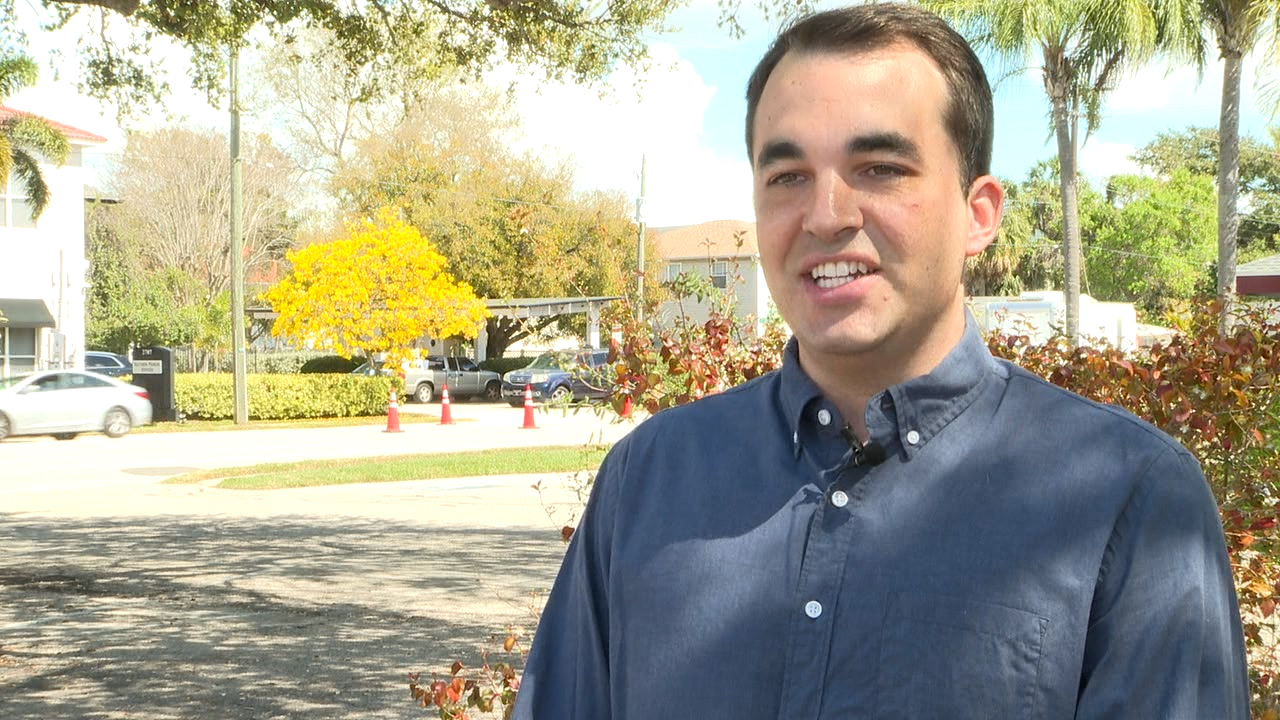


TAMPA, Fla. (WFTS) — A Tampa resident who suffered $100,000 in flood damage during Hurricane Milton reached out to me after my previous coverage, saying an important voice was missing from the story about the city's proposed South Howard Flood Relief Project: the people whose homes and businesses have already flooded.
William Kolega moved to Palma Ceia Pines in August 2022. He said flooding was something he and his wife sort of joked about at first.
Watch report from Jada Williams
"We would always joke about it and laugh about it, those first few months we moved in, when we noticed the streets, you know, accumulating water and cars splashing through and whatnot," Kolega said.
That changed when Hurricane Milton hit.
"To raise a two-year-old at the time in a down-to-the-studs home with no kitchen. We were living off a microwave and a toaster oven on the second floor for about six months," Kolega said.
Kolega said his family celebrated his son's second birthday on the floor of the second floor of their home while repairs were underway. His wife is due next month. He said the thought of it happening again is difficult to accept, especially given where his home sits.
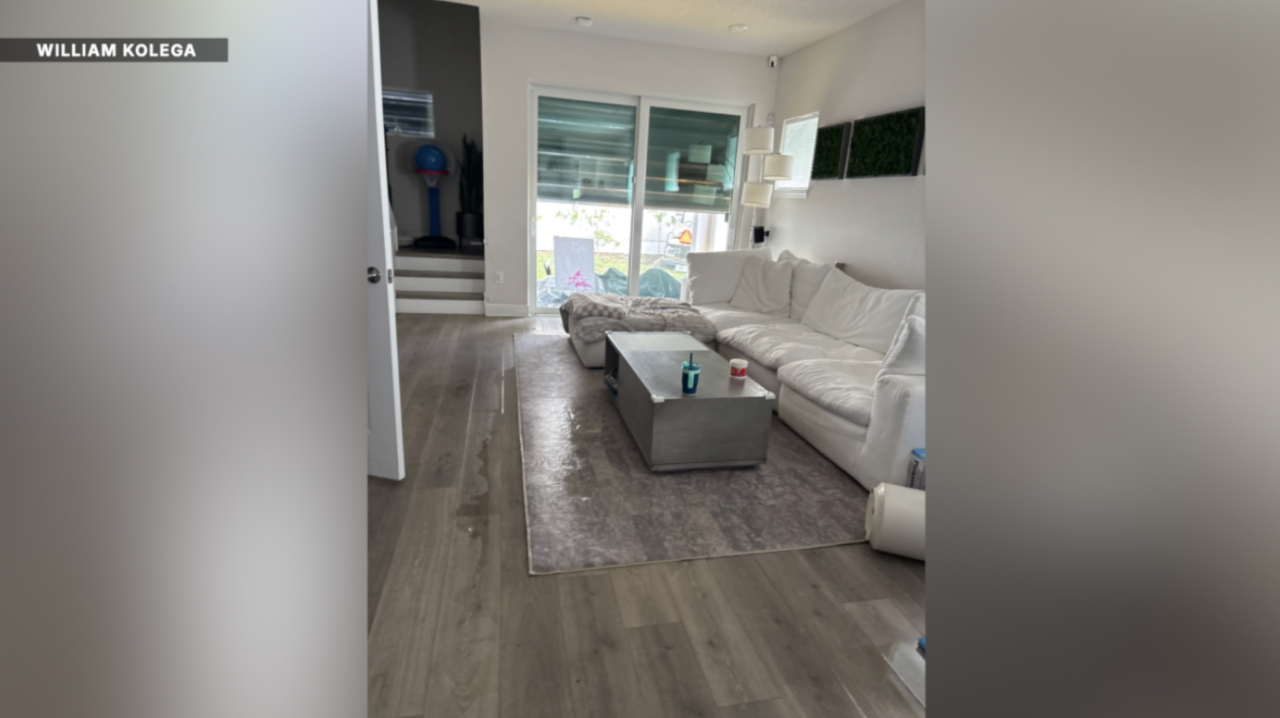
"We're 20 feet above sea level, and FEMA doesn't consider us a high-risk zone at all," Kolega said.
Kolega said he took vacation days from work to attend city council meetings and to speak with me. He said most of his neighbors are in a similar position: working people without the time or resources to fight back.

"I took some time off work to be here today and talk with you. I took vacation days to attend the city council meeting. I can assure you, I'd much rather be taking that time off with my family on a vacation," Kolega said.
After my previous story aired, Kolega sent me an email raising concerns about how the project's opposition has framed its arguments. In it, he pointed to a 2022 Southwest Florida Water Management District analysis cited by opponents, which found only 5 structures would flood in a 100-year storm. Kolega argued that Hurricane Milton had already run that experiment and flooded hundreds of structures, rendering the older model obsolete. The city also changed its plans, now the project stands to prevent structural damage from more than 200 buildings.
Kolega also wrote that while opponents have described grant funding as denied, city CFO Dennis Rogero said on the record at a January 29 workshop that the grant "hasn't been denied," describing it instead as a "chicken and egg thing", meaning the Florida Department of Environmental Protection wants to see a signed contract before approving the funds.
You can view that meeting where the City's CFO spoke about funding here. The conversation starts about 18 minutes in.
Kolega said he wanted to draw attention to the people who couldn't return to their homes and businesses for months after Milton, a group he said has largely gone unheard.
"Most of them are working people who don't have the time or resources to fight back against a law firm and paid lobbyists," Kolega wrote.
Not everyone along the South Howard corridor shares that view. On February 23, I spoke with Ami Govindaraju, the owner and operator of Drybar Tampa, who said her biggest concern is what construction would mean for small businesses that are still recovering from previous disruptions.
"Small businesses can't really afford to have businesses shut down again. We've already dealt with the COVID and the post-COVID ramifications that really impacted us," Govindaraju said.
She also questioned whether the project would deliver meaningful flood relief to businesses on her side of the street.
"We don't have flooding on this side of Howard. And I think where it falls short is that the proposed plans is only really going to help a handful of structures. It's not helping a whole lot of but it's going to impact the business on the entire street," Govindaraju said.
The city's communications and public outreach coordinator, Josh Cascio, addressed those concerns directly with me.
"The city has identified numerous potential funding sources for the South Howard flood relief project, including current and potential grants, potentially additional legislative funding, as well as other sources," Cascio said.
Cascio said the city's CFO laid out the full funding picture at a public workshop in January, which is available on YouTube. He also pushed back on claims that the project would drain the city's stormwater improvement fund.
"Only $8.4 million from the stormwater fund will go to this project, leaving plenty more for future projects as well," Cascio said.
Cascio said there will not be a tax increase because of this project.
On the question of how many structures the project would actually protect, Cascio pushed back on the figures being cited by opponents. He said a widely circulated email from the SoHo Business Alliance claiming only 3 to 15 homes would be impacted dates to 2022: two years before the design contract was even agreed to by the Tampa City Council.
"That email is wildly out of date and not at all reflective of the current project," Cascio said.
Cascio said the project has since grown in scope specifically to protect as many people as possible, and that the benefits extend to the entire South Howard basin, including businesses along the corridor.
"This project helps everyone in that South Howard basin. It especially helps the neighborhoods of Palma Ceia Pines, Parkland Estates and surrounding, but it helps everybody," Cascio said.
The project is designed at a minimum to stop flooding from a five-year, eight-hour storm. That's what Cascio described as a strong summer storm.
"In a strong summer storm, this project eliminates structural flooding in Palma Ceia Pines and in Parkland Estates," Cascio said.
Cascio said the benefits extend to larger storm events as well.
"If a hurricane Milton hit and this project were in place, we would expect to see up to 70% less structural flooding in those neighborhoods. That means we're protecting more than 220 homes and businesses," Cascio said.
Cascio said the project also includes a phase one component that extends into Palma Ceia Pines by connecting to a pond under a hospital parking deck, turning it into a large inlet to help drain floodwater from the neighborhood down to the outfall at Bayshore and South Howard Avenue.
On the concern about access during construction, Cascio said the contractor, Kimmons, has committed to a block-by-block approach.
"Usually between five to seven weeks per area, although they're still working on that, but that's the general idea," Cascio said.
Cascio said not all of South Howard Avenue will be torn up at one time, and that the city is working on a preliminary campaign, described as a "shop Howard" type effort, to help keep customers flowing to businesses during construction. He also said the finished project will bring 10-foot-wide sidewalks, new trees, new landscaping and new lighting to the corridor.
"It will be a very inviting destination for people to come to, and that is really good for businesses," Cascio said.
Just a few blocks from Kolega's home, Dr. Mark Abdoney said his business flooded as well. And that it wasn't the first time.
Abdoney said he first flooded in August 2015, not during a hurricane, but during a series of heavy rain events. At the time, he said he had no flood insurance because he had deliberately chosen to operate in Zone X, an area FEMA does not designate as high risk.
"I purposely chose to be in zone X. I don't like residing or doing business in areas that flood," Abdoney said.
He said he changed his approach after 2015 and began carrying flood insurance every year. When Milton hit in 2024, he said he sandbagged his entire office.
"The water height in the office was like four to five inches. And I think what happened was the water table was so saturated, I think it might have come up through my slab," Abdoney said.
Abdoney said he kept all of his employees on payroll during both flood-related closures and during the COVID-19 shutdown, and said he believes other businesses along South Howard have the resources to do the same during the construction window.
"They have time to plan, and they have resources. They got more resources than I do, and I'm here. I'm still here," Abdoney said.
Abdoney said he is confident the project will ultimately move forward, but expressed frustration with what he described as years of delay.
"The fact that we're actually standing here arguing about a real problem with a known solution, a long proven, established solution that makes sense that they have yet to legitimately disprove, is insulting to me as a taxpayer," Abdoney said.
Kolega said he believes the impact of not completing the project far outweighs the concerns about construction.
"The impact of the flooding that we're not going to solve if this project is ultimately killed is much greater than a possible revenue loss that we're just kind of guessing at at this point," Kolega said.
On March 5, the city of Tampa is hosting an open house where residents and business owners can learn more about the project and get their questions answered. That is scheduled to begin at 6 P.M. at Bayshore Baptist Church.
Final approval for the project is scheduled for sometime between late summer and early fall this year.
Share Your Story with Jada
Jada Williams is focused on the issues that matter most to people in who live in Tampa and West Hillsborough County. From downtown Tampa to Town ‘n’ Country and Westchase, Jada works to bring you updates and solutions on everything from crime to infrastructure. Reach out to Jada below with your concerns for your neighborhood.
.
Bradenton community responds after 20-year-old volleyball star dies from disease that affects 2 in a million
The 20-year-old IMG Academy volleyball star and Under Armour All-American died Sept. 16 after a three-month battle with the rare blood disorder — even though doctors had found her a 100% bone marrow match, her mother, Tanya Mack tells Tampa Bay 28 reporter Haley Zarcone.
