




PINELLAS COUNTY, Fla. (WFTS) — A Pinellas County sheriff's deputy accused of improperly searching a woman's license plate 300 times using automated license plate reader cameras, including those made by Flock, was caught after a media inquiry prompted the sheriff's office to take a closer look at its audit procedures, Sheriff Bob Gualtieri said Wednesday.
The case was one of two unrelated incidents announced Wednesday in which Pinellas County deputies were arrested for unlawfully accessing law enforcement databases.
Gualtieri said the cases also exposed weaknesses in how the sheriff's office monitors access to its automated license plate reader system (ALPR) cameras and databases.
“The audits were there, but we were not focusing on high quantity,” Gualtieri said. “We are now.”
Gualtieri acknowledged the department's previous approach as “inadequate” and said the Pinellas County Sheriff’s Office (PCSO) is now working to strengthen its oversight.
Deputy allegedly searched woman's plate 300 times
Deputy Karl Gwynne, 57, was arrested Wednesday after investigators determined he repeatedly accessed information about a 35-year-old woman he wanted to date.
Gualtieri said an audit showed Gwynne had searched the woman's license plate 300 times through the ALPR system.
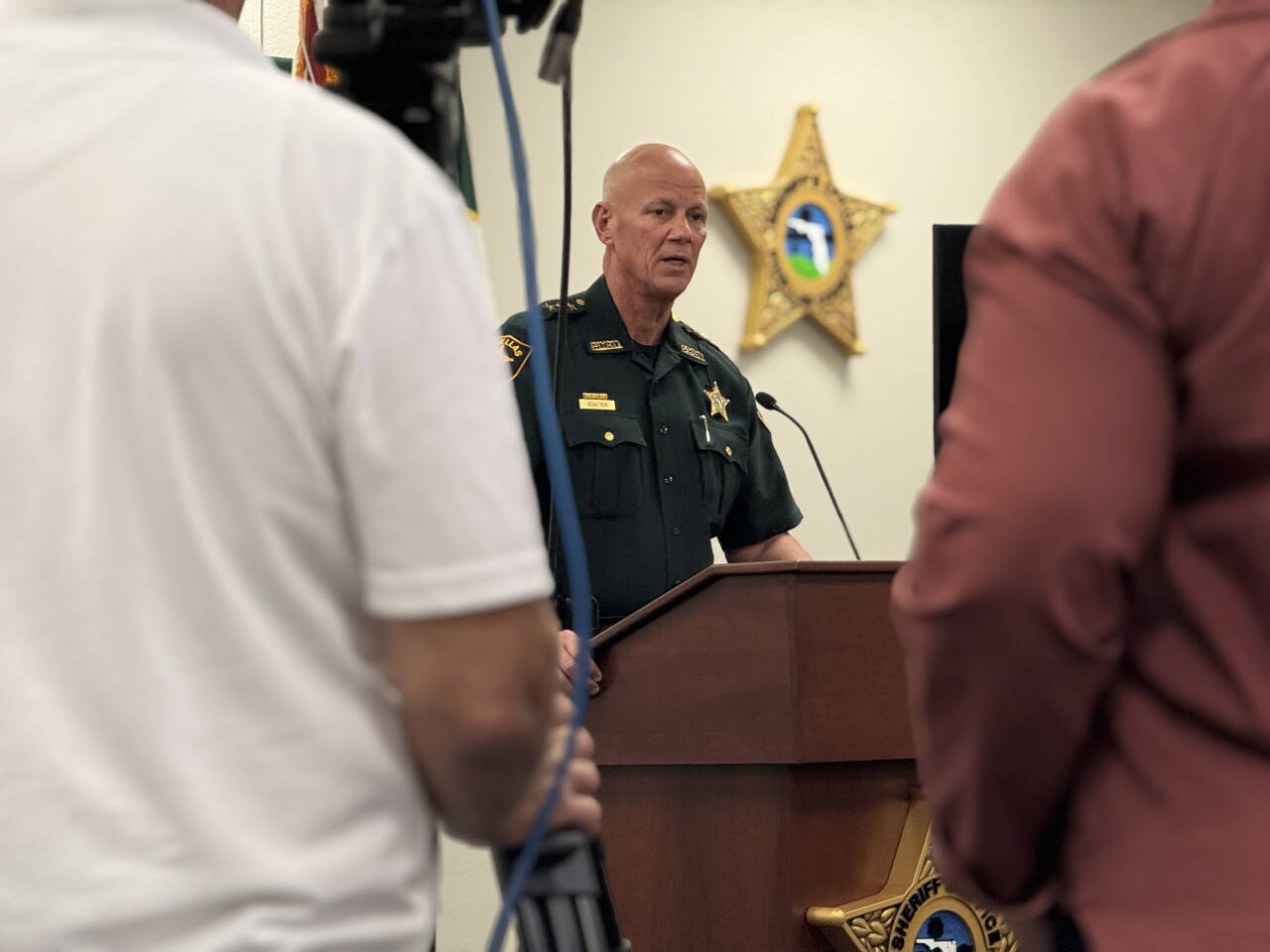
The investigation began after a media inquiry about ALPR use brought the high number of searches to PCSO's attention, Gualtieri said.
Investigators found Gwynne had queried the woman 381 times across five law enforcement databases between January 2025 and July 2026.
That included 32 searches of the state driver's license database, two searches through the Florida Crime Information Center, 18 searches of the statewide law enforcement records system, 29 searches of PCSO's records management system, and 300 ALPR searches.
Of the 381 searches, 207 were conducted while Gwynne was off duty, Gualtieri said.
The woman was not under investigation, and investigators found no legitimate law enforcement reason for the searches.
Gwynne had arrested the woman in 2010. Gualtieri said Gwynn later reestablished contact with her and developed an interest in dating her.
The sheriff said Gwynne eventually admitted he had been using the databases because he wanted a relationship with the woman, who had declined his advances.
According to the sheriff, Gwynne resigned from the sheriff's office Sept. 11 after being questioned about the searches.
Gwynne was arrested Wednesday and charged with four counts of unlawfully accessing a computer system and one count of official misconduct.
Sheriff says audits were not focused enough
Gualtieri said PCSO does conduct regular audits of its law enforcement databases.
He said the systems generally require users to enter a case number or valid reason for conducting a search, depending on the system.
But the sheriff acknowledged the department's approach to auditing ALPR use was not sufficient.
He said high numbers of searches can have legitimate explanations, particularly in narcotics, terrorism, and other complex investigations where investigators may repeatedly check the same vehicle.
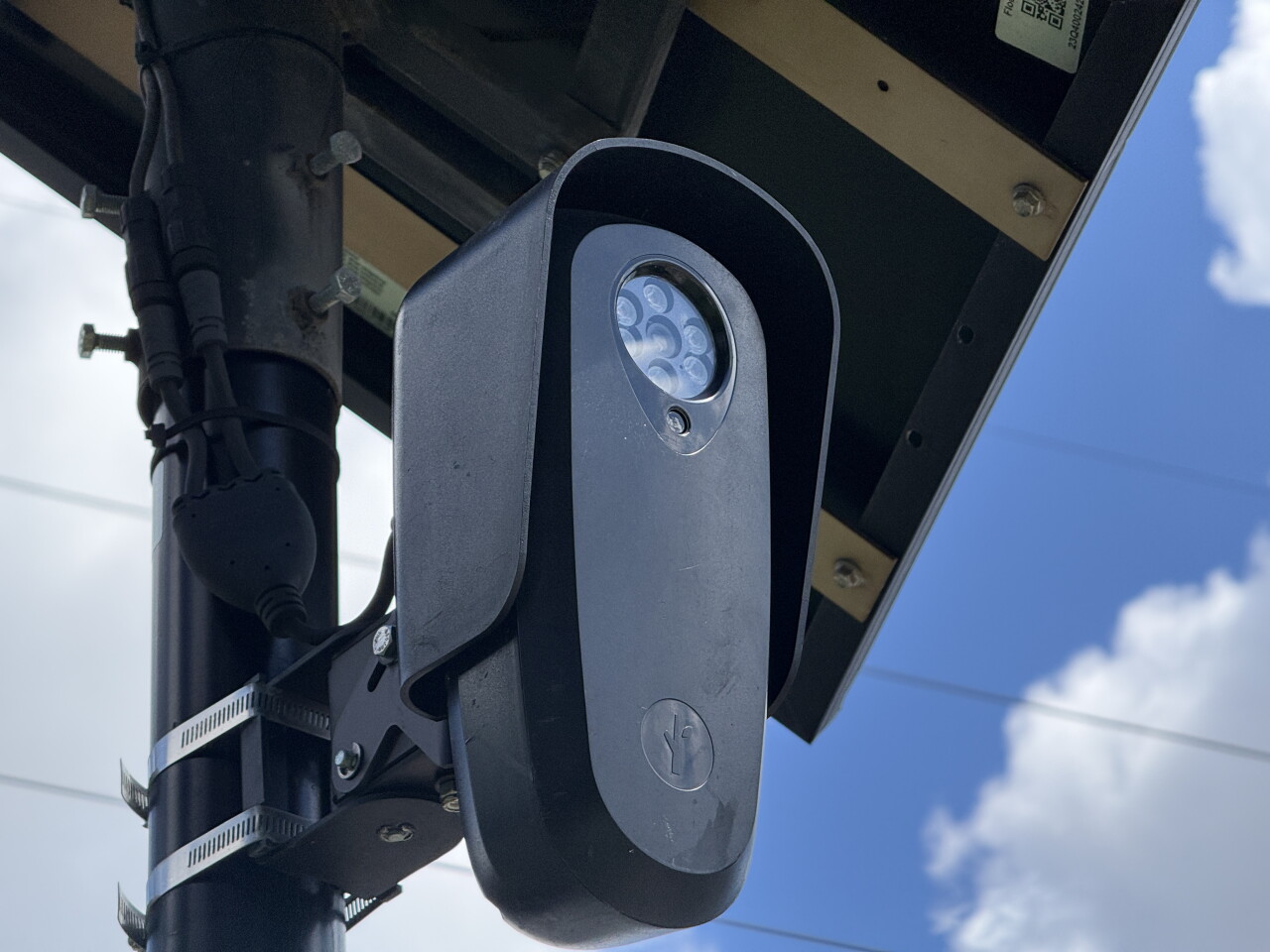
But Gualtieri said PCSO now plans to look more closely at unusually high numbers of searches and other potential warning signs. That includes situations where a single license plate is searched repeatedly or where the same plate is searched by multiple users.
“We need to do random checks,” Gualtieri said. “We need to verify. We need to cross-reference.”
He said the searches appeared in PCSO’s audit logs, but a media inquiry about the unusually high number of searches prompted a deeper review that uncovered the alleged misuse.
Gualtieri was also asked whether the department would have discovered Gwynn's conduct if the media inquiry had never occurred.
He said he could not say for certain.
“I would like to think so,” Gualtieri said. “But, I can’t answer that.”
PCSO policy does not spell out some of those safeguards
The sheriff's comments come after Tampa Bay 28 obtained PCSO's written policy governing its license plate reader program.
General Order 12-16, revised on July 28, says PCSO uses LPR systems operated by Flock Safety, Axon, and Motorola. The policy says the technology is intended for law enforcement purposes and establishes rules for access, use, training, data retention, and verification of license plate hits.
But the written policy does not specifically require a case number for every LPR search.
For PCSO's in-house PLATES LPR Search, the policy says users enter a license plate and a search reason.
That is different from what Gualtieri told reporters earlier this month, when he said deputies were required to enter a case number when conducting an LPR search.
Asked about that discrepancy Wednesday, Gualtieri acknowledged the written policy has not been updated to reflect all of the protocols currently being used.
He said the case-number requirement is being implemented through the various software systems, but some systems do not currently require the field to be entered.
Gwynne did not enter a case number for his searches, Gualtieri said.
The sheriff said vendors are working toward making the case-number field mandatory so a search cannot be completed without it.
Policy lacks audit specifics
PCSO's written policy says its Intelligence Led Policing section conducts monthly audits that include “Success Reports.”
The policy does not specifically lay out a process for reviewing individual searches based on high-volume or unusual activity.
Gualtieri said Wednesday that is changing.
He said PCSO needs to increase the frequency and depth of its audits and look for indicators such as repeated searches of a single license plate or searches by multiple users.
“We still have room to up our game in this,” Gualtieri said.
The sheriff said PCSO is also looking at software changes that could provide additional controls.
Second deputy accused of abusing databases
The other deputy arrested Wednesday, Travis Stanton, 33, was accused of improperly accessing several law enforcement databases to obtain information about a 17-year-old girl he met while she was working at a restaurant.
Gualtieri said the case was not related to the use of ALPR cameras.
Investigators say Stanton learned the girl drove a Nissan Altima and that she was 17. Shortly after leaving the restaurant in late July, he allegedly used a patrol car computer to run the vehicle's license plate through the Florida Crime Information Center.
The search showed the vehicle was registered to the girl's mother, Gualtieri said. Stanton then allegedly used the system to obtain the mother's address and information about others living there in an effort to identify the girl.
He also allegedly accessed driver's license photographs of the girl and her twin sister and searched PCSO records for information about the girl.
Gualtieri said Stanton later went to the parking lot of Seminole High School, where the girls attended school, and conducted additional searches.
Investigators determined Stanton entered a false reason for at least one search, saying he was verifying an identity for official purposes.
He later returned to the girl's workplace several times, Gualtieri said.
During one visit, Stanton allegedly told the girl he had received an ALPR hit showing that her driver's license had been suspended for truancy.
Gualtieri said that was false.
Gualtieri said Stanton later admitted he had no legitimate law enforcement reason for accessing the girl's information and told investigators that “curiosity got the better of him.”
Stanton resigned Sept. 25 and was arrested Wednesday. He faces charges of unlawfully accessing a computer network and official misconduct.
Gualtieri stands by ALPR technology
Despite the cases, Gualtieri said the incidents do not change his support for ALPR technology.
He repeatedly emphasized that the problem was not the technology itself, but how individual deputies use it.
“This is a people problem,” Gualtieri said.
He said PCSO is reviewing its controls and wants stronger safeguards, more frequent audits, and better ways to identify potential misuse.
“We have to make sure our people use it properly,” Gualtieri said.
PCSO's policy allows authorized personnel to search not only cameras maintained by the sheriff's office, but other cameras within Flock's shared network, including cameras operated by other law enforcement agencies and private businesses and organizations.
Gualtieri said the sheriff's office will continue using ALPR while strengthening its oversight.
Share Your Story with Chad

Chad Mills calls Polk County home and has witnessed the area’s growth firsthand. He is focused on sharing stories from his neighbors in Lakeland. You can use the form below to connect with Chad.
.

Bradenton community responds after 20-year-old volleyball star dies from disease that affects 2 in a million
The 20-year-old IMG Academy volleyball star and Under Armour All-American died Sept. 16 after a three-month battle with the rare blood disorder — even though doctors had found her a 100% bone marrow match, her mother, Tanya Mack tells Tampa Bay 28 reporter Haley Zarcone.
