

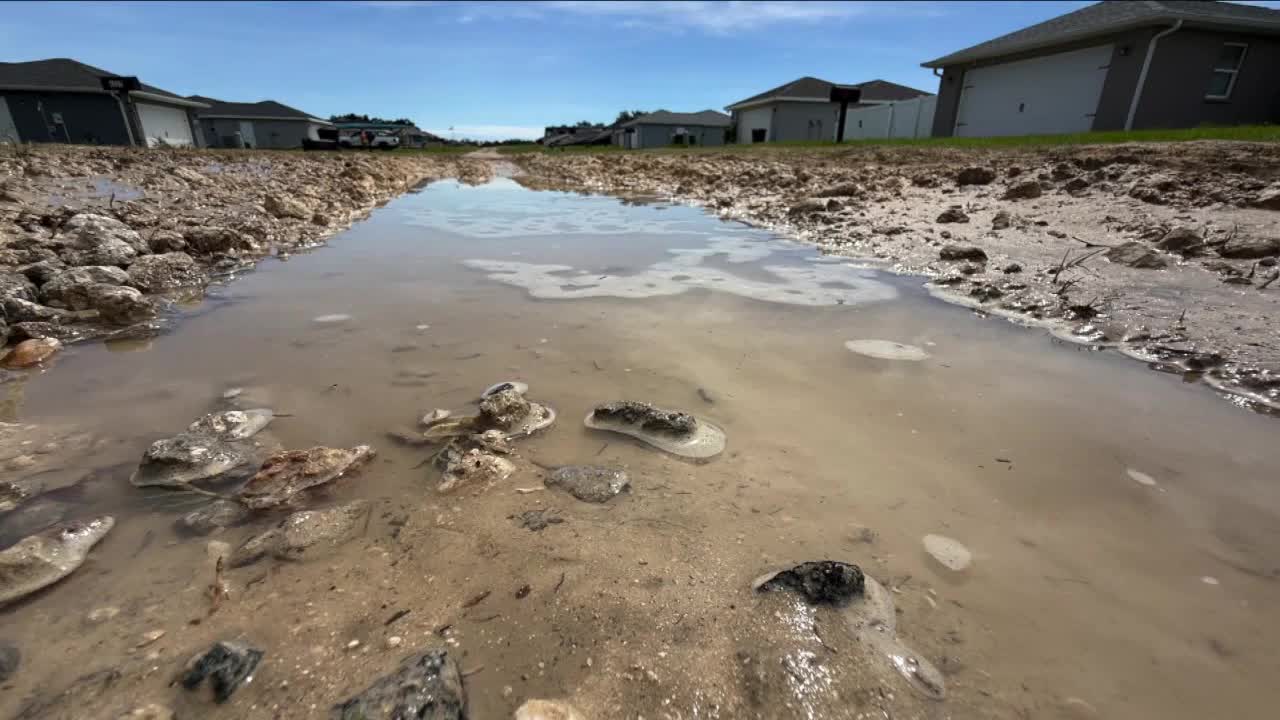


CITRUS COUNTY, Fla. — Imagine living in a neighborhood where some of the roads are so rough that you have to drive through your neighbor’s lawn to get around the potholes.
Now imagine calling 911 and knowing the fire engine might not reach your house.
That’s the reality for some homeowners in Inverness Village 4, a Citrus County neighborhood that was built without paved streets or a completed drainage system.
And now, Citrus County Fire Rescue has documented just how difficult it has become to traverse some of those roads.
On E. Jay Street, firefighters found what they described as a “grass path only” and determined there was “no access for Engines, Tankers.” The department said crews may need to use a four-wheel-drive brush truck or ATV to reach homes there.
On other streets, firefighters found deep ruts, large potholes, and pools of water. E. Taper Street was described as “more of a path than street.” E. Rejoice Street presented “very slow and careful access” for larger emergency vehicles.
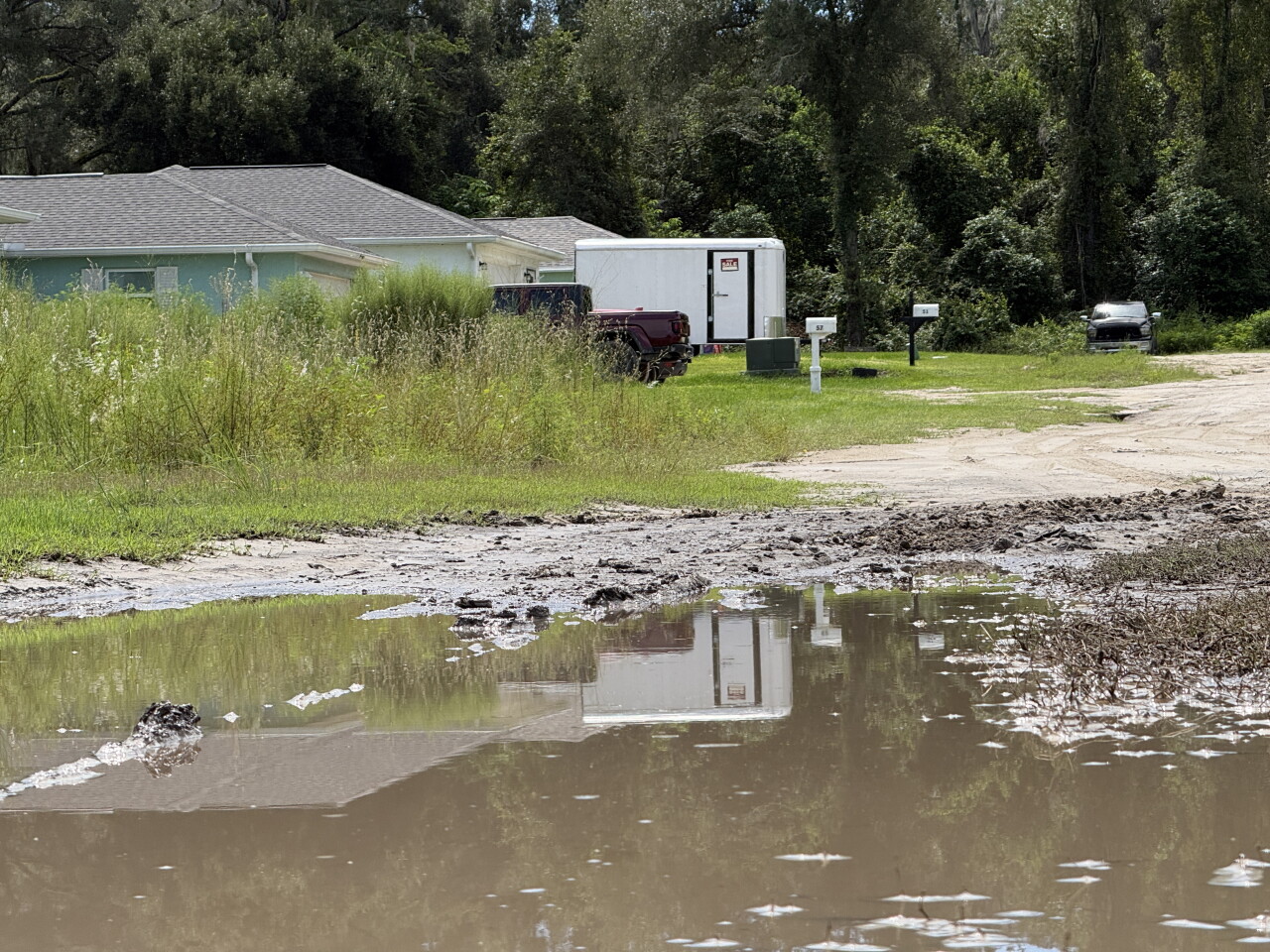
Fire Rescue conducted the road-by-road assessment Sept. 1 after a homeowner contacted county and fire officials about dangerous and deteriorating roadway conditions.
The department says those conditions will not prevent it from responding to emergencies.
If an engine cannot reach a home, firefighters can position it at the closest safe location and extend hose lines to the structure. For medical calls, crews can use four-wheel-drive vehicles or ATVs to reach patients and bring them back to an ambulance.
But homeowners say having to plan around whether a fire engine can reach their street is just the latest chapter in a problem they thought would have been solved years ago.
When people bought homes in Inverness Village 4, they say they were led to believe the roads would eventually be paved through an assessment that would cost each household roughly $6,000.
Instead, the neighborhood grew while the promised infrastructure never materialized.
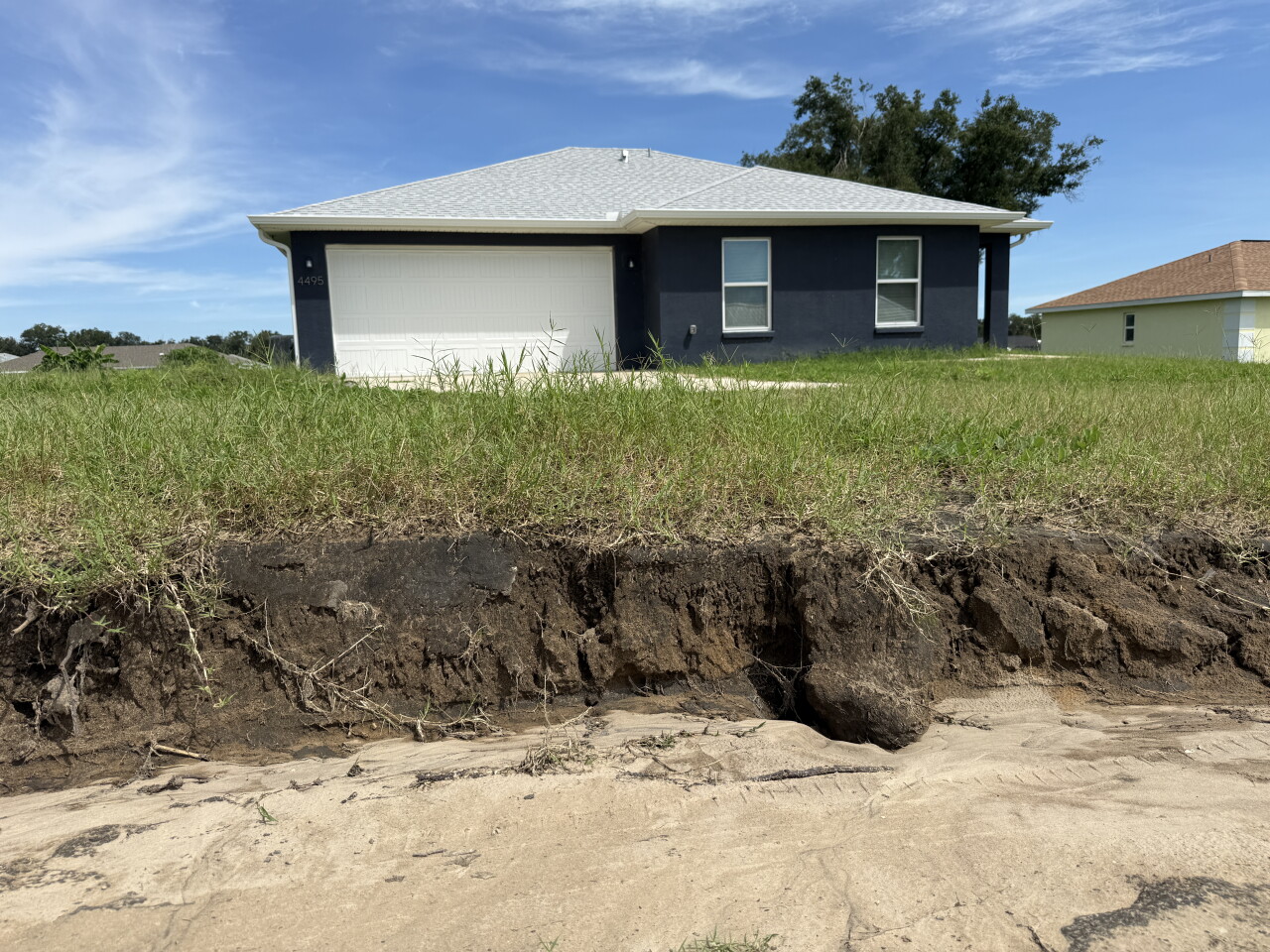
Today, homeowners are left with sandy, unpaved roads and no completed drainage system. Although the roads were dedicated to the public, Citrus County has said no actual roads were constructed and has declined to maintain the rights-of-way.
That has left homeowners, the county, and people involved in developing the neighborhood arguing for years over who should pay to fix it.
The dispute eventually landed in court.
The Florida Department of Environmental Protection sued Van Der Valk Construction and related companies in 2023, alleging construction took place without required stormwater permits. The Southwest Florida Water Management District later filed a separate lawsuit alleging the development lacked required environmental resource permits and that the lack of drainage had contributed to flooding and erosion.
Meanwhile, the roads keep getting worse when it rains.
“This is one of my heartbreaks right now,” homeowner Ruben Crespo said, pointing to a damaged stretch of road near his home. “Nobody should live like this. It’s so hard.
Crespo said people have resorted to driving across lawns to get around some of the worst sections.
“I tell ya one thing, if I could sell it tomorrow and get the right price, we’d be gone,” he said. “We’d be gone.”
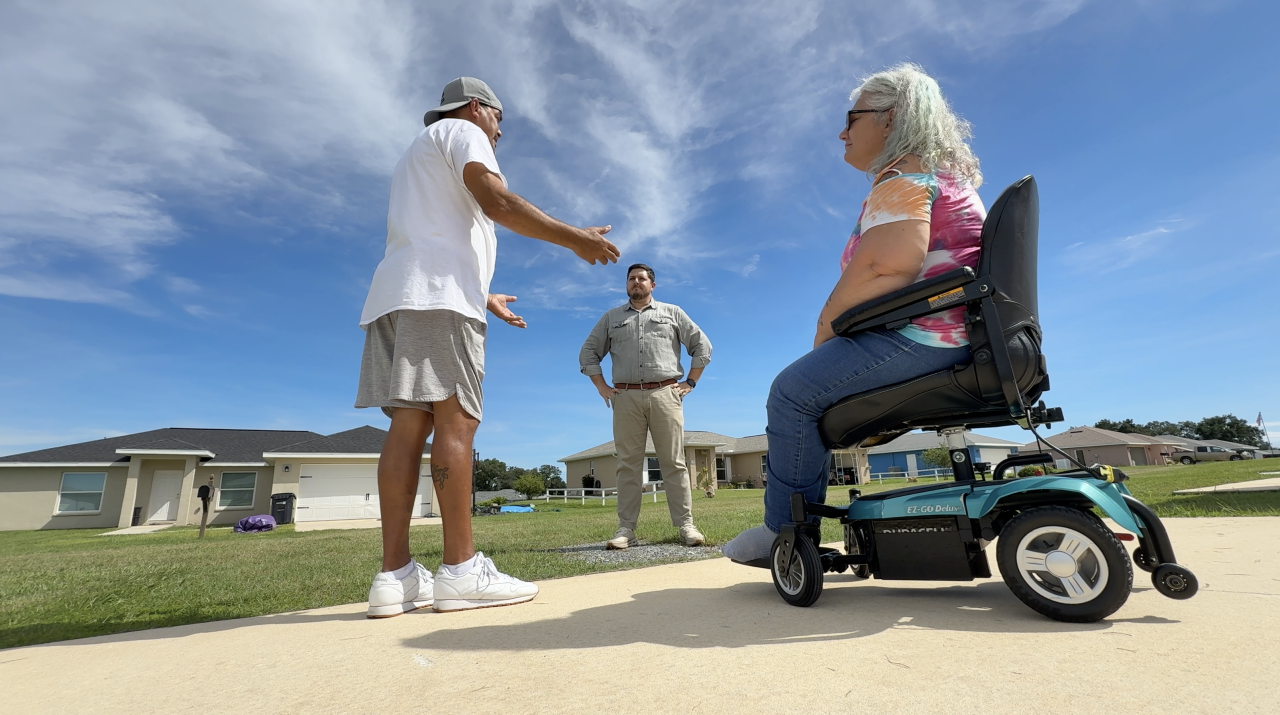
Kerri Gladden, his next-door neighbor, has lived in Inverness Village 4 for four years. She says the roads are in the worst shape she’s seen.
“The crevasses and the puddles have been completely unpassable, and it’s very bad,” she said.
Emergency access has been an issue before. Last year, a Citrus County Fire Rescue truck became stuck in the neighborhood’s sugar sand.
Fire Rescue says it has now identified the problem areas and developed alternate ways to reach homeowners when its larger equipment cannot get through.
For the people who live there, though, that is not the permanent fix they have been waiting for.
Share Your Story with Chad

Chad Mills calls Polk County home and has witnessed the area’s growth firsthand. He is focused on sharing stories from his neighbors in Lakeland. You can use the form below to connect with Chad.
.

Saudi flight from Tampa, secret FBI probe reveal possible Saudi support network for 9/11 hijackers
Twenty years after the Sept. 11 attacks, more than 80,000 records compiled by the Tampa FBI Field Office remain classified. Newly declassified documents are pointing to a possible secret Saudi support network for the hijackers. Soon after the attacks, the FBI uncovered that 15 of the 19 hijackers were from Saudi Arabia.
